REVIEW · HOI AN
Hoi An: Vietnamese Foldable Lantern Making Workshops
Book on GetYourGuide →Operated by Hoi An Local Tour · Bookable on GetYourGuide
Hoi An lanterns have a way of making you slow down. This workshop turns the UNESCO-era streets into something you can carry home: a foldable lantern you made yourself, guided step by step. I like that you’re learning traditional lantern-making from skilled local artisans, not just watching a demo. The one thing to keep in mind is that the start of the session can feel a bit unclear if language support isn’t as thorough right at the beginning.
My favorite part is how simple it is to get results. You don’t need crafting skills, and the instructor and translator help you through the process so you can focus on shaping, choosing fabrics, and getting the final look right. Still, it’s not ideal for wheelchair users, so plan an alternate activity if mobility is an issue.
In This Review
- Key Points You’ll Care About
- From Ancient Town to Your Workbench: The Vibe of This Lantern Class
- Price and Value: Why $11 Makes Sense in Hoi An
- Meeting at The Lantern Lady: Where You Start and How Pickup Works
- Express vs Full Class: How to Choose Your Level of Hands-On Time
- Express class (bamboo sticks prepped)
- Full class (from scratch)
- Your Lantern Choices: Shapes, Silk Styles, and Color Decisions
- The Hands-On Making Part: What the Workshop Teaches You
- The Lantern Lady Stop: Photo Time, Walk, and a Taste of Hoi An Rhythm
- What You Take Home (And How to Use It)
- Language and Comfort: Making the Experience Feel Smooth
- Who This Workshop Suits Best (And Who Might Skip It)
- Should You Book This Hoi An Lantern Making Workshop?
- FAQ
- How long does the Hoi An lantern making workshop take?
- How much does it cost?
- Where is the meeting point?
- Is pickup available?
- What language is the class taught in?
- What will I make and take home?
- Are kids allowed?
- What should I wear or bring?
- Is it wheelchair accessible?
Key Points You’ll Care About
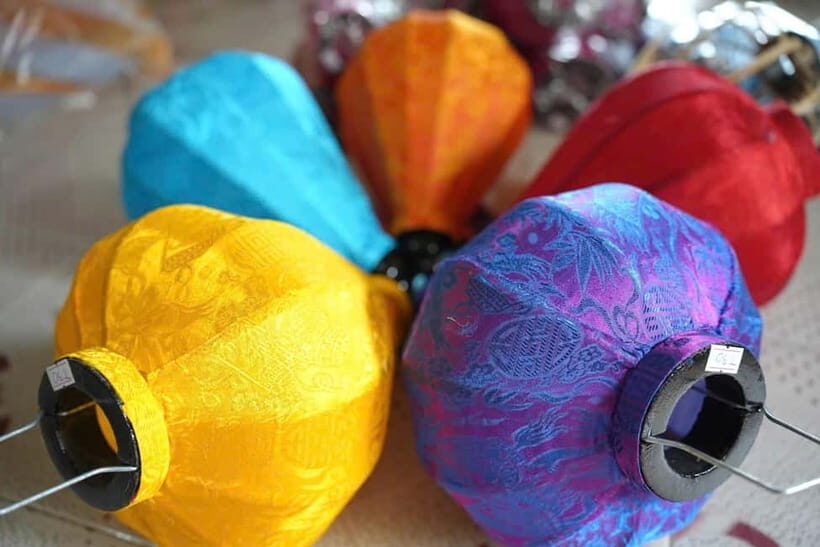
- Custom choices: Pick lantern shapes (lotus, triangle, garlic, diamond) and choose silk style and color.
- Two teaching styles: Go express with bamboo sticks prepped, or take the full class from scratch.
- Real take-home value: You leave with your own handmade foldable lantern—something personal, not generic.
- Comfort starts with the small stuff: A welcome drink of traditional Vietnamese tea sets the tone before you begin.
- Good for groups: Works for couples, families, and small groups, including kids as young as 3 (with an adult).
- Meeting point is straightforward: It’s at The Lantern Lady, 3/6 Phan Bội Châu Street, Cẩm Châu, Hoi An.
From Ancient Town to Your Workbench: The Vibe of This Lantern Class
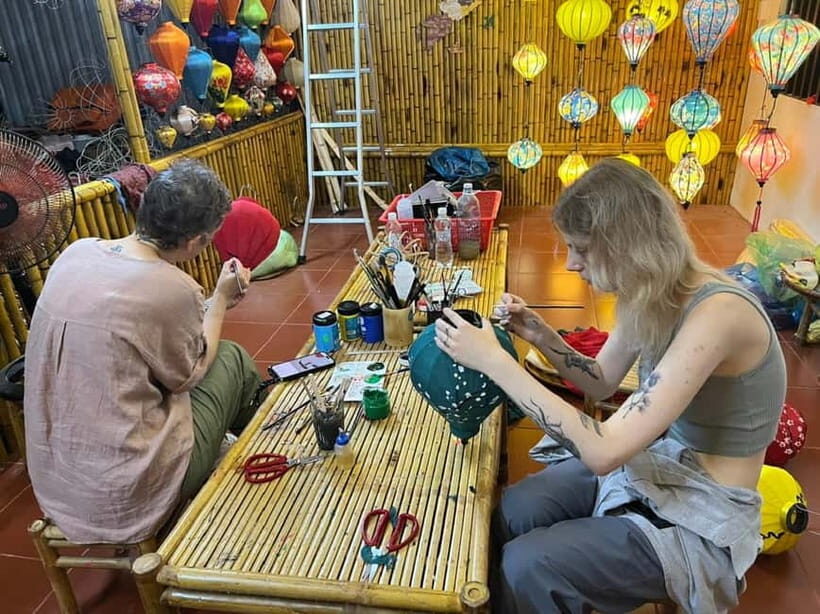
Hoi An has a special rhythm. Even if you’ve only been walking the ancient lanes for a day, you start noticing lanterns everywhere—fixed to shop fronts, drifting from balconies, glowing above doorways. This class borrows that atmosphere and gives you something concrete to do with it.
You’re not cramming a craft project into a tight stop on a sightseeing bus. The format is built around making: you’ll get guidance, you’ll choose what you want your lantern to look like, and then you’ll bring it to life piece by piece. And yes, the lantern theme is very Hoi An—people in the town associate lanterns with good fortune and happiness when hung in front of a house.
The atmosphere is also family-friendly in a practical way. Kids can join (the minimum listed is 3 years old, with an adult). That matters because the experience isn’t overly technical or “only for serious hobbyists.” It’s designed so you can make a lantern even if you’ve never held crafting tools before.
One more detail that helps: the instructor is English-speaking, with a translator also part of the teaching team. That combination usually makes the step-by-step parts easier to follow—especially when you’re learning how the foldable structure should hold shape.
You can also read our reviews of more tours and experiences in Hoi An



Price and Value: Why $11 Makes Sense in Hoi An
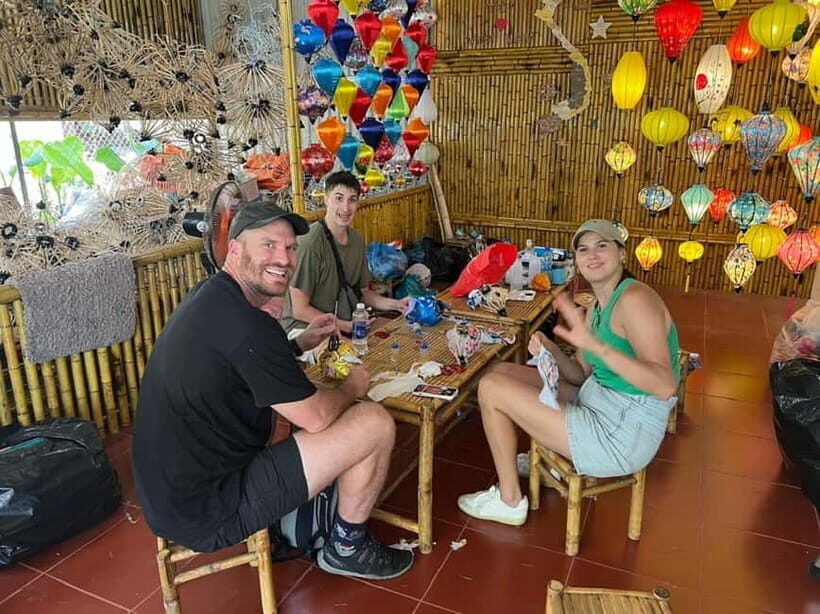
At $11 per person, the big question is what you’re actually getting for your money. This is where the value is strong.
You’re paying for:
- an instructor (and translator) who guide you through the technique,
- a set-up that helps you succeed without special skills,
- and a physical take-home souvenir that you made yourself.
That last point is key. A lot of Hoi An shopping buys you something “Hoi An themed,” but it still feels like a purchase. Here, you’re making the object. The result is a souvenir that’s tied to your choices—shape, silk style, and color—so it feels personal instead of mass-produced.
Also, the tea welcome drink isn’t huge money-wise, but it’s part of the experience rhythm. It signals that you’re stepping into a local workshop flow, not just dropping into a quick craft booth.
If you’re balancing a day of walking the Ancient Town with one activity that creates a memory you can literally hold, this class is one of the better bets for cost-to-reward.
Meeting at The Lantern Lady: Where You Start and How Pickup Works
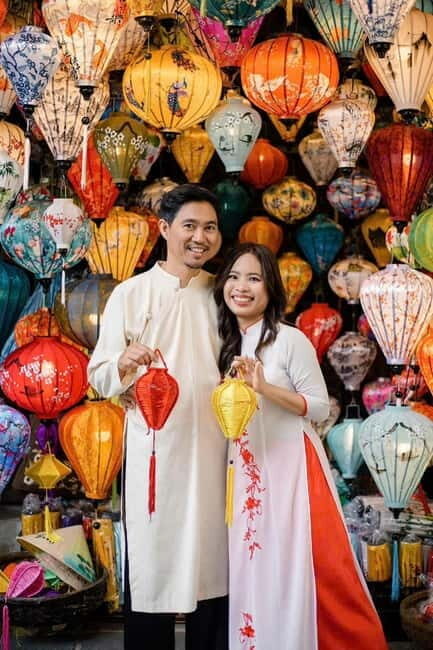
Most people will want to know two things: where to show up and how you get there.
The meeting point is at The Lantern Lady, 3/6 Phan Bội Châu Street, Cẩm Châu, Hoi An, Quang Nam (it also matches the name on Google Maps). If you choose hotel pickup, you’ll wait at the hotel lobby or main entrance at your selected pickup time.
Communication is handled via WhatsApp. Your driver or guide contacts you to coordinate, so if you’re the type who hates uncertainty, have WhatsApp ready and keep notifications on.
Timing is also straightforward. You’ll want to arrive 5–10 minutes early. That buffer matters because craft classes run on a calm schedule; showing up late can squeeze your start, especially if your group is choosing between the express and full options.
What to bring is minimal—just wear comfortable clothes. You’ll be sitting or standing at a work area for a while, and comfortable clothing is the easiest way to avoid turning the session into a scratchy, sweaty chore.
Express vs Full Class: How to Choose Your Level of Hands-On Time
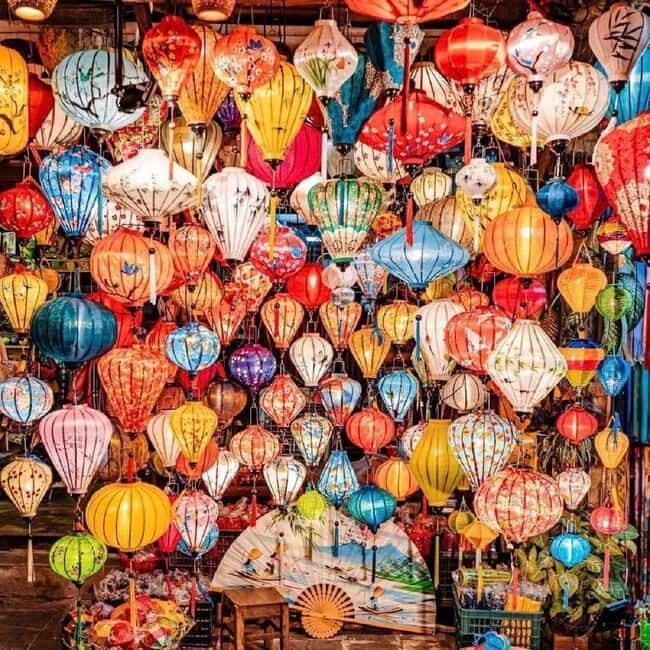
One of the smartest parts of this workshop is the choice between an express class and a full class.
Express class (bamboo sticks prepped)
If you want maximum payoff with less time spent on the structural prep, the express option has your bamboo sticks prepared ahead of time. That means you spend more effort on the visible parts—assembling, shaping, and creating the look with fabrics and colors.
This is a great choice if:
- you’re on a tight schedule,
- you’re traveling with kids who might get restless,
- or you just don’t want the earlier step to feel too slow.



Full class (from scratch)
If you like doing the whole process yourself, the full class lets you experience lantern making from the beginning. That tends to feel more satisfying because you understand how the foldable structure works, not just the finished decoration.
This is a great choice if:
- you enjoy crafts and want the full workflow,
- you like learning how things are built,
- or you want a deeper sense of “I made this” beyond decorating.
Either way, you’ll get step-by-step help from the instructor, so you’re not left to figure it out alone. Your job is basically to choose what you want your lantern to look like and then follow along.
Your Lantern Choices: Shapes, Silk Styles, and Color Decisions

This is the part that makes the class feel personal. You’ll get to pick from several lantern shapes:
- lotus,
- triangle,
- garlic,
- diamond.
You’ll also choose your silk style and color. The exact fabric options aren’t listed here, but the key is that you’re not stuck with one option. The design choices are part of why people walk out feeling happy—your lantern actually looks like your style, not a standard template.
One practical tip: decide early and commit. When you’re in the middle of assembling, it’s easy to get distracted by fabric choices. If you can pick a shape and color theme before the final assembly starts, your hands will stay on task and you’ll avoid rushing.
And yes, your final souvenir will be a foldable lantern. That matters because it’s easier to carry home and store later. You’re not taking a fragile, bulky item. You can pack it like a personal art object.
The Hands-On Making Part: What the Workshop Teaches You
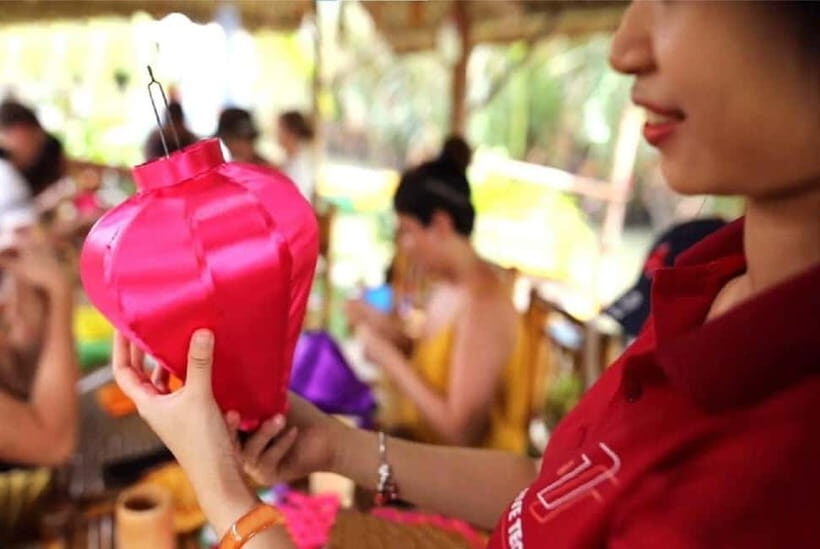
The lantern-making portion is where the class earns its keep. You’ll be shown how to:
- build and shape the lantern frame,
- work with materials to create the lantern’s outer look,
- and finish it so it holds its form as a foldable piece.
The teaching style is step-by-step with an English-speaking instructor and translator. That setup is important. Craft instructions can be hard even when the language is shared, but you’ll have support when you’re doing something with your hands and need clarity fast.
From the practical side, I like that you don’t need prior crafting skills. The whole process is set up so a first-timer can succeed. When things go smoothly, it’s usually because someone is watching for mistakes early—things like alignment, tension, and how panels are layered.
Also, the class offers structure without making you feel rushed. The goal is that you leave with a complete lantern, not that you memorize a technique for future competitions.
The Lantern Lady Stop: Photo Time, Walk, and a Taste of Hoi An Rhythm
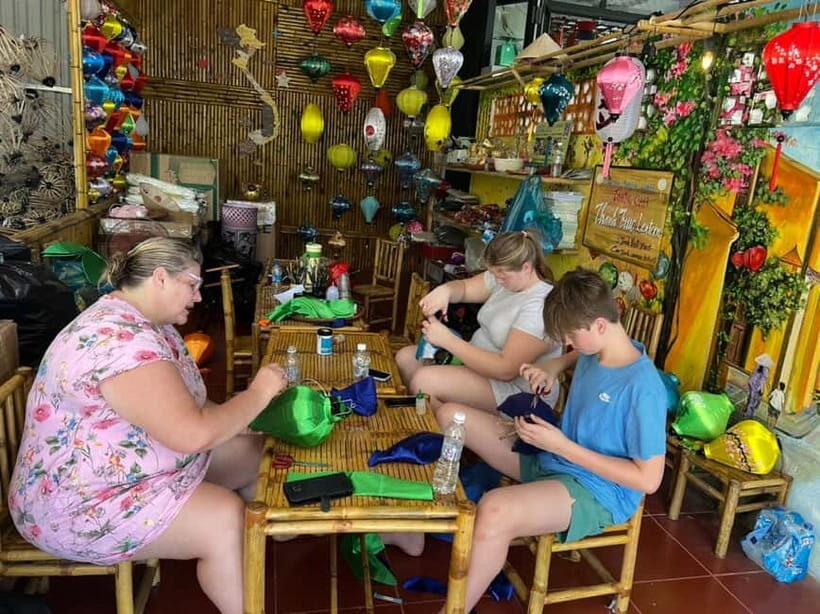
Beyond the workbench, there’s time to see the area around The Lantern Lady and connect the craft back to the town.
The program includes a photo stop, plus time for walking and sightseeing. That’s not random filler. It helps you link the lantern-making to the visual world you came from. You see lanterns in context, then you make one in a way that matches how Hoi An presents these ornaments in real life.
You’ll also have some free time included as part of the session. That’s handy if you want a moment to:
- grab water,
- take a few quick photos,
- or simply reset before the main assembly continues.
This blend of craft + short walking time is ideal if your Hoi An days are heavy on strolling. It gives you both a break and a reason to look closely at the details in the Ancient Town.
What You Take Home (And How to Use It)
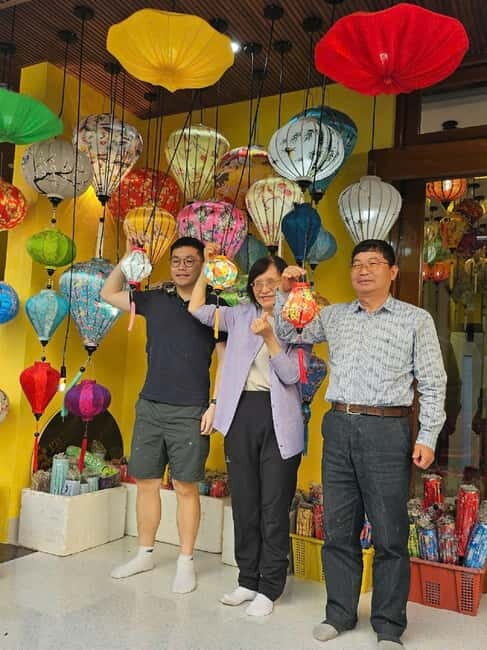
The main takeaway is your handmade foldable lantern. Because you choose the shape and silk style/color, the lantern feels like a personal souvenir rather than an afterthought.
You’ll also receive a special surprise gift from your host. The exact item isn’t listed, but the point is that it adds that small extra element of warmth to the experience.
As for how to use it, the cultural idea behind Hoi An lanterns is part of the experience: lanterns are associated with good fortune and happiness when hung in front of a house. Even if you don’t hang it outdoors, you can treat it as décor for a doorway, a hallway, or a special shelf moment.
Storage is also easier because it’s designed to fold.
Language and Comfort: Making the Experience Feel Smooth
This class is built to be accessible, but you can help yourself have a smoother experience.
The instructor is English-speaking and there’s a translator, which is a big help for step-by-step craft tasks. Still, one concern to consider is that the earliest part of the session may feel a little under-explained if your group’s language needs don’t get extra attention right at the start.
If you’re worried about that, do two simple things:
- Arrive 5–10 minutes early so there’s time for a proper welcome.
- Ask a quick check-in question as soon as you sit down (something like: what step are we starting with first).
That small habit reduces confusion and makes the rest of the class feel relaxing instead of slightly stressful.
Who This Workshop Suits Best (And Who Might Skip It)
This is a strong fit for:
- couples who want a memorable Hoi An activity that’s not just another meal,
- families since kids as young as 3 can join with an adult,
- small groups who want a hands-on experience with a guided structure,
- travelers who like practical souvenirs they can actually use or display.
It may be less ideal if:
- you use a wheelchair (the activity is listed as not suitable for wheelchair users),
- you’re looking for a fast 30-minute tour type experience (this needs a bit of time to do properly),
- you strongly prefer silent, museum-style activities (this is interaction and instruction).
If you’re the type who likes to learn a skill—even a short one—this is a sweet way to do it without homework or prep.
Should You Book This Hoi An Lantern Making Workshop?
Yes, I’d book it if you want a souvenir with meaning and a low-stress craft experience. For $11, you’re not only paying for instruction—you’re paying for a finished object that reflects your choices and fits into real travel life thanks to the foldable design.
Choose the express class if you’re short on time or traveling with kids. Choose the full class if you want the satisfaction of understanding the process from scratch.
Skip it only if mobility is a concern or if you know you dislike hands-on activities. Otherwise, this is the kind of Hoi An experience that turns a photo from your day into something you can keep.
FAQ
How long does the Hoi An lantern making workshop take?
The duration is listed as 90 to 150 minutes. Class timing can vary by the selected option, so check available start times when you book.
How much does it cost?
It’s listed at $11 per person.
Where is the meeting point?
Meet at The Lantern Lady, 3/6 Phan Bội Châu Street, Cẩm Châu, Hoi An, Quang Nam.
Is pickup available?
Pickup is optional. If you select it, you’ll wait at your hotel lobby or main entrance, and the driver or guide coordinates via WhatsApp.
What language is the class taught in?
The class includes a live tour guide in English and Vietnamese.
What will I make and take home?
You’ll make your own foldable lantern during the class and take it home. You’ll also receive a special surprise gift from your host.
Are kids allowed?
Yes. The workshop is suitable for all ages, including kids as young as 3, as long as they’re accompanied by an adult.
What should I wear or bring?
Wear comfortable clothes. There’s nothing else specifically required in the provided details.
Is it wheelchair accessible?
No. The activity is listed as not suitable for wheelchair users.