REVIEW · HOI AN
All must-see places Hue City, Hai Van Pass from Hoi An Group Tour
Book on Viator →Operated by Dacotours Co.,Ltd · Bookable on Viator
The road from Hoi An to Hue has a wow factor. This group day blends Hai Van Pass coastal scenery with real palace-and-pagoda time in Hue Imperial City. I like that you get a tight route (and not just a bus ride), plus a guide who keeps the history clear and human. The one thing to consider: it’s an early start, and you’ll be on the move most of the day, so plan for some sitting time in the air-conditioned vehicle.
You start around 7:00am and return after a full circuit of stops, with bottled water and lunch handled. The tour caps at 15 travelers, which usually makes it feel less like a cattle lineup and more like a well-paced day with a small group. If you’re easily bothered by heat or glare, bring sun protection—this route is outdoors for viewpoints and walking.
In This Review
- Key highlights you’ll feel right away
- Getting from Hoi An to Hue: how the day stays efficient
- Hai Van Pass: the coastal viewpoint stop that powers the whole day
- Lang Co Beach: a quick stretch break without derailing your timeline
- Inside Hue Imperial City: from Noon Gate to Thai Hoa Palace
- Start at the Noon Gate (Cua Ngo Mon)
- Then move through the royal core
- Thien Mu Pagoda and the Tomb of Khai Dinh: two very different moods
- Thien Mu Pagoda: calm, iconic, and easy to orient
- Tomb of Khai Dinh: where Vietnamese meets European influence
- Lunch and bottled water: simple inclusions that help the day feel smoother
- Group tour size and pace: what “small group” really means for you
- Price and value: why $66 can work (if your ticket option matches your needs)
- Who this Hue and Hai Van Pass tour is best for
- Should you book this tour?
- FAQ
- How long is the Hue City and Hai Van Pass group tour?
- What time does the tour start?
- Are pickup and drop-off included?
- Is lunch included?
- Is bottled water included?
- Are entrance tickets to Hue Imperial City included?
- Are entrance tickets included for Khai Dinh Tomb and Thien Mu Pagoda?
- How many people are on the tour?
Key highlights you’ll feel right away
- Hai Van Pass viewpoints with real coastal drama: the kind of stop you remember even if you only catch part of the horizon.
- Hue Imperial City as a guided walking route: Noon Gate, royal temples, and Thai Hoa Palace in a logical loop.
- Two “different moods” back-to-back: Thien Mu Pagoda for calm religious atmosphere, then Khai Dinh’s tomb for bold design.
- Lunch that keeps the day moving: Vietnamese local food (vegetarian option available) so you can recharge without losing the itinerary.
- Small group size (max 15): better attention and smoother timing at the main sights.
Getting from Hoi An to Hue: how the day stays efficient
This tour is built around one straightforward idea: see Hue’s must-sees without turning the day into a stress test. You’re picked up in the Hoi An area (the company also serves Da Nang city center), then driven in an air-conditioned coach to the central sites.
The duration runs about 8–10 hours, which sounds long until you realize how much ground this area covers. You’re not doing one museum and calling it a day. You’re stacking key stops in the classic Hue route—imperial buildings in the city, then religious and royal sites just outside the core.
Because it’s a group tour, you also get that “shared pace” effect. The schedule is structured, and your guide keeps you from getting lost in the details. If you like planning but hate feeling rushed, this middle-of-the-road tempo is a good fit.
You can also read our reviews of more city tours in Hoi An



Hai Van Pass: the coastal viewpoint stop that powers the whole day
If you’ve got a single favorite part to hope for, it’s usually the Hai Van Pass segment. The road is famous for dramatic coastal views, and this tour uses it well: it’s not just a drive past it. You get about 1 hour to stop, look around, and take photos.
Why it matters: this is the visual payoff for traveling between Central Vietnam’s coast and old imperial Hue. Even when visibility isn’t perfect, you still get that sense of scale—water, cliffs, and the long curve of the coastline.
Practical note: wear shoes you can walk in comfortably. The viewpoint areas can be uneven, and your time is limited, so you’ll want to move confidently. Also, bring something for sun and glare. The pass is a bright, open-air scene.
Lang Co Beach: a quick stretch break without derailing your timeline
Right after the pass, the itinerary adds a Lang Co Beach stop (around 30 minutes). This is more than a random break stop. It’s placed where it makes sense: you’ve already had the “big scenery,” and now you get a calmer bay scene at the foot of the pass.
You’ll mainly use this time for legs and photos—getting a sense of the coastline’s softer side before the day turns back toward history. If you’re traveling with kids or anyone who gets cranky after too much vehicle time, this stop is the pressure valve.
If weather is rainy, you might want to keep expectations flexible. But if it’s clear, it’s a simple, satisfying pause.
Inside Hue Imperial City: from Noon Gate to Thai Hoa Palace
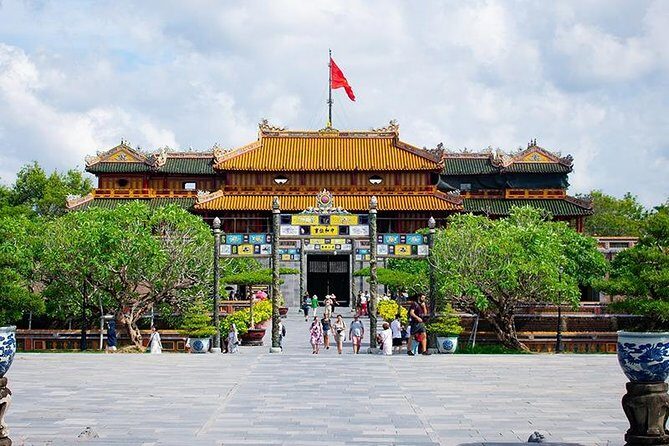
Hue Imperial City (the citadel) is the anchor stop, and the tour treats it like one. You’ll get about 2 hours here, plus separate time carved out for specific areas within the complex.
Start at the Noon Gate (Cua Ngo Mon)
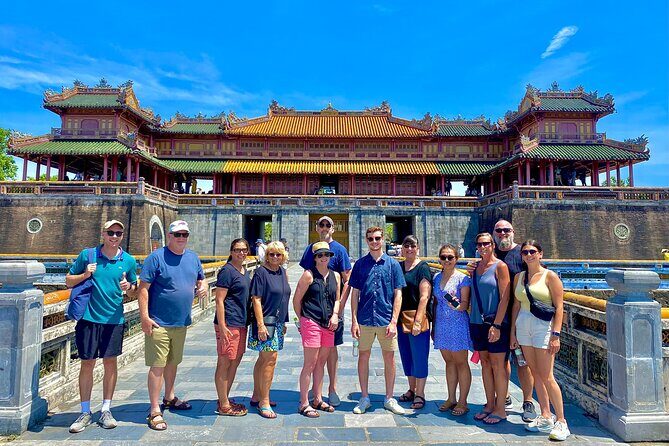
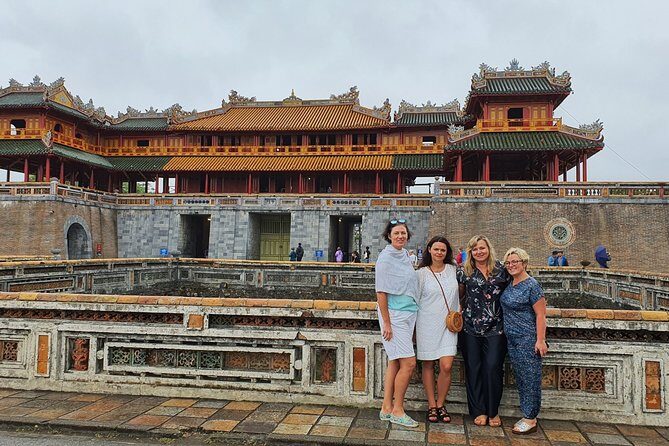
The day’s Hue experience often begins with the Noon Gate, the main entrance where the emperor’s ceremonial processions would pass during important events. Even if you’re not a history nerd, this gate works as a storytelling tool. It gives you a clear sense of how formal power was staged.






Then move through the royal core
Next you visit key imperial spaces, including:
- Mieu Temple, dedicated to worship of past Nguyen emperors. This is where you feel the spiritual layer inside an imperial system.
- Thai Hoa Palace, the central building used for receptions and major events. If you want one place to picture official gatherings and court ceremony, this is the one.
What I like about structuring the time this way: you’re not expected to read every sign on your own. Your guide connects the dots between gates, temples, and palace function. That makes the architecture feel purposeful instead of just “old buildings.”
A quick walking reality check: you’ll cover multiple stops inside the citadel area, and the tour has small timed windows for each. Comfortable shoes matter. So does water.
Thien Mu Pagoda and the Tomb of Khai Dinh: two very different moods
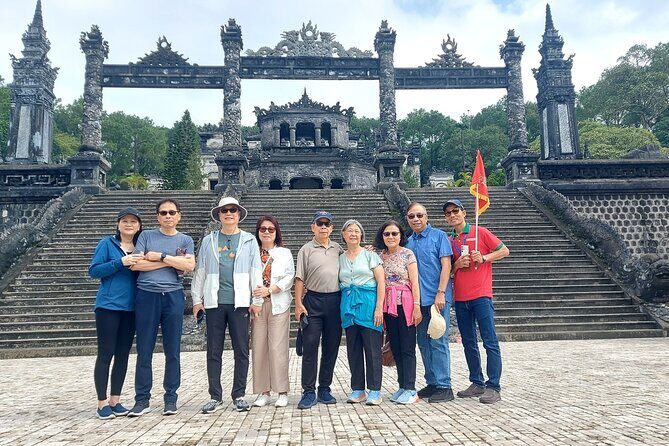
After the imperial complex, the route shifts from court life to religious and royal afterlife culture.
Thien Mu Pagoda: calm, iconic, and easy to orient
Thien Mu Pagoda is one of the oldest and most recognizable pagodas in Vietnam. You’ll spend about 40 minutes here. The highlight is the famous seven-story octagonal tower (often referenced by its Phuoc Duyen name), which helps you orient quickly—even if this is your first time in Hue.
This stop works well after palaces because it slows your brain down. The atmosphere is different: less ceremony-for-the-state, more devotion and tradition. If you want one place to take your time and absorb the vibe, this is it.
Tomb of Khai Dinh: where Vietnamese meets European influence
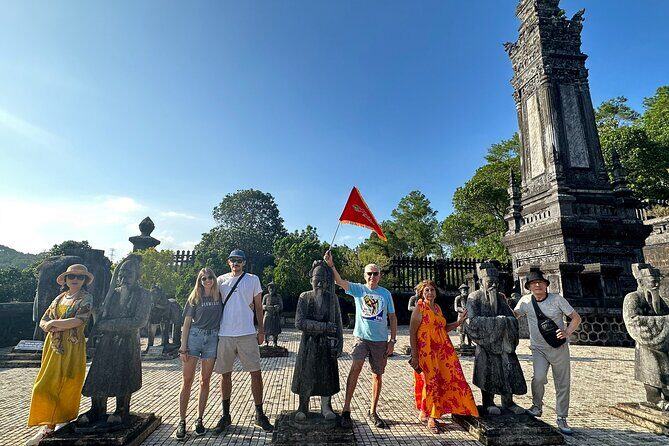
Then comes Khai Dinh Tomb, about 1 hour. This mausoleum is known for a fusion of traditional Vietnamese design elements with European influences—because Emperor Khai Dinh had an affinity for Western culture.
Why that detail matters: it makes the tomb feel like a story about transition and taste, not just another royal site. It’s still imperial, but in a different flavor than the citadel.
If you’re the kind of traveler who likes seeing how cultures mix over time, this stop can be the day’s surprise. It’s also a good counterweight to the more straightforward, ceremonial feel of the palaces.
Lunch and bottled water: simple inclusions that help the day feel smoother
The tour includes lunch and bottled water. Lunch is Vietnamese local cuisine, and there’s a vegetarian option available.
I like this kind of inclusion because it removes one of the biggest day-trip headaches: finding food that works on a tight schedule. You don’t have to gamble on whether a restaurant will be easy to reach, fast enough, or open when you arrive.
The midday meal also helps you mentally reset. After the coastline viewpoint and the imperial walking, you’ll want something steady before the pagoda and tomb.
Group tour size and pace: what “small group” really means for you
This is capped at 15 travelers. In a day with multiple timed stops, that small limit matters. It tends to reduce the long waiting that bigger groups can create at entrances and photo spots.
It also pairs well with what the feedback highlights: guides like Miss One, Tan, and Thanh are described as very informative and friendly, with enough time for questions and a comfortable, unhurried feel at attractions. For a day like this, that’s not just nice—it’s useful. When you’re standing in front of gates, temples, and palaces, context is what turns “sightseeing” into understanding.
Price and value: why $66 can work (if your ticket option matches your needs)

The price is $66 per person, and the tour includes a lot of the big-ticket items you’d otherwise spend time and money on:
- Hotel pickup and drop-off in Da Nang or Hoi An city center
- Air-conditioned coach transport
- English-speaking local guide
- Lunch plus bottled water
- Travel insurance
- A set of paid sites in Hue (depending on the ticket option you choose)
Here’s the key value detail: entry tickets for Hue Imperial City and Khai Dinh Tomb and Thien Mu Pagoda are included only if you select the option that includes entry tickets. If you select the version without entry tickets, there are extra per-person admission costs listed in Vietnam dong.
So before you book, check your ticket option choice. If you already plan to pay admissions anyway, the included-entry version usually feels like the better deal. If you’re certain you’ll want to manage tickets on your own, then you can choose accordingly—but don’t accidentally pay twice.
Also remember: tips aren’t included. That’s normal for Vietnam tours, but it’s good to keep a little cash aside.
Who this Hue and Hai Van Pass tour is best for
This tour fits best if you want:
- A full-day hit list of Hue sights from Hoi An without organizing transport yourself
- A guide-led explanation at the major imperial and religious sites
- Enough structure to keep the day moving, but not so much that you feel trapped
It’s also a solid option for families, since the format is designed to be manageable and the schedule includes breaks like the Lang Co Beach stop.
If you’re the type who likes roaming slowly with no group schedule, you might prefer a private driver or a slower day focused only on Hue. This itinerary is efficient, not leisurely.
Should you book this tour?
I’d book it if you’re short on time in Hoi An and you want Hue’s headline sights—Hai Van Pass, Hue Imperial City, Thien Mu Pagoda, and Khai Dinh Tomb—all in one shot, with lunch and water already handled.
I’d think twice if you dislike early starts or if you know you’ll need lots of unstructured downtime. This day is designed to cover ground, so plan for a packed schedule and comfortable walking shoes.
If you match the mood—history plus views, with a guided pace—this is an efficient, good-value way to connect Central Vietnam’s coast with its imperial heart.
FAQ
How long is the Hue City and Hai Van Pass group tour?
It runs about 8 to 10 hours.
What time does the tour start?
The start time is 7:00am.
Are pickup and drop-off included?
Yes. Hotel pick-up and drop-off are offered in Da Nang or Hoi An city center.
Is lunch included?
Yes. Lunch is included and vegetarian food is available.
Is bottled water included?
Yes, bottled water is included.
Are entrance tickets to Hue Imperial City included?
Entrance fees are included only if you choose the option that includes entry tickets. If you choose the option without entry tickets, you’ll pay the listed additional admission costs per person.
Are entrance tickets included for Khai Dinh Tomb and Thien Mu Pagoda?
Same rule: they’re included only if you select the entry-ticket option. Otherwise, there are separate additional admission costs listed.
How many people are on the tour?
The group size is limited to a maximum of 15 travelers.