REVIEW · HOI AN
Biking to Explore Traditional Craft Villages in Hoi An.
Book on Viator →Operated by Sun Hoi An Tours · Bookable on Viator
This is Vietnam craft culture, but on two wheels. You’ll visit working family workshops in Hoi An and actually try making pottery and reeds-based sleeping mats, then ride through fields while your guide connects the dots between daily life and Vietnam’s past.
I especially like the hands-on format. You’re not just watching from the edge, and the tour builds in time for you to practice each craft, then keep what you make. The group is small (up to 10), and the pace stays relaxed for early-morning cycling.
One thing to consider: this is an outdoor ride and the schedule depends on good weather, so if conditions are rough, the experience may be switched or refunded.
In This Review
- Key points at a glance
- Why bike through Hoi An craft villages on a small-group morning
- The 8:00 hotel pickup, bikes, and the ride plan that ends with a boat
- Thanh Ha Traditional Pottery Village: clay work you can take home
- Rice flour rice paper and noodles: a meal made during the ride
- Reed sleeping mats: the craft behind a familiar home item
- River ride to pagoda, war monument, and cemetery stories
- Countryside cycling: chili gardens, corn, rice fields, and buffalo photos
- Traditional carpentry village and the boat back to Hoi An Old Town
- Price and value: what $45 buys beyond the workshops
- What to bring and how to handle a craft-and-bike day
- Who should book this craft-village bike tour
- Should you book this Hoi An bike-and-craft tour with Sun Hoi An Tours?
- FAQ
- What is the duration of this biking craft tour in Hoi An?
- Does the tour include hotel pickup and a bike?
- What activities are included during the craft village visits?
- Is an English-speaking guide included?
- What is included in the price of $45?
- What happens if weather is poor?
Key points at a glance
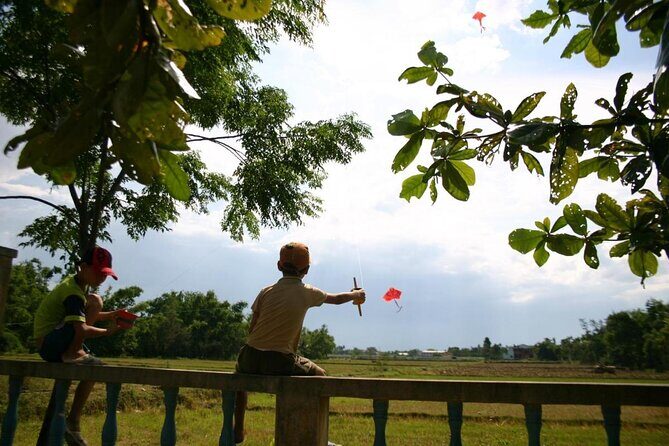
- Hands-on pottery at Thanh Ha: you’ll learn to shape cups, jars, bowls, and pots and take your souvenir home
- Rice flour food making: you’ll try making rice paper and noodles, then eat what you make
- Reed sleeping mats: you get to challenge yourself on a craft that’s still part of local home life
- War-era context with a guide: you’ll stop at a pagoda area plus a war monument and cemetery, with stories to add meaning
- Countryside cycling moments: chili gardens, corn, rice fields, and chances for photos (including water buffalo)
- Simple logistics included: bikes, a boat back to Hoi An Old Town, tickets, and bottled water are all part of the deal
Why bike through Hoi An craft villages on a small-group morning
Hoi An’s crafts aren’t museum pieces. They’re skills passed through families, often right inside the homes where people live and work. Doing this by bike makes the whole day feel like a tour of real routines rather than a checklist of stops.
This one is built for a small group, with a max of 10 people. That matters. You’ll have more time to ask questions, get guidance while you try each craft, and actually hear what your guide is saying.
The ride also hits a sweet spot: early hours, cooler air, and a leisurely tempo. One review noted about 15 km of easy cycling, which sounds right for a day that mixes workshop time, photo breaks, and a river boat at the end.
You can also read our reviews of more cycling tours in Hoi An


The 8:00 hotel pickup, bikes, and the ride plan that ends with a boat
Your day starts with an 8:00 pick-up from your hotel in Hoi An. From there, you’ll be set up with a bike and included boat transport back to Hoi An Old Town later in the tour, with bottled water provided along the way.
The schedule runs for about 5 hours. It typically ends around 1:30 pm, so you’re back in town early enough to keep exploring after. That’s good value if you’re the type who likes long mornings and then a slower afternoon with coffee, beach time, or lantern strolls.
You’ll also receive a mobile ticket, which usually makes the check-in part easy. If you’re trying to plan around tight vacation time, this format is the kind that doesn’t eat up your whole day just getting from place to place.
Thanh Ha Traditional Pottery Village: clay work you can take home
The first craft stop is Thanh Ha Traditional Pottery Village. This is one of those places where the skill looks simple until you try it. You’ll visit families who make materials used for buildings in older Hoi An homes, including bricks and tiles.
Then the real fun begins: you’ll learn how to make everyday pottery items like cups, jars, bowls, and pots. The tour doesn’t just point you at a finished product. You get to make something yourself, and you keep it as a souvenir.
A useful detail here: you’ll be learning in a living workshop setting, not a staged demo space. That means questions about tools, clay texture, drying, and workflow make more sense as you watch and practice. If you like crafts that have a story behind them, this first stop usually sets the tone for the whole morning.
Possible drawback: pottery takes focus. If you’re not into hands-on work or you’re easily frustrated by fine motor tasks, you might need patience with the learning curve.
Rice flour rice paper and noodles: a meal made during the ride
After pottery, you’ll bike to a local family that makes rice paper and noodles from rice flour. This part works well because it mixes craft and food in one smooth step.
You’ll learn how it’s made yourself, then you’ll eat what you make. That turns the experience into something practical, not just educational. You’ll go home with a better feel for why ingredients and timing matter when you’re working with rice flour.
Food-focused workshop stops can sometimes feel rushed, but this one is timed as a middle segment. That helps you stay engaged. You’re not just cycling to the next place; you’re stopping long enough to see the process and enjoy the result while the day is still moving at a comfortable pace.
Reed sleeping mats: the craft behind a familiar home item
Next comes a family that specializes in making sleeping mats from reeds. This is a great contrast after pottery. Clay is shaped and fired; reeds are cut, handled, and woven into something that’s meant for daily use.
You’ll have a chance to challenge yourself and make one. Even if your mat won’t be identical to what the family produces, the value is in learning the technique and understanding why certain steps exist.
This stop also helps you understand how Vietnamese craft isn’t only about art. It’s about practical materials—things that go into home life. If you’re trying to connect craft with culture, this is one of the most direct lessons on the route.






River ride to pagoda, war monument, and cemetery stories
Between workshops, the tour shifts into context mode. You’ll continue riding, cross through another river segment, and stop to see a pagoda area, a war monument, and a cemetery.
Here, your local guide shares stories about the Vietnam War. The goal isn’t to turn it into drama or a lecture. It’s to help you understand why certain places exist and what they mean in the lives of people around Hoi An.
If you’re the type who likes travel with meaning, this is often the emotional anchor of the day. It gives the craft villages weight—because history and hardship shape how skills are passed down and how communities rebuild.
A simple tip: keep your voice low and your attention on what the guide is explaining. These sites deserve a respectful vibe, even if the tour is otherwise hands-on and lighthearted.
Countryside cycling: chili gardens, corn, rice fields, and buffalo photos
After the history stop, the route continues across working countryside. You’ll cross areas like a chili garden, corn farming, and rice fields, with a chance to take photos of water buffalo.
This is the part that makes the bike ride feel like a real countryside loop instead of only short hops between workshops. It’s also where you can slow down and enjoy the morning rhythm—bike, stop, photo, move on.
One thing I like about this structure is that the scenic moments aren’t random. They’re connected to what you just learned: agriculture supports daily life, and daily life supports the craft traditions you’ve been practicing.
If you’re traveling with a camera, this is the section where it makes sense to keep it ready. You’ll get visual variety without having to force long detours.
Traditional carpentry village and the boat back to Hoi An Old Town
The final craft stop is the traditional carpentry village. You’ll see skilled carving work by local people, including wooden statues and fishing boat designs.
This ending matters because it shows craft isn’t limited to ceramics and weaving. Wood carving is another major Vietnamese skill set, and carpentry connects strongly to the region’s boats and everyday objects.
After the last village visit, you’ll get on the boat to return to Hoi An Old Town. That boat segment is a nice change from biking. It also helps break up the day so the tour doesn’t feel like one long stretch of movement.
By the time you’re back in the old town area around 1:30 pm, you’ll likely feel mentally refreshed. You can use the afternoon for a café stop, shopping, or just wandering the lantern streets while everything is still fresh in your mind.
Price and value: what $45 buys beyond the workshops
At $45 for about 5 hours, this tour prices itself as good value because several costs are bundled. You’re not just paying for access to one place.
In the included price you get:
- All visit tickets
- An experienced English-speaking guide
- Bikes and a boat
- Bottled mineral water
That bundle is the big deal. If you were to plan this yourself, you’d spend time arranging transport, finding multiple workshops that let you participate, and figuring out how to coordinate a smooth return trip. Here, the tour handles the logistics and focuses on the cultural learning.
Also, the hands-on craft parts raise the value. Pottery and mat weaving aren’t just sightseeing. They’re activities that produce something you can keep (at least for the pottery), plus food-making that ends with you eating your own rice paper or noodles.
One more value point: the small group size helps quality. When a day like this stays under 10 people, you’ll usually get clearer instruction and more interaction with your guide.
If you care most about seeing buildings, photos only, and zero participation, then this might feel like too much work. But if you want craft skills you can understand with your hands, the price makes sense.
What to bring and how to handle a craft-and-bike day
You’ll bike early in the morning and spend time inside family workshops. Plan for both.
Bring:
- A camera or phone for village details, fields, and water buffalo photo moments
- Sun protection (the day runs outdoors before the afternoon)
- Comfortable shoes that can handle workshop floors
- A light layer in the morning, since early hours can feel cooler
You already get bottled water, so you don’t have to load up. Still, it’s smart to pace yourself. The tour is designed as an easy cycling morning at a leisure pace, so it shouldn’t feel like a workout camp—but you are riding between stops.
If weather looks shaky, keep flexible expectations. This experience requires good weather, and the operator may offer a different date or refund if conditions cancel it.
Who should book this craft-village bike tour
This is a strong fit if you want Vietnamese culture that feels practical and human.
Book it if you:
- Like hands-on learning more than watching
- Want to try multiple crafts in one morning: pottery, rice noodle and rice paper making, and reed mat weaving
- Appreciate a guide who ties daily life to bigger historical context, including Vietnam War stories at key sites
- Prefer a small group experience (up to 10 people)
It’s also a good choice for people who want an active day without intense cycling. One review highlighted easy cycling at a leisurely pace, which matches the flow: bike, workshop, bike, workshop, then boat back.
If you dislike any sort of making-by-hand activity, you might enjoy the scenery and guide storytelling more than the crafting sections. But even then, the food and craft context can make the tour more memorable than a plain ride.
Should you book this Hoi An bike-and-craft tour with Sun Hoi An Tours?
If you’re deciding whether this is worth your time in Hoi An, I’d say yes—if you’re open to participating. The value isn’t only the places. It’s the mix of making, eating, and understanding: clay skills at Thanh Ha, rice flour cooking with the family, reeds woven into a sleeping mat, and then carpentry craftsmanship that rounds the day out.
I’d skip it only if you strongly prefer passive sightseeing. The schedule is active, with learning moments at every stop. The payoff is that you’ll leave with skills you understand, photos you can pair with meaning, and pottery you can keep.
One more reason to book early: the tour starts around 8:00 and ends about 1:30, so you keep your afternoon free. You can turn the rest of your day into your own Hoi An time, instead of feeling locked into another full-day plan.
FAQ
What is the duration of this biking craft tour in Hoi An?
The tour lasts about 5 hours (approximately), with pick-up at 8:00 am and completion around 1:30 pm.
Does the tour include hotel pickup and a bike?
Yes. You’ll get picked up from your hotel at around 8:00 am, and bikes are included for the cycling portion.
What activities are included during the craft village visits?
You’ll visit traditional pottery-making in Thanh Ha, learn rice paper and noodle making from rice flour, and try making sleeping mats from reeds. The route also includes traditional carpentry and stops for sightseeing and stories.
Is an English-speaking guide included?
Yes. The tour includes an experienced English-speaking guide.
What is included in the price of $45?
Included items are all visit tickets, an English-speaking guide, bikes and boat, and bottled mineral water.
What happens if weather is poor?
This experience requires good weather. If it’s canceled due to poor weather, you’ll be offered a different date or a full refund.