REVIEW · HOI AN
Half-Day Hoi An Countryside and Villages Tour by Bike
Book on Viator →Operated by Dragon Travel Viet · Bookable on Viator
A bike ride through Hoi An’s working countryside beats the usual sightseeing circuit. This half-day tour mixes traditional crafts with real daily life in villages, at a slow pace you can actually enjoy. I especially like that you choose a morning or afternoon start, and that the route is built around hands-on local production like silk, pottery, and boat-making. One thing to consider: it’s a mix of cycling plus short transfers by local transportation, so you’ll want a little comfort with time on a bike and getting on/off boats or vehicles.
What makes it feel personal is the guide. At least one standout guide is Kim, who’s described as attentive, accommodating, and flexible—exactly what you want when the day’s plan includes multiple villages and a few different transport modes. With a private-group format (only your group), it also tends to feel less rushed than you’d expect from a 4 to 5 hour tour. If you’re hoping for nonstop pedaling the whole time, you may find the rhythm more “varied local moments” than “continuous cycling.”
In This Review
- Key reasons to book this Hoi An countryside bike tour
- The big picture: why this tour works for first-time Hoi An visitors
- Start right: bike pickup and getting oriented around Hoi An
- Stop 1: Thang Loi silk—recognizing real silk the practical way
- Stop 2: Thanh Ha pottery village—watch the making of common kitchenware
- Stop 3: Kim Bong carpentry—cross the Song Thu delta and see boat woodwork
- Stop 4: Cam Kim Island—buffalo grazing, rice wine, and sedge-mat weaving
- Stop 5: Tra Que Vegetable Village and lunch—organic growing with riverweed fertilization
- What’s included in the price—and why $49.99 can make sense
- A realistic sense of pacing: what a 4–5 hour day feels like
- Who this tour suits best
- Should you book the Half-Day Hoi An Countryside and Villages Tour by Bike?
- FAQ
- How long is the Half-Day Hoi An countryside and villages bike tour?
- Is pickup included?
- Do I choose between a morning and afternoon departure?
- What village stops are included?
- Is lunch included?
- What’s included in the tour price?
- What are the main things not included?
- How much does it cost?
- Is this tour private?
- What’s the minimum number of people per booking?
Key reasons to book this Hoi An countryside bike tour
- Morning or afternoon timing so you can match the route to your day
- Craft stops with real recognition and process, from silk to pottery and woodwork
- Village-to-village travel that includes river-delta crossings using local transport
- Cam Kim Island farm life, including buffalo grazing and rural weaving activity
- Tra Que lunch in the vegetable village, where you’ll learn about riverweed fertilization
The big picture: why this tour works for first-time Hoi An visitors
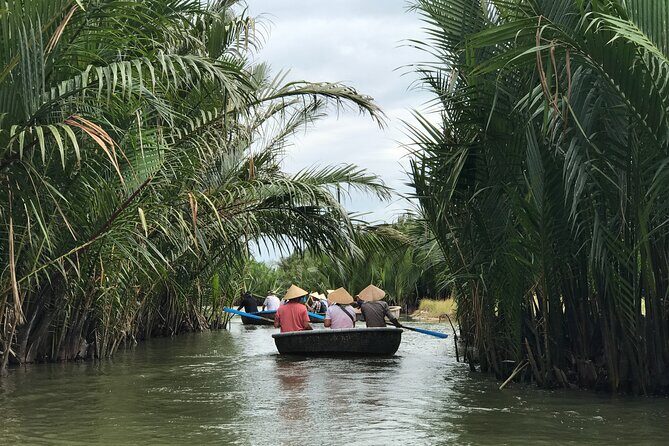
Hoi An is famous for its old town, but the real charm starts when you leave the center. This tour is designed for that exact shift: you get out into the countryside and villages around Hoi An without needing to plan transportation, figure out what’s worth seeing, or worry about how long everything takes.
The value here is the mix. You’re not just looking at pretty scenery. You’re seeing how products are made and how people keep their traditions alive—silk production, pottery forming, carpentry for wooden boats, rice wine distillation in a local family setting, and organic vegetable growing in Tra Que. Those are the kinds of stops that add meaning to your photos, because you understand what you’re seeing.
Also, the pacing is realistic. It’s only 4 to 5 hours. That length is long enough to feel like you left the tourist bubble, but short enough that you’re not wiped out afterward. If you’re trying to fit a productive day into a tight schedule, this half-day format is a practical choice.
You can also read our reviews of more cycling tours in Hoi An


Start right: bike pickup and getting oriented around Hoi An
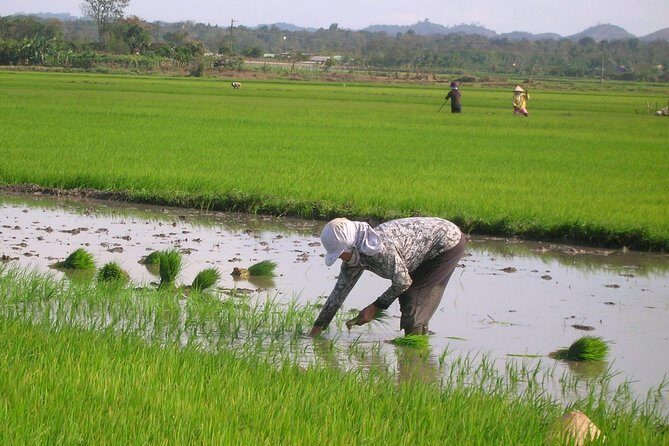
The tour begins with pickup and bike orientation. Your local guide comes to get you and gives context as you set off—history and culture of the city, explained in a way that helps everything make sense later. Even if you arrive in Hoi An already having read a little, I think this “first hour” kind of orientation matters, because it gives you the language for what you’ll notice around you.
If you’re the type who likes to understand where you are before taking a hundred photos, you’ll appreciate this. It also helps you feel more confident on the road, since your guide is effectively your moving reference point.
A practical note: the tour is private, so you’re not stuck in a big group with different comfort levels. That matters when you’re bouncing between villages and transport modes.
Stop 1: Thang Loi silk—recognizing real silk the practical way
Silk is one of Hoi An’s signature exports, and Thang Loi is where you start to understand why. This stop is short (around 20 minutes), but it’s focused on recognition—learning what real silk is and what to look for. That’s the kind of skill you can use right after the tour when you’re shopping, or simply when you’re trying to separate “pretty fabric” from “actually good silk.”
What I like about starting here is that it sets the theme early: you’re going to encounter multiple crafts today, and silk gives you a baseline for how village-scale production becomes a product.
The main drawback is time. It’s not a full production workshop day. If you want a deep, step-by-step textile education, this is likely more of an introduction. But as a first taste that helps you make smarter choices later in Hoi An, it’s a smart use of your limited hours.
Stop 2: Thanh Ha pottery village—watch the making of common kitchenware
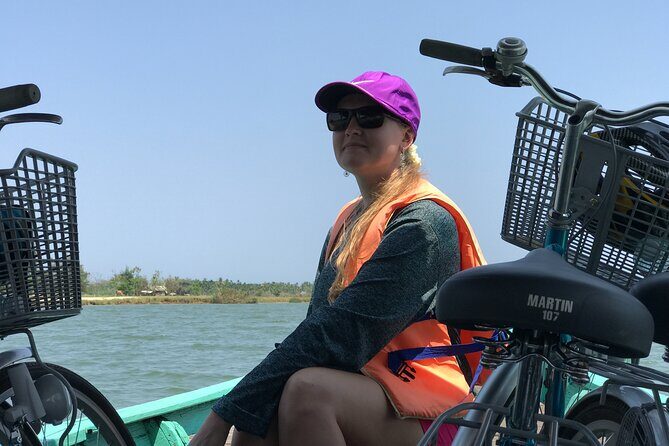
Next up is Thanh Ha Pottery Village. You cycle over and get a structured look at how pottery items are made, with an emphasis on practical forms such as vases, pots, kettles, and cooking pots. You’ll spend about 40 minutes here, with admission included.
This is the stop that tends to reward curiosity. Pottery can look simple from a distance, but when you see the steps involved, you start noticing details—shapes, firing needs, and how the final objects relate to everyday life. And because the items listed are things people actually use, it connects craft to daily needs rather than treating the village as a stage set.
If you’re sensitive to crowds or fast-moving demonstration styles, you’ll want to keep an eye on how your guide manages the pace. The advantage is that this is a small-tour setup, so you typically won’t feel like you’re being herded.
Stop 3: Kim Bong carpentry—cross the Song Thu delta and see boat woodwork

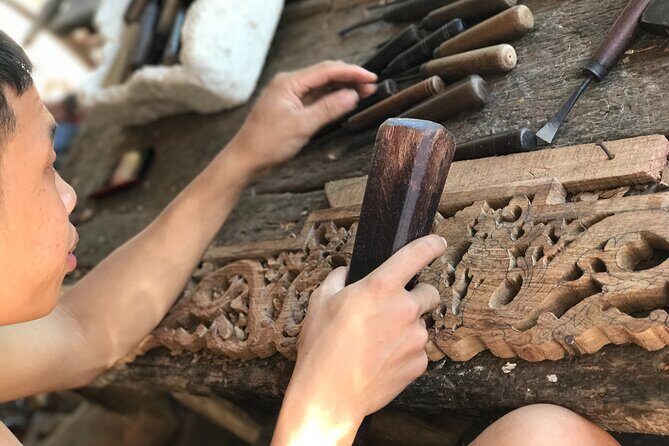
Carpentry in a river delta context hits differently. At Kim Bong Carpentry Village, you’ll visit the woodcraft side of the region’s working life—especially famous for making wooden boats (including fishing boats and tourist boats). It’s a highlight if you like practical engineering and everyday labor more than museum-style displays.
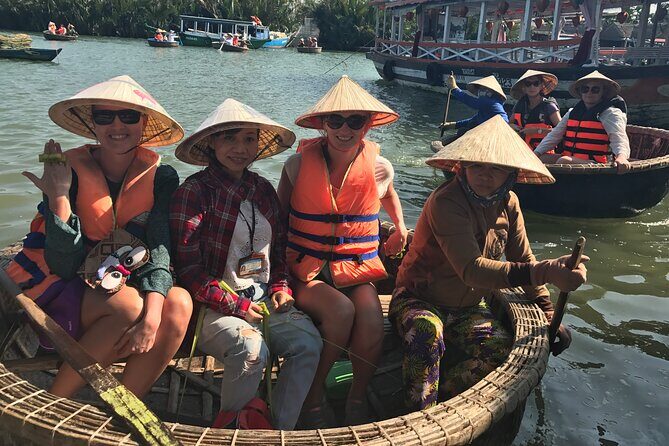
You also cross the islands on the Song Thu river delta, using local transportation. Depending on the route that day, that can mean a boat crossing or a local bridge crossing. Admission is included, and the stop lasts about 1 hour.
Here’s why this stop is more valuable than it sounds: boat-making ties together the geography (waterways), the economy (fishing and tourism), and the craft (wood joining and durability). Even if you don’t know carpentry terms, you’ll understand the purpose immediately because boats are built to work.
Potential consideration: you should be comfortable with light switching between transport types. You’re not just staying on a bike. You’ll hop between bike and local transit modes, and the flow will depend on the day’s crossing logistics.
You can also read our reviews of more tours and experiences in Hoi An




Stop 4: Cam Kim Island—buffalo grazing, rice wine, and sedge-mat weaving
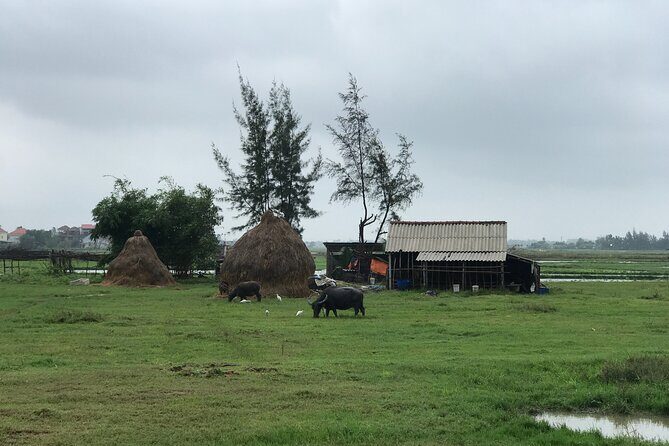
Cam Kim Island is where the tour slows down into countryside rhythms. First, you pass through green fields with buffalo grazing—an easy-to-love moment that makes the countryside feel real, not staged. Then you visit a rice wine distillery in a local family setting.
This is about 1 hour total at this stop, and it’s included without an extra admission charge.
After the rice wine, you also see weaving work using sedge plants to make mats. That’s a nice pairing: you get one “drink product” and one “household product” that both come from local materials and local knowledge.
I like that Cam Kim gives you variety without feeling random. You’re building a picture of how rural families create multiple income streams and keep practical skills alive—food, drink, and everyday goods.
If you’re someone who prefers purely scenic stops over craft demonstrations, you might wish there were more time for photos in the fields. But if you want the story behind rural life, this stop earns its place.
Stop 5: Tra Que Vegetable Village and lunch—organic growing with riverweed fertilization
Tra Que is well-known for organic vegetables. The tour connects the “how” to the taste. You’ll learn about how vegetables are fertilized using riverweed, which helps explain why the produce here can have a special flavor. It’s the kind of detail that makes your later meals feel smarter.
You’ll also have lunch at a nice place here. Admission is included, and you’ll spend about 45 minutes before finishing the tour back at your hotel.
This is the most relaxed stop of the day. It gives you time to recharge, eat well, and digest what you’ve seen: silk, pottery, boat carpentry, rice wine, and weaving—then vegetables and lunch to close the loop.
One small consideration: lunch time can affect pacing. If you have an evening commitment, tell your guide and confirm the finish time expectations at the start.
What’s included in the price—and why $49.99 can make sense
At $49.99 per person, this half-day tour is priced for people who want structure without spending hours planning. The included items matter:
- Tour guide and bike
- Transfers using bus, boat, and basket boat (as needed for river and island crossings)
- Lunch (and the listing notes lunch/dinner as part of what’s included)
- Entrance fees
- Bottle water
When entrance fees and transport are bundled, your main variable cost becomes personal spending and optional tipping for your guide. That can make budgeting easier than booking separate attractions.
You’re also getting a private-group format, which can improve comfort and attention. If you value having a guide who can adjust pace—like the guide Kim described as attentive and flexible—this format can feel worth it, even for a short day.
A realistic sense of pacing: what a 4–5 hour day feels like
This tour is designed to fit into a half day, which means you’ll move through several village experiences without turning any one stop into a full-day project. You’ll spend time cycling, then transition to specific craft or life stops, then cycle again, then eat.
If you’re used to long tours, you might feel like “one hour isn’t enough.” But if you’re the type who likes variety and wants a quick, meaningful introduction, the pacing is a strength. You’ll leave with more context than you’d get from just wandering streets in town.
Also, the morning or afternoon departure choice is useful. The right timing helps you avoid harsh heat and helps match your energy level after or before other sightseeing.
Who this tour suits best
This experience is a strong fit if you:
- Want authentic local crafts more than just landmarks
- Like countryside context around Hoi An, not only the old town
- Prefer a guide-led route that handles village logistics and entry fees
- Are traveling as a small group and want a more personalized day
It may be less ideal if you:
- Want a full-day countryside cycling workout with minimal stops
- Are looking for large museums or heavily curated sightseeing
- Have limited tolerance for short transitions between bike and local transport modes
Should you book the Half-Day Hoi An Countryside and Villages Tour by Bike?
I think you should book this tour if your goal is to understand how Hoi An’s region works—silk, pottery, boats, farm products, and rice wine—within a manageable half day. The combination of countryside biking and multiple craft villages is a smart value play, especially because entrance fees and key transfers are included.
If you’re the kind of traveler who loves one or two stops deeply, this might feel a bit fast. But for first-timers who want variety, a real taste of village life, and a guide who can keep the day smooth, it’s a solid choice.
FAQ
How long is the Half-Day Hoi An countryside and villages bike tour?
It runs about 4 to 5 hours.
Is pickup included?
Yes, pickup is offered, and the local guide comes by bike to start the experience.
Do I choose between a morning and afternoon departure?
Yes, you can choose either a morning or afternoon start time.
What village stops are included?
You’ll visit Thang Loi silk, Thanh Ha pottery village, Kim Bong carpentry village, Cam Kim Island (including a rice wine distillery and sedge-mat weaving), and Tra Que Vegetable Village.
Is lunch included?
Yes, lunch is included, and it’s served at Tra Que Vegetable Village.
What’s included in the tour price?
Included items are the tour guide/bike, transfers using bus/boat/basket boat, lunch or dinner, entrance fees, and bottle water.
What are the main things not included?
Personal fees and tips for the tour guide are not included. A car/bus on request is also not included.
How much does it cost?
The price is $49.99 per person.
Is this tour private?
Yes, it’s private, so only your group participates.
What’s the minimum number of people per booking?
A minimum of 2 people is required per booking.