REVIEW · HOI AN
Hoi An bicycle tour to beautiful countryside
Book on Viator →Operated by Billy Vietnam Travel · Bookable on Viator
Tra Que beats tour-bus days. This Hoi An bicycle tour feels personal fast because you pedal into real working farmland, not a staged village set. I like the fact that you get hands-on farm tasks (hoeing, gathering riverweed, transplanting, watering), and I also like the private format that keeps the pace calm and conversational, with guides such as Tham earning consistent praise.
One thing to consider: this is best when the weather cooperates. With rural routes and early start options (morning or mid-afternoon), heat and sun can be real, and the tour requires good weather.
You’ll also get the practical bits that matter—bicycle, guide, water, admissions, and a light lunch—so you’re not juggling extras while you’re trying to enjoy the ride.
In This Review
- Key highlights worth your attention
- Tra Que vegetable village: where farm work becomes the main event
- The bike ride through Hoi An’s farmland: flat, rural, and camera-friendly
- Hands-on tasks: hoeing, riverweed, transplanting, and watering
- Local crafts and food stops: rice noodle, sleeping mats, rice wine, carpentry
- Timing and pace: mornings, afternoons, and what “3 hours” really feels like
- Private tour value: what $38 buys you in real terms
- Who should book this bike tour (and who might skip it)
- Practical tips for a smoother day in the Hoi An heat
- Should you book the Hoi An bicycle tour to Tra Que?
- FAQ
- What is included in the Hoi An bicycle tour price?
- How long does the tour last?
- What time does the tour start?
- Is pickup offered?
- Is the tour private?
- What do you do at Tra Que vegetable village?
- What happens if the weather is bad?
Key highlights worth your attention
- Tra Que vegetable village hands-on work: hoeing soil, gathering riverweed, transplanting, and watering
- Countryside cycling with wildlife moments: ducks, cows, birds, and water buffalo show up on the route
- Rice-field photo and riding time: you may get a chance to ride in the rice fields
- Local products along the way: rice noodle, sleeping mats, rice wine, and carpentry stops
- A private feel that can turn 1:1: if your date has few sign-ups, the guide pace stays flexible
Tra Que vegetable village: where farm work becomes the main event
Tra Que is one of those places where you can tell the difference between watching farming and doing farming. Your bike ride carries you into the vegetable-growing area, and then the focus shifts from pedals to participation.
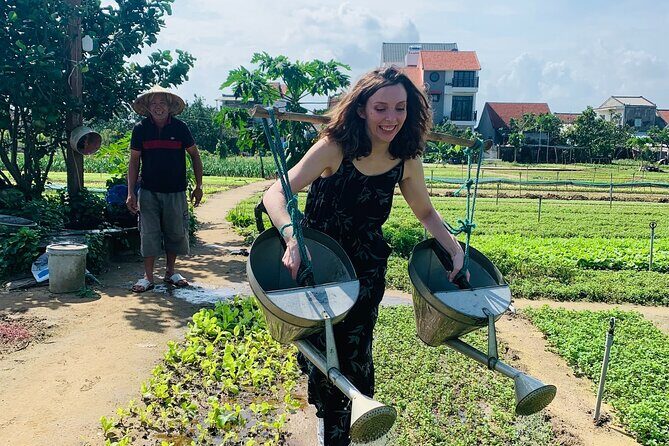
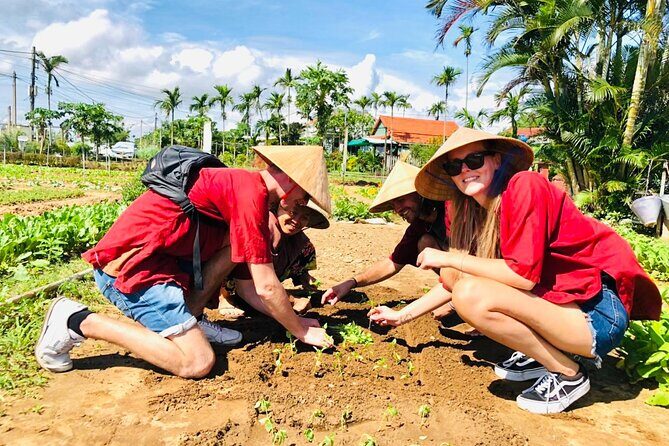
What makes this special is the work itself. Instead of just touring neatly arranged rows, you’re invited to help with tasks like hoeing soil and transplanting vegetables. You may also take part in gathering riverweed and watering the crops. Even if you’re not a gardening person, these are the kinds of activities you can actually try without needing special skills.
This is also where the guide’s role matters. A good guide helps you understand what you’re seeing—why riverweed matters, how daily watering fits into growth, and what herb-and-vegetable farming looks like beyond the finished product you buy later. Guides like Tham are repeatedly praised for making the experience feel relaxed and personal.
The payoff: you leave with a better sense of what keeps this place running, not just a pile of photos.
You can also read our reviews of more tours and experiences in Hoi An.
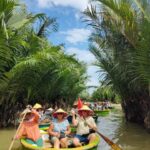


The bike ride through Hoi An’s farmland: flat, rural, and camera-friendly
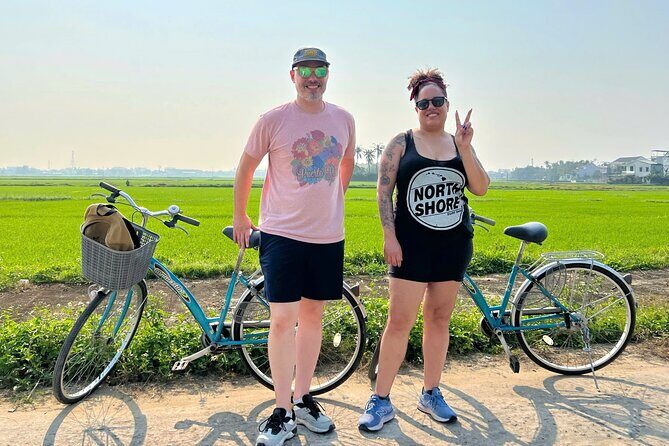
After the Tra Que stop, you keep cycling along the countryside where the scenery changes often enough to stay interesting. This is a bike tour built for real pace, not racing. Expect rural roads and lanes where farm life shows up in the background—sometimes right beside you.
From the animal sightings alone, this route has an easy “wow” factor. Ducks, cows, birds, and water buffalo are all part of the rural scenery you may see along the way. If you like photography, you’ll appreciate that you’re not stuck at a single viewpoint. You’re moving, so the light and angles change naturally.
One detail to know: you may get opportunities related to rice fields, including the chance to ride in them. That can turn a normal countryside ride into something more memorable—because the rice field isn’t just scenery; it becomes part of the path.
That said, don’t expect city cycling smoothness every minute. Rural routes can be uneven in places. The good news is that this tour is described as manageable, with roads generally considered easy to ride. Still, treat it as countryside riding, not an urban bike lane.
Hands-on tasks: hoeing, riverweed, transplanting, and watering
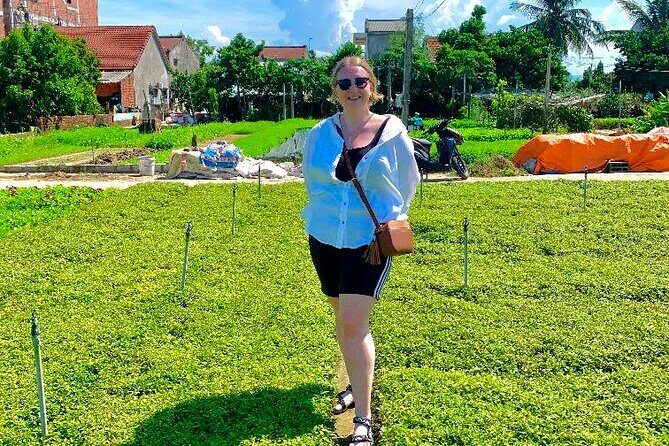
Let’s talk about what you’ll likely do at Tra Que, because that’s the heart of the value.
Here’s how the farm activities typically break down:
- Soil prep (hoeing): you help loosen and prepare ground for planting
- Planting (transplanting): you work with seedlings and place them in the right spot
- Gathering riverweed: you learn what’s collected and why it’s used in farming life
- Watering: you practice the everyday routine that keeps vegetables growing
These tasks are short enough to be doable, but meaningful enough that you feel connected to the place. And they’re also a great way to meet locals in a non-performative setting. You see how farm work actually happens—steady, practical, and repeatable.
If you’re the type who learns best by doing, this tour clicks. If you mainly want resting time on a scenic ride, you might feel the day is a bit more interactive than expected. The tour is still paced for fun, but it’s not a passive sightseeing circuit.
Local crafts and food stops: rice noodle, sleeping mats, rice wine, carpentry
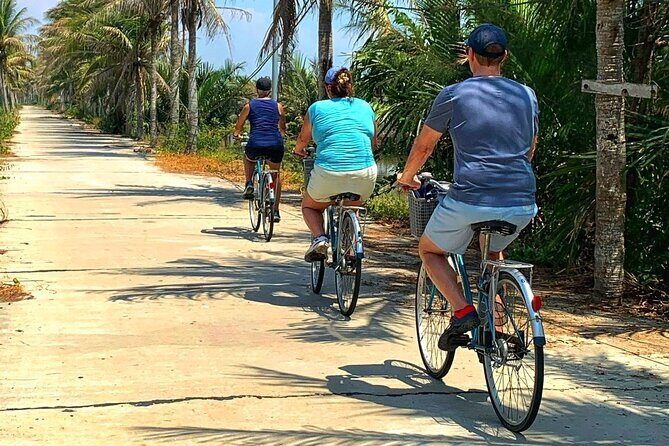
Hoi An’s countryside isn’t only vegetables and rice. Along the route, you may get a chance to witness local products being made and sold—small-scale, everyday production that supports local families.
What you may see includes:
- Rice noodle: the kind of food that shows up at meals, but often feels mysterious if you only buy it sealed
- Sleeping mat: a practical item with handmade value
- Rice wine: a look into local fermentation and production
- Carpentry stuffs: woodworking in the real world, not just as a photo prop
One review experience also described a food stop where banh mi and beer were included as part of the included meal. The tour listing specifically confirms a light lunch, but it doesn’t spell out every item. So plan for a solid included lunch, and if the day adds more than that, consider it a bonus.
Why this matters: these stops turn a cycling day into a “how things are made” day. You get context for what you’ll eat and buy around Hoi An after the tour ends.
Timing and pace: mornings, afternoons, and what “3 hours” really feels like
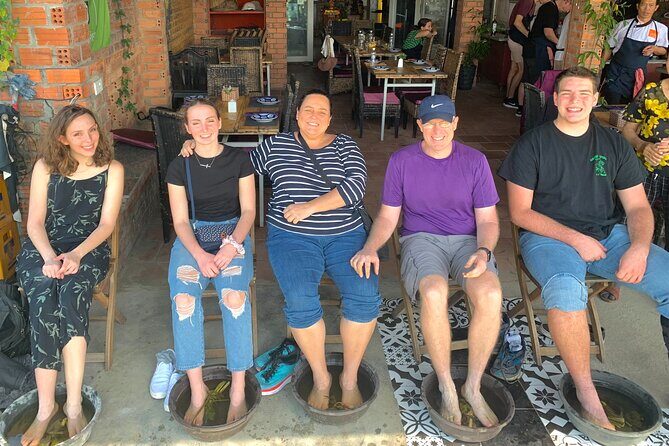
The official duration is listed at about 3 hours, and the tour runs with early-morning and afternoon options. Start times you’ll see include:
- Morning pickup around 7:00 am or 8:00 am
- The tour meeting time listed at 8:00 am
- Afternoon start around 14:00 or 14:30
There’s also a “after lunch ride back” flow built into the schedule. That suggests you’re not just doing a quick hop outside town and back. The ride is structured so you can eat and do the Tra Que work without feeling like you’re constantly rushing.
In practice, your day length can feel different depending on how long the farm activities take, how your group pace moves, and whether any optional segments happen along the route (like extra scenic stops). Some experiences are described as feeling more like a longer countryside outing than a short sprint.
My advice: if you’re planning other activities the same day, build in a buffer. Morning tours are easiest if you want the rest of your day free. Afternoon tours can be perfect if you want to sleep in or you’d rather avoid the strongest morning sun.


Private tour value: what $38 buys you in real terms
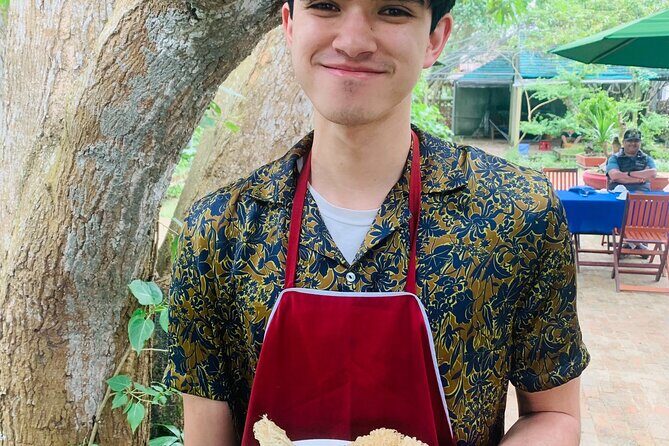
The price is $38 per person, and on paper, it’s easy to compare to other tours in Hoi An. What makes this one feel like good value is what’s bundled.
Included:
- Tour guide
- Bicycle
- Bottled water
- Light lunch
- All admission costs
And the tour is private/activity-only, meaning your group rides together rather than mixing with strangers.
If you’ve ever done a countryside excursion where you pay for transportation and then get hit with extra small fees, this one is refreshingly straightforward. You pay once, then you’re mostly focused on cycling and the farm experience.
Also, the private format can shift the quality of the day. When the group is small, your guide can slow down for questions and adjust the pace if you want more photos or more hands-on time.
For $38, you’re paying for access to a real working farm day plus guiding. That’s the kind of value that shows up in how much you learn, not just how far you ride.
Who should book this bike tour (and who might skip it)
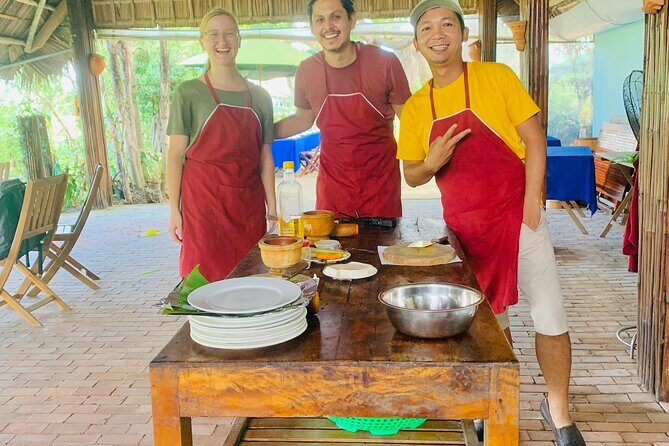
This tour is a strong fit if you want:
- A hands-on cultural experience in a working vegetable area
- A countryside bike ride without technical biking skills
- Wildlife and farm scenery beyond the main tourist strip
- A guide-led day with clear structure: Tra Que work, countryside riding, local product glimpses, lunch, then back
It’s less ideal if you:
- Prefer to keep your hands fully clean and only watch from a distance
- Have mobility issues that make farm tasks uncomfortable
- Want a purely relaxing ride with minimal participation
The good part is that the tour is designed for normal visitors. You’re active, but it’s not described as extreme cycling.
Practical tips for a smoother day in the Hoi An heat
Even with water included, come prepared. The biggest comfort factor is sun and heat, especially if you choose morning timing.
Bring:
- Sunscreen and a hat
- Light breathable clothes
- Closed-toe shoes you don’t mind getting a little dusty
If you’re doing the hands-on farm tasks, expect to get slightly dirty. It’s part of the point. Plan to change your top layer after.
Also, wear something you can move in. Hoing soil, transplanting, and watering are all “hands busy” activities. Comfort beats fashion here.
Should you book the Hoi An bicycle tour to Tra Que?
Yes, if your idea of a great Hoi An day includes more than temples and old streets. This tour delivers something practical: time with local farming life, active participation, and a countryside ride that’s built for photos and real context.
I’d especially book it if you like structured days with a strong “why it matters” component. The mix of farm work at Tra Que plus product and craft glimpses gives you plenty to talk about after the ride ends.
Skip it only if you want a totally passive, fully effortless experience. This is hands-on, and that’s why it’s worth it.
FAQ
What is included in the Hoi An bicycle tour price?
The price includes the tour guide, bicycle, bottled water, a light lunch, and all admission costs.
How long does the tour last?
It’s listed as about 3 hours (approx.).
What time does the tour start?
The meeting time is listed as 8:00 am, and there are also early-morning departures around 7:00 am or 8:00 am. Afternoon excursions start around 14:00 or 14:30.
Is pickup offered?
Pickup is offered in the Hoi An area.
Is the tour private?
Yes. It’s a private tour/activity, so only your group participates.
What do you do at Tra Que vegetable village?
You ride to Tra Que and then take part in farm activities such as hoeing soil, gathering riverweed, transplanting, and watering vegetables, alongside meeting locals working in herb and vegetable gardens.
What happens if the weather is bad?
The experience requires good weather. If it’s canceled due to poor weather, you’ll be offered a different date or a full refund.