REVIEW · HOI AN
Hoi An Cooking Class with Local Chef
Book on Viator →Operated by Happy Tour · Bookable on Viator
A banh xeo lesson in just three hours. It’s a hands-on Hoi An cooking class with a friendly local chef, where ingredients are set out and you learn how to pick the best ones and what they’re called in Vietnamese. Before you eat, you’ll cook popular dishes like bánh xèo, spring rolls, papaya salad, and a clay-pot main served with steamed rice.
I love the way the chef handles a lot of the groundwork while still teaching you the important choices, especially the ingredient names in Vietnamese. I also like the small group setup (max 10 travelers), which keeps the pace friendly and question-friendly instead of rushed. One consideration: pickup and drop-off aren’t included, and drinks cost extra, so plan for that added logistics and spend.
In This Review
- Key points to know before you go
- Why this Hoi An cooking class feels local fast
- Starting at Villa Hoa Vừng in Cẩm Thanh
- The two-hour cook-and-learn format: chef prep plus your technique
- What you cook: bánh xèo, papaya salad, fried spring rolls and more
- Bánh xèo (rice pancake with fresh salad)
- Papaya salad with shrimp cracker
- Fried spring roll
- Chicken with lemongrass
- Seasonal fresh fruits
- The clay-pot main and steamed rice: comfort food pacing
- Lunch or dinner: you actually get to eat what you cook
- Price and value: $22 for a chef-led 3-hour meal lesson
- Vegetarian options that actually change ingredients
- Evening sessions: why the menu can change
- Who this works best for (and who should set expectations)
- Should you book this Hoi An cooking class?
- FAQ
- How long is the cooking class?
- What kinds of dishes will I learn to make?
- Is lunch or dinner included?
- Is pickup or drop-off included?
- Are drinks included?
- How big is the group?
- Can vegetarians join?
- How does the night session work?
- What is the cancellation policy?
Key points to know before you go
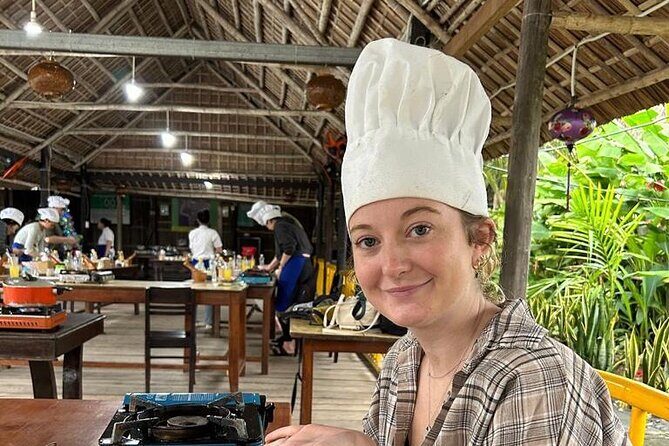
- A chef-guided, 2-hour cooking block inside a total ~3-hour experience
- Hands-on Vietnamese classics such as bánh xèo, papaya salad, and fried spring rolls
- Ingredient know-how, including how items are named in Vietnamese
- Lunch or dinner included, plus seasonal fresh fruit
- Vegetarian-friendly adjustments using veggies like tofu, mushrooms, and eggplant
Why this Hoi An cooking class feels local fast
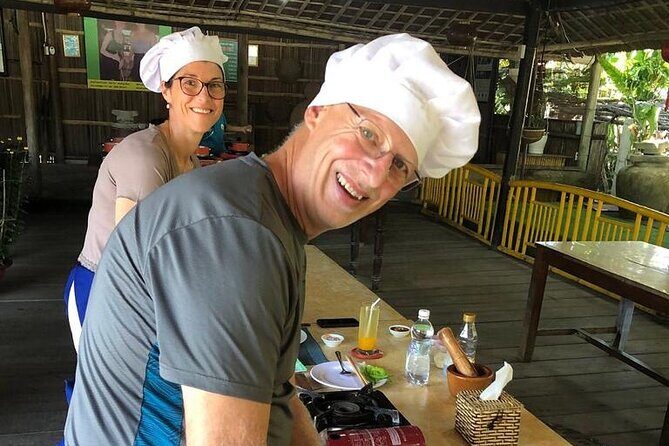
Hoi An is famous for lanterns and old-town strolls, but eating is where the culture really sticks. This class is built around learning a handful of everyday dishes you’d actually find in Vietnamese homes—then sitting down to enjoy them as your meal.
What makes it work is the balance. Your chef prepares ingredients so you aren’t stuck hunting down basics, yet you still learn what matters: picking good components and understanding their Vietnamese names. That second part is sneaky-useful. It helps you shop with more confidence later, or even order food without sounding lost.
The menu focus is also practical. You’re not studying cooking theory for three hours. You’re making the kinds of dishes that show up across Vietnam—crispy fried items, tangy salads, and comforting rice-centered mains.
You can also read our reviews of more cooking classes in Hoi An


Starting at Villa Hoa Vừng in Cẩm Thanh
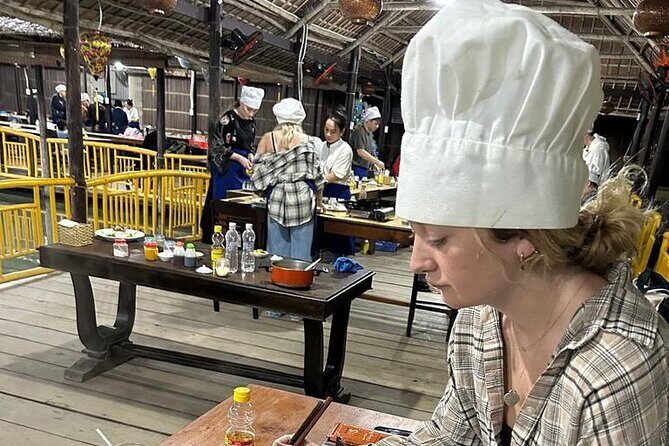
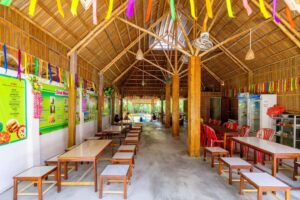
You begin at Villa Hoa Vừng (Bartonia Villa) in Cẩm Thanh. The address is given as V9M9+C6R, Cẩm Thanh, Hội An, Quảng Nam, Vietnam. The good news: it’s near public transportation, so you’re not locked into a private vehicle just to get there.
Ending is simple too. This experience finishes back at the meeting point, which makes it easier to plan your evening in Hoi An afterward. The whole schedule is tight, so this back-to-start setup helps you avoid the “now what?” scramble.
If you’re picturing a big, flashy cooking show, calibrate expectations. The format is more like a guided home-style lesson (the cooking happens with you, not just to you). That’s part of why the experience earns such strong satisfaction overall.
The two-hour cook-and-learn format: chef prep plus your technique
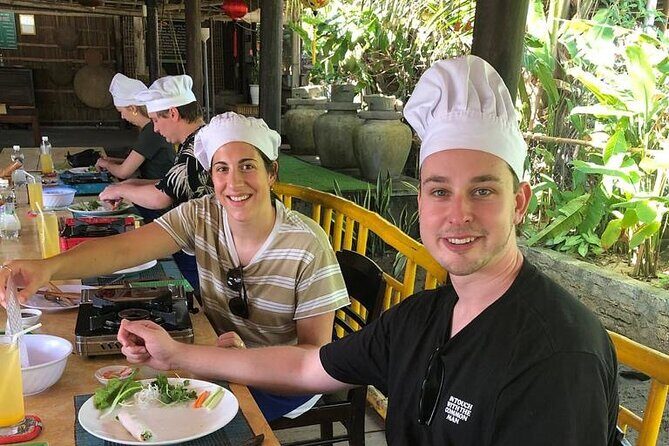
The class runs for about three hours total, with two hours of cooking. That’s a sweet spot. Long enough to actually learn multiple dishes, short enough that you’re not exhausted by the end.
Here’s how the teaching is structured:
- Your chef prepares all ingredients
- The chef explains what you’re using and why
- You get guided steps as you cook, not just a lecture
A detail I really like: the chef doesn’t just tell you what to do. You also learn the interesting Vietnamese names for ingredients. It sounds small, but it changes how you remember the dishes. Instead of thinking of papaya salad as a generic “salad thing,” you start to connect it to the language people use every day.
Group size matters, too. With a max of 10 travelers, it’s easier to see what’s happening and keep your questions from getting lost. That’s the kind of difference you feel immediately when you’re frying, mixing, and timing components at once.
What you cook: bánh xèo, papaya salad, fried spring rolls and more
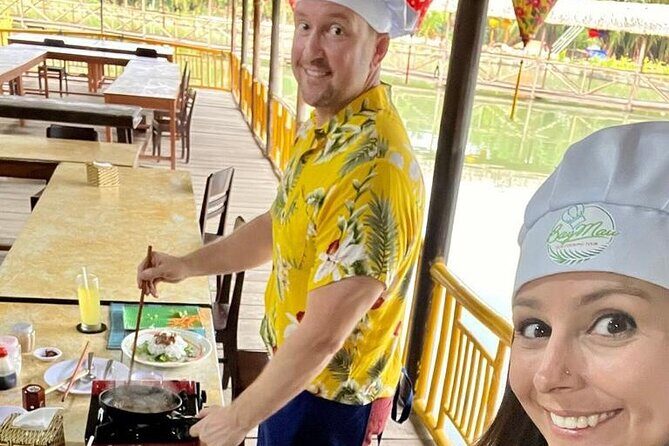
This is the core menu you can expect in the class format, with seasonal fresh fruit as part of the meal. You’ll likely work through a sequence that includes both crispy and fresh elements—so you don’t leave only thinking about one style of cooking.
Bánh xèo (rice pancake with fresh salad)
Bánh xèo is one of the best “learn fast” dishes because it teaches technique. You’re dealing with a thin batter-style pancake, plus toppings and a fresh side. Expect the mix of textures: crisp edges and softer pancake layers paired with bright salad flavors.
The class also highlights the idea of balance—especially when you’re pairing the cooked component with fresh greens and herbs. That balance is what makes bánh xèo feel like a meal, not just a snack.
You can also read our reviews of more tours and experiences in Hoi An




Papaya salad with shrimp cracker
Papaya salad is the flavor lesson. It leans on tang, salt, sweetness, and heat. The class menu includes shrimp cracker, which adds crunch and keeps the dish from tasting one-note.
If you’ve only had papaya salad outside Vietnam, this is where you’ll start to understand how the flavors are built.
Fried spring roll
You’ll make deep-fried spring rolls in this class. This is where the “hands-on” part really shows. Frying can be intimidating at home, but in a guided setting you can focus on the process and the timing.
You also get the satisfaction of seeing something crisp come together from simple steps—wrap, fill, fry, and plate.
Chicken with lemongrass
This dish gives you an aromatic counterpoint to the fried and tangy items. Lemongrass brings a recognizable fragrance that makes the whole plate feel Vietnamese right away, even if you’re new to Vietnamese cooking.
Seasonal fresh fruits
You’ll finish with fruits as part of the lunch/dinner. It’s a simple ending, but it matters. After fried and acidic dishes, fruit helps reset your palate.
The clay-pot main and steamed rice: comfort food pacing
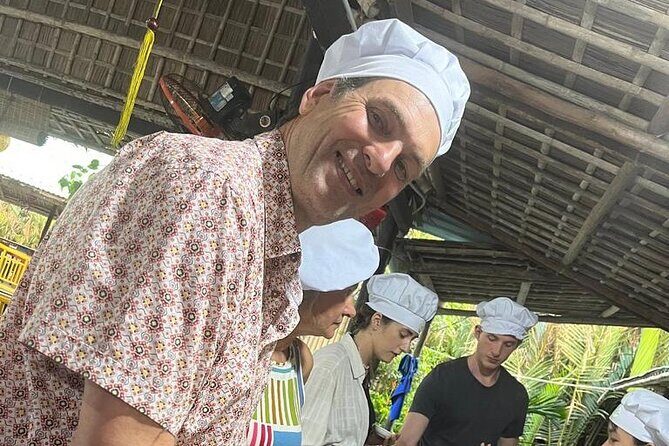
Beyond the classics above, you’ll also cook a clay-pot main such as pork or fish, served with steamed rice. The clay pot matters because it signals how Vietnamese comfort food is meant to be eaten: warm, savory, and meant for the rice.
You’ll also get practice coordinating timing. While one dish is finishing, another is being prepared. That coordination is exactly what you want from a cooking class—because it teaches you the rhythm, not just the recipe.
If you’re curious what you’ll end up with, know that the clay-pot option is flexible in the sense that it can be pork or fish. The class menu gives the structure, but the exact choices can vary by session.
Lunch or dinner: you actually get to eat what you cook
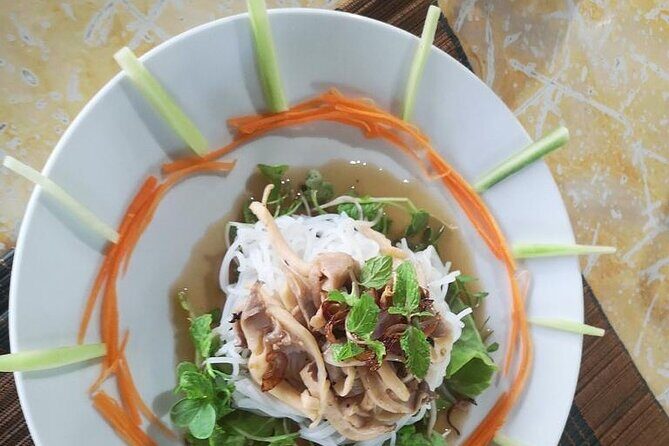
This experience includes local lunch or dinner. That means the final payoff isn’t just tasting sauces or nibbling one bite. You sit down and enjoy a full meal based on what you made.
And because fresh fruits are part of the menu, you get a more complete arc. It’s fried, bright, savory, and then clean. That’s also why this class can work even if you’re not a “serious foodie.” You’re guaranteed a satisfying meal at the end, not just a hands-on workshop.
Price and value: $22 for a chef-led 3-hour meal lesson
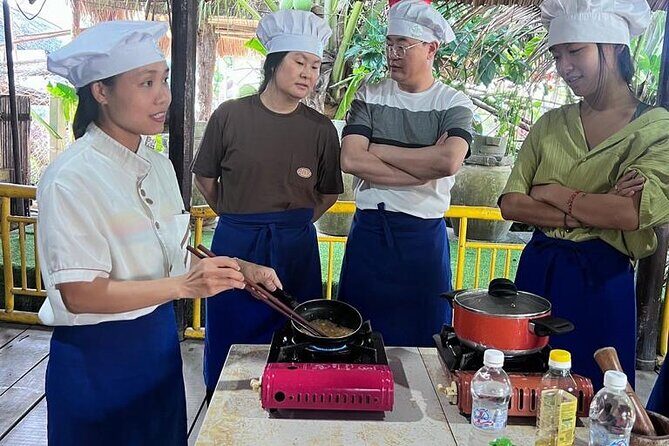
At $22 per person, this sits in the value zone for Hoi An activities. The math is pretty straightforward:
- You get about 3 hours of instruction
- 2 hours of cooking time
- Lunch or dinner included
- A recipe book is included
Most “cheap” activities either charge extra for the meal or leave you with a light snack. Here, you get a real meal at the end. Add the recipe book, and you leave with more than memories—you leave with something you can cook again.
Also, the class is capped at 10 travelers. For this price point, that limit helps keep the experience from turning into a mass workshop.
Vegetarian options that actually change ingredients
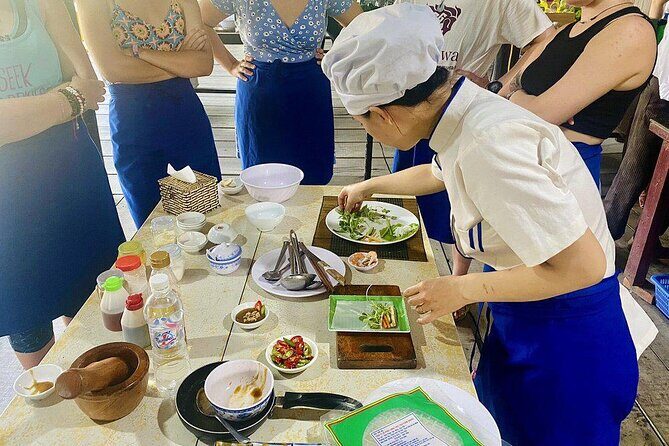
If you’re vegetarian, this class can adjust. The info is clear: vegetarian ingredients will be changed into veggies such as mushrooms, tofu, and eggplant.
That matters because it’s not just swapping one topping. Dishes like spring rolls, papaya salad pairings, and mains rely on specific ingredients and textures. If tofu and eggplant are used thoughtfully, you end up with a plate that still feels Vietnamese rather than bland substitutions.
If you’re booking vegetarian, choose this class style because it’s explicitly designed to handle your menu needs.
Evening sessions: why the menu can change
The night session (18:00) has a different menu. It’s confirmed 1 day in advance, so don’t assume the same exact lineup as daytime.
That can be a plus. It keeps the class fresh and allows the chef to tailor what’s available. The only “watch out” is mindset. If you’re booking for a very specific dish, check what’s confirmed for your session date.
Who this works best for (and who should set expectations)
This class is a great fit if you want:
- A hands-on Vietnamese meal experience in only a few hours
- A chef who explains steps and ingredient choices
- A structured way to learn popular Hoi An dishes you can actually make later
It’s also a solid pick for a small group situation. With max 10 travelers, the pace feels more human.
A realistic expectation: this isn’t a one-person kitchen tour where you follow every ingredient from garden to pot. Some people prefer a full “home kitchen” vibe all the time, while others mainly care about learning the recipes and eating well at the end. If your top priority is the setting more than the cooking, you might feel that the experience can vary by how the session is run.
Still, the consistent theme is clear: you’re cooking, you’re eating, and the instruction is meant to be friendly and understandable.
Should you book this Hoi An cooking class?
If you want a practical, food-first way to experience Hoi An, I’d book it—especially at $22 for a chef-led class plus a full lunch or dinner and a recipe book. The small group size, the focus on core dishes like bánh xèo, and the vegetarian adjustments are strong reasons to pick it.
I’d only hesitate if you’re the type who needs pickup/drop-off handled, or you’re trying to avoid any extra transport cost. Since pickup and drinks aren’t included, you’ll want to plan your own way to Villa Hoa Vừng and budget a bit for beverages.
If you show up hungry and ready to cook, this is exactly the kind of short, satisfying experience that makes Hoi An feel like more than postcards.
FAQ
How long is the cooking class?
It lasts about 3 hours.
What kinds of dishes will I learn to make?
You’ll learn Vietnamese dishes such as bánh xèo (rice pancake with fresh salad), papaya salad, fried spring rolls, chicken with lemongrass, and a clay pot dish (pork or fish) served with steamed rice, plus seasonal fresh fruits.
Is lunch or dinner included?
Yes. Local lunch or dinner is included.
Is pickup or drop-off included?
No. Pick up and drop off are not included.
Are drinks included?
No. Drink is not included.
How big is the group?
The class has a maximum of 10 travelers.
Can vegetarians join?
Yes. Vegetarian ingredients can be changed into veggies such as mushrooms, tofu, and eggplant.
How does the night session work?
The night session is at 18:00, and the menu will be changed and confirmed 1 day in advance.
What is the cancellation policy?
This experience is non-refundable and cannot be changed. If it’s canceled due to poor weather, you’ll be offered a different date or a full refund. If the minimum number of travelers isn’t met, you’ll be offered a different date/experience or a full refund.