REVIEW · HOI AN
Hoi An Local Market and Vegetable Village Cooking Class
Book on Viator →Operated by Hoi An Cooking Class · Bookable on Viator
You’ll eat well before you even start cooking. This half-day Hoi An experience mixes a local market run, a visit to an organic vegetable village, and a hands-on class that teaches you the why behind Vietnamese flavors.
I like that it’s designed around real ingredients and real routines, not just a demo where you watch and leave. Two things I especially like are the chance to see produce at the source and the way the chef helps you learn techniques you can reuse later.
The main thing to consider is the weather. This tour needs good conditions, and if it’s canceled for poor weather you’ll be offered a different date or a full refund.
In This Review
- Key highlights you’ll actually feel
- Hoi An Local Market and Vegetable Village: What You’re Really Buying
- Stop 1: The Hoi An Market Run (Where Flavors Start)
- Stop 2: Tra Que Vegetable Village and the Herb-Eating Lesson
- Stop 3: Cam Thanh, a Welcome Drink, and Time on the Water
- The Cooking Class with Chef Hai: Cooking 4 Dishes the Teach-You-Way
- Value for $29: Why the Math Works
- Timing, Pickup, and Getting There Without Stress
- What to Bring and How to Make It Easier on Yourself
- Who This Hoi An Cooking Tour Fits Best
- Should You Book This Market, Vegetable Village, and Cooking Class?
- FAQ
- How long is the Hoi An Local Market and Vegetable Village Cooking Class?
- What are the main stops on the tour?
- How many dishes will I cook?
- Is pickup included?
- How big are the groups?
- What happens if the weather is poor?
Key highlights you’ll actually feel
- Market stop with ingredient know-how: Learn what to look for and how to talk to sellers as you gather cooking inputs.
- Tra Que Vegetable Village farming time: See organic growing and get a feel for why fresh herbs matter in Vietnamese food.
- Cam Thanh coconut-basket boat fun: You get time on the water plus an explanation of local fishing techniques.
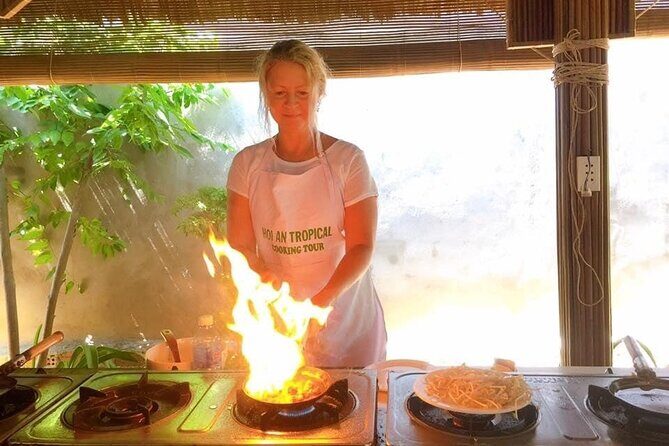
- Chef-led cooking of 4 dishes: You don’t just taste. You learn, chop, mix, and cook.
- Small group (max 12): You’re more likely to get help when questions pop up.
Hoi An Local Market and Vegetable Village: What You’re Really Buying
At $29, this is the kind of cooking tour that tries to do two jobs at once: feed you and teach you. You’re not just paying for a meal. You’re paying for a route that connects food to place—market herbs today, garden vegetables next, then a class where those flavors show up on your plate.
The time flow matters. You start with a short market stop, then move into the countryside via Tra Que, then settle in at Cam Thanh for the longer cooking stretch. That structure keeps the day from feeling like a long checklist, and it gives you a clear mental map of where ingredients come from.
You also get a small group vibe. With up to 12 people and pickup offered, it’s easier to hear instructions and stay engaged while the chef explains ingredient differences and cooking methods.
One note: Vietnamese cooking tours vary a lot. This one leans toward farm-to-table basics—produce, herbs, and techniques—rather than just plating and photo ops. If that’s your style, you’ll likely enjoy it a lot.
You can also read our reviews of more shopping tours in Hoi An


Stop 1: The Hoi An Market Run (Where Flavors Start)
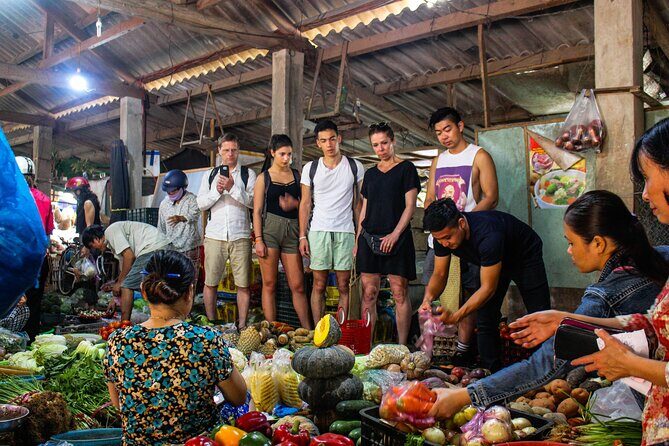
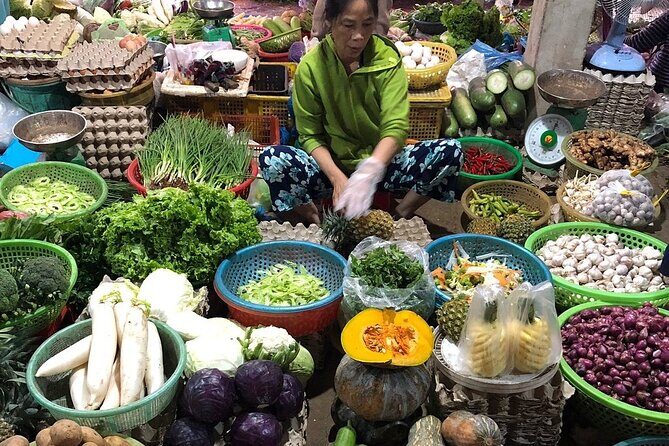
The market portion is brief—around 20 minutes—but it’s targeted. You’re there to understand ingredients before you touch a cutting board. That’s the value in starting here: when you later cook, you know what you’re using and why it matters.
You’ll get a feel for a local market’s rhythm, including how sellers work and how to interact without making it awkward. It’s not about speed shopping. It’s about learning what’s common in Vietnamese cooking and how herbs, vegetables, and other components play together.
A practical bonus: if you want to pick up a couple items to use in your cooking class, the market stop is the moment to do it. Even if you don’t buy anything, you’ll leave with a better sense of what to look for if you cook Vietnamese food back home.
Downside? A short market visit means you can’t expect a full deep-walk of every stall. Come ready to treat this as ingredient scouting, then rely on the chef for the full cooking guidance.
Stop 2: Tra Que Vegetable Village and the Herb-Eating Lesson
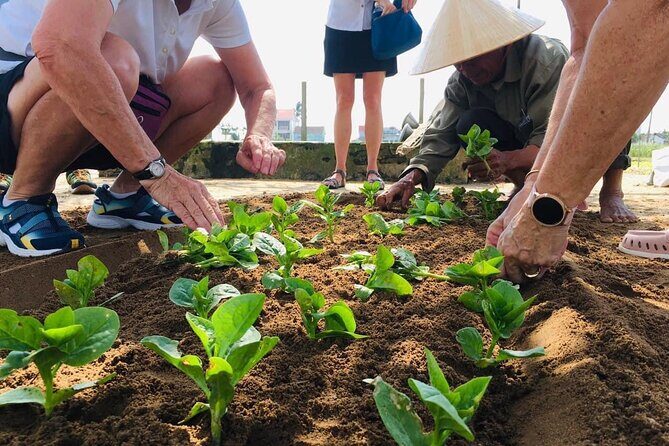
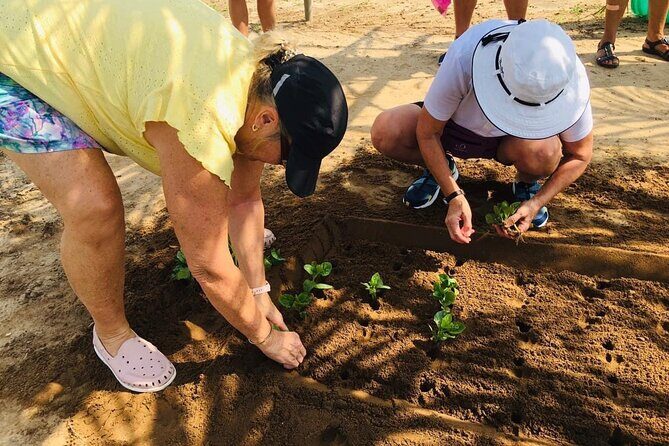
Next is Tra Que Vegetable Village, an organic farm area where vegetables look crisp and herbs feel central to the flavors. This stop runs about 30 minutes, so you’re not touring every row like a documentary crew. But you do get time to see how the community farms and to understand how produce quality affects taste.
I like that the tour describes this place as an organic vegetable village with lovely people. In practice, that usually means you’re not rushed through a sterile attraction. It’s more likely to feel like you’re stepping into an active farming day.
One thing Vietnamese cooking depends on is herb variety. Reviews and the tour description both point to learning about the herbs and produce Vietnamese cooks use often. That matters because many people think Vietnamese cooking is mostly about sauces. Yes, sauces matter. But the herb and vegetable mix is what makes dishes taste alive rather than just salty-sour-sweet.
What could annoy you? If you hate any farm time—mud, sun, or just the idea of being outdoors—this part might feel like a detour. But if you enjoy seeing food grown and you want better results when you cook later, this stop earns its place.
Stop 3: Cam Thanh, a Welcome Drink, and Time on the Water
Cam Thanh is where the day slows down in a good way. After you head back to the restaurant, you get a welcome drink before the cooking class begins. That small pause helps because by this point you’ve already walked a market and visited an organic vegetable area. You’ll appreciate the reset.
Cam Thanh is also where the tour connects to local life beyond the garden. Some versions of the experience include basket boats and time on the water, along with explanations of different fishing techniques. If you get this component, it’s a fun break from sitting and chopping, and it adds context for how people here live and work with the water nearby.
I like that this stop isn’t only entertainment. The tour frames it as learning—how local fishing works, and how that connects to what people eat. When your cooking lesson starts, you’ll likely understand dishes more naturally, because you’ve already seen a piece of the food system.
Potential drawback: water-time can depend on conditions. If you’re the kind of person who hates unpredictability, keep that in mind. Good weather is part of the deal for the whole experience anyway.
The Cooking Class with Chef Hai: Cooking 4 Dishes the Teach-You-Way
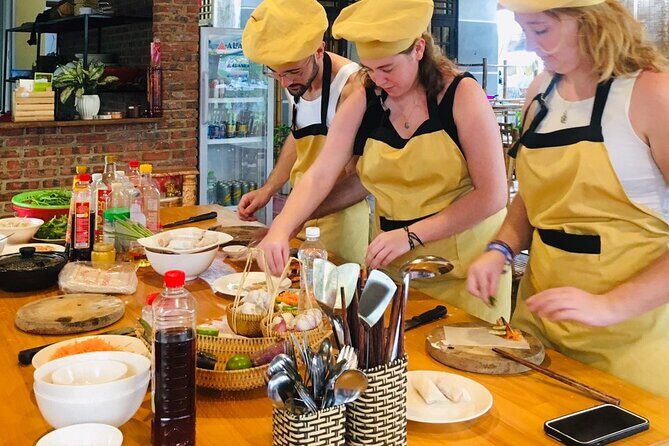
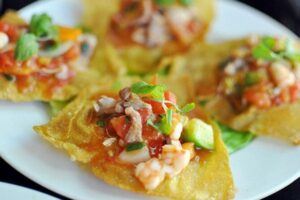
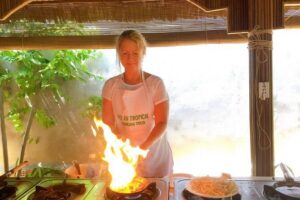
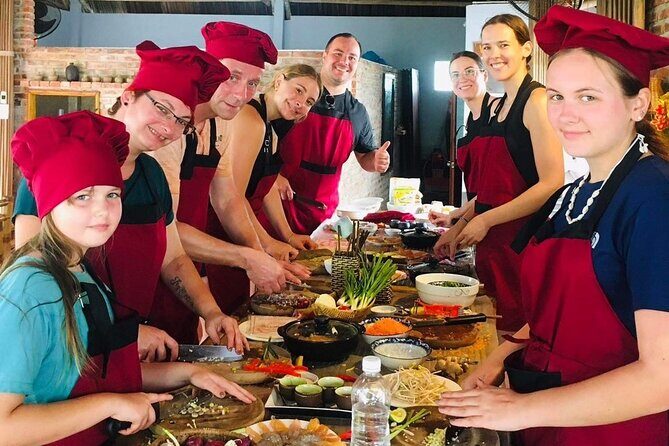
The cooking class is the heart of this tour. It lasts about three hours, and you’ll learn how to cook four Vietnamese dishes using traditional methods. The chef also focuses on ingredient differences—so it’s not just a recipe list.
Chef Hai is named as the chef for the experience, and some sessions also credit Chef Ly Hi as the guide/chef. If your teacher is one of these names, it’s the same idea: you’re learning technique, not memorizing steps.
Here’s what you should expect from a hands-on class like this:
- You’ll start cooking with a plan, not random taste-testing. The chef explains what each dish needs and how ingredients behave.
- You’ll use fresh produce and herbs you saw earlier, which makes the flavor logic click.
- You’ll work at a real cooking pace. This isn’t a sit-and-watch show.
One reason these classes feel so satisfying is timing. You shop for ingredients at the market, see them grown at Tra Que, and then cook them soon after. Your brain stays connected to the lesson. When you finally taste the dish you made, it feels like proof, not just dinner.
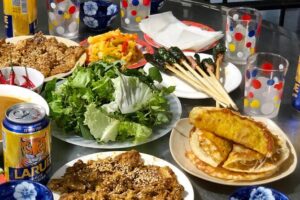
Also, the payoff is real. The class is designed so you don’t leave hungry. One of the most consistent takeaways in the experience’s feedback is that the food is tasty and the portion is enough to feel like you truly ate, not just sampled.
If you’re worried about language barriers, don’t. The class is structured for teaching. Expect visuals, hands-on instruction, and enough repetition for you to follow even if your Vietnamese vocabulary is zero.
The only “watch out” is skill level. If you’re an absolute beginner, you’ll still be fine, but go slow and listen carefully during chopping and mixing. If you rush, you’ll end up with uneven results—which is true in any cooking class.
You can also read our reviews of more tours and experiences in Hoi An


Value for $29: Why the Math Works
Let’s talk money without pretending it’s the only thing that matters.
At $29, you’re paying for:
- a market visit with ingredient education,
- an organic village stop with hands-on context,
- time at Cam Thanh and a welcome drink,
- and a chef-led class where you cook four dishes.
Cooking classes in popular cities can be pricey because you’re mostly paying for the kitchen access and instructor time. Here, a chunk of the value comes from the built-in ingredient story. You’re not just buying cooking instruction—you’re also getting the sourcing lesson.
The small group size (up to 12) adds value too. More personal attention usually means better outcomes, especially when you’re learning techniques like herb handling or sauce balance.
Could it be too short for the price? Possibly, but the structure keeps it efficient. You’re getting a full food experience in about 4.5 hours. If you want a longer countryside journey with multiple farm stops, this may feel compact. If you want a high-return half-day that leaves you with skills, it’s a strong fit.
Timing, Pickup, and Getting There Without Stress
This experience runs about 4 hours 30 minutes. That’s the sweet spot for a day in Hoi An: long enough to feel like you did something meaningful, not so long that it hijacks your whole schedule.
Pickup is offered, which can reduce the hassle of coordinating transport with your hotel location. It’s also described as near public transportation, so even if pickup timing doesn’t match your plans, you usually have a workable backup.
Group size is capped at 12. That matters more than people think. In larger classes, you spend time waiting for your turn. Here, you can usually stay more involved with what the chef is doing.
If you hate early starts or you’re juggling multiple tours in a single day, treat this as a half-day anchor. Pair it with a slower meal after. Don’t stack it right before something that requires you to be perfectly fresh and well-rested.
What to Bring and How to Make It Easier on Yourself
For a market + farm + cooking day, bring practical basics:
- Comfortable shoes you don’t mind getting a little warm or dusty.
- Sun protection. Even if you’re indoors for part of the day, the earlier stops can put you under the sun.
- A light layer. Sometimes the air feels different between outdoor stops and restaurant space.
- An appetite mindset. You’re cooking multiple dishes, and the goal is to leave satisfied.
Also, try to arrive with a curious attitude. Ask questions about ingredient differences. Even simple ones—why this herb instead of that one, or what changes when you adjust sauce balance—help you take the lesson home.
If you’re hoping to recreate dishes later, don’t just take photos. Take mental notes: textures, smells, and what the chef says about how ingredients behave during cooking.
Who This Hoi An Cooking Tour Fits Best
You’ll probably love this if you want a farm-to-table style cooking class that connects ingredients to real places. It also suits you if you like interactive learning. This is a hands-on experience where you cook four dishes, not a passive food show.
It’s also a good match if you’re traveling with someone who wants more than one kind of activity. You get market time, countryside farm time, optional water fun at Cam Thanh, and cooking all in one day.
Who might skip it? If you want a purely cultural tour with lots of walking and historical stops, you might find this too food-centered. And if you dislike outdoor time at all, you may not enjoy the farm and weather-dependent parts.
But if your main goal is to understand Vietnamese cooking and taste better because you cooked it yourself, this is the kind of class that makes that happen.
Should You Book This Market, Vegetable Village, and Cooking Class?
Book it if you want a practical cooking experience with a real ingredient story. The biggest strengths are the flow—market to organic village to chef-led cooking—and the fact that you cook four dishes rather than just sampling. With a small group and pickup options, it’s also easier to enjoy without constant logistics stress.
Skip it if you’re looking for a long countryside expedition or you know you dislike outdoor farm time. Also keep an eye on weather needs, since poor conditions can lead to a date change or refund offer.
If you’re in Hoi An and you care about learning to cook, not just eating, this one is a strong value.
FAQ
How long is the Hoi An Local Market and Vegetable Village Cooking Class?
It lasts about 4 hours 30 minutes.
What are the main stops on the tour?
You visit a local Hoi An market, Tra Que Vegetable Village, and then the Cam Thanh restaurant area for the cooking class.
How many dishes will I cook?
You cook 4 Vietnamese dishes with the chef.
Is pickup included?
Pickup is offered.
How big are the groups?
The experience has a maximum of 12 travelers.
What happens if the weather is poor?
The tour requires good weather. If it’s canceled due to poor weather, you’ll be offered a different date or a full refund.
If you want, tell me your travel dates and whether you prefer more food action or more sightseeing, and I’ll help you fit this into a smart Hoi An half-day plan.