REVIEW · HOI AN
Private Motorbike tour and Discover local villages around Hoi An
Book on Viator →Operated by Traveling to Asia · Bookable on Viator
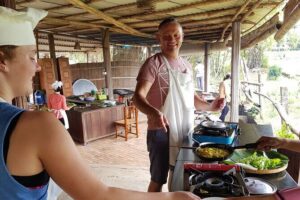
Two wheels, real village work. This private motorbike tour around Hoi An takes you off the main strip and into working craft villages, with I love the hands-on lessons and how guide Dani and Daniel kept the day moving smoothly. You’ll also get the feel of a local routine, not a scripted show, which is a big part of why I enjoyed it.
I also liked that the stops are different on purpose. One moment you’re at a pottery kiln and shaping clay, and the next you’re watching how families make rice paper step by step.
The only real drawback to plan for: this experience runs in good weather, and you’ll spend most of the 4 hours riding and switching between workshops, so it’s not ideal if you hate being on a motorbike for extended stretches.
In This Review
- Key highlights worth caring about
- Why this Hoi An motorbike village tour feels different
- Your 4-hour route: what the timing really means
- Stop 1: Thanh Ha Pottery Village and shaping clay for real
- Stop 2: Cam Kim Island homemade noodles and rice paper in 5 stages
- Stop 3: Kim Bong carpentry village and boat-makers on the river
- Stop 4: Tra Nhieu mat village and the plant-to-mat process
- Lunch in Hoi An: light vegetarian after the workshops
- Price and value: what $55 covers and why it’s fair
- Who should book this tour, and who might not love it
- What to bring and how to get the most out of each stop
- Should you book this Hoi An motorbike village tour?
- FAQ
- How long is the motorbike village tour around Hoi An?
- How much does the tour cost?
- Is the tour private or shared?
- Where does the tour start and end?
- What stops are included in the itinerary?
- Are admission tickets included?
- Is lunch included?
- What happens if the weather is bad?
Key highlights worth caring about
- Thanh Ha pottery with a try-it moment: you don’t just watch, you make your own simple clay items.
- Cam Kim island noodle and rice-paper process: you’ll see the real stages, including soaking rice for about 6 hours.
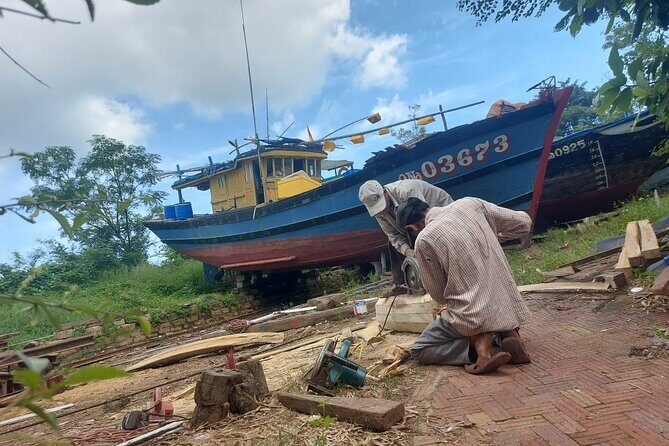
- Kim Bong carpentry plus boat-making: woodworking and the river work for wooden ships are both part of the story.
- Tra Nhieu mat weaving with hands-on practice: you learn the plant-to-threads-to-mats path, and you can try weaving.
- Admission tickets included for the main craft stops: you’re not constantly paying small extras as you go.
- Light vegetarian lunch in Hoi An after the workshops: a calm finish, right when you’re starting to feel busy-tired.
Why this Hoi An motorbike village tour feels different
If your Hoi An days have mostly been lanterns, tailoring shops, and custom-cocktail calories, this tour gives you something else: daily work. The route is built around villages where people still make things the way they’ve done for generations, just with today’s visitors as the new audience.
The private setup matters. With only your group, you’re not stuck waiting for the slowest person in a bus line, and you can ask questions without that constant, low-level crowd noise. In the reviews, I saw a clear theme: Daniel’s operation and Dani’s guiding made the day feel organized without feeling stiff.
If you love doing things, not just watching, this tour fits. You get chances to make ceramics, learn the rice-paper method, and even experiment with mat weaving. That hands-on time turns countryside sightseeing into a real skill you can remember.
You can also read our reviews of more private tours in Hoi An



Your 4-hour route: what the timing really means
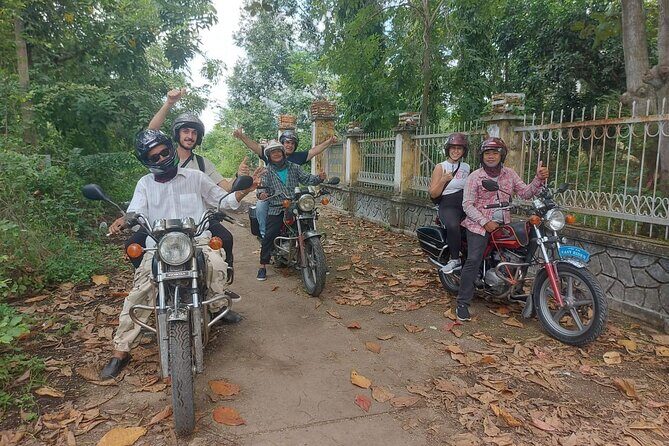
This is listed at about 4 hours total, and travel time is included. The tour is private, and the day flows through five main stops: pottery, homemade noodles and rice paper, carpentry, mat weaving, then a light vegetarian lunch back in Hoi An.
Here’s how to think about the schedule: each craft stop is short enough to keep you fresh, but long enough to see a process start-to-finish and try a small part yourself. The visit lengths are roughly:
- Thanh Ha Pottery Village: about 50 minutes
- Cam Kim Island noodle and rice paper: about 50 minutes
- Kim Bong Carpentry Village: about 40 minutes
- Tra Nhieu mat village: about 50 minutes
- Hoi An lunch after: about 50 minutes
That adds up to a busy but manageable day. If you’re the type who wants 2-hour museum-style deep time, you might find the workshops a bit brief. But if you want variety in one afternoon, it’s a strong format.
Stop 1: Thanh Ha Pottery Village and shaping clay for real
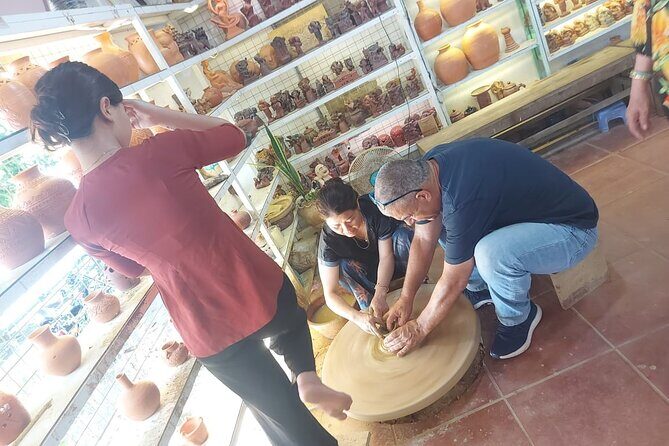
Thanh Ha Pottery Village is where the day gets hands-on fast. You’ll spend about 50 minutes here, and it’s set up in a simple flow: you see how pottery starts from clay, the owner teaches you how to make items, you make something yourself, then you can browse their shop afterward.
What makes this stop useful is the structure. You get a quick introduction, then you’re not just standing there while someone else works. You try making everyday ceramic items like ashtrays and vases. Even if your first attempt looks more like a learning project than a showroom piece, that’s the point. You’ll walk away understanding the basics of shaping, not just the final object.
Small practical note: you’re doing craft work during the tour. Plan for clothes that can handle a little mess. Also, think about whether you want to buy something after you’ve made your own, because you’ll understand the effort behind the piece.
Stop 2: Cam Kim Island homemade noodles and rice paper in 5 stages
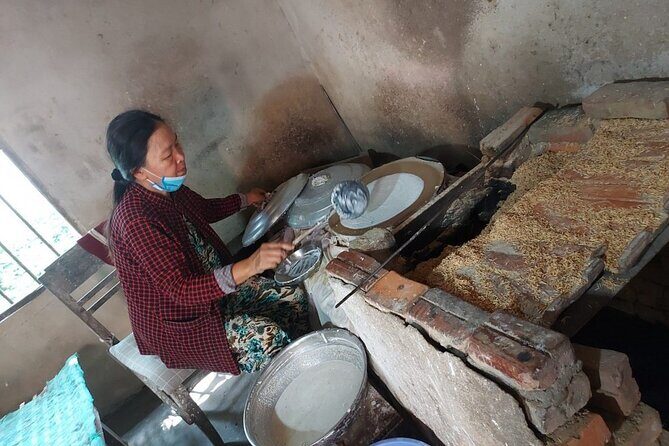
Cam Kim Island is often associated with food, but this stop is more than a snack break. You’ll visit a homemade noodle factory where rice paper is made from rice grains, and the process is shown in about 50 minutes with roughly five stages.
The most important detail: rice is soaked for about 6 hours before grinding and cooking. That matters because it explains why rice paper is rarely something you can make last-minute. It’s a setup process, not just a quick kitchen step.
From there, you’ll see the method:
- soak rice (about 6 hours)
- grind with water
- heat a specialized pot
- add the mixture and form sheets
- complete the rice paper production steps
The tour gives you a view of how local families work, not just how food ends up on a plate. This is the kind of stop that helps you connect tastes with time and technique.
If you’re thinking about buying food, you’ll likely be more confident doing so after seeing how it’s made. Just keep in mind you’ll be eating later too, so you may want to taste lightly rather than load up right away.
Stop 3: Kim Bong carpentry village and boat-makers on the river
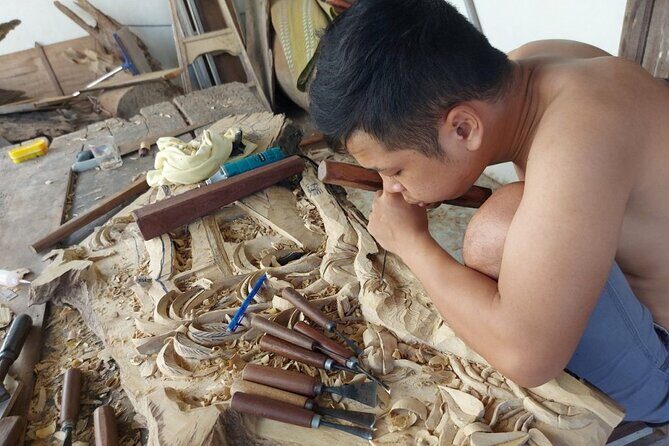
Kim Bong Carpentry Village shifts the tone from food to wood. It’s about 40 minutes, and it’s focused on carpenters designing and carving wood, plus the related boat-making work you can see on the river.
This is the stop that rewards patience. Carpentry is detail-heavy work, and you can usually spot why through the time the craft takes. You’ll see wood-and-bamboo products that can look pretty simple at first glance, but the shaping and carving show the real effort once you watch closely.
The boat angle is a bonus. The description highlights ship carpenters working on the river, busy renovating and manufacturing wooden ships. Even if you don’t spend ages watching one project, you get a clear idea of how skilled this work is and how closely it ties to the local environment.
Practical tip: if you’re sensitive to dust or strong smells, carpentry workshops can be more intense than food stops. Keep your expectations realistic and give yourself a moment to adjust.






Stop 4: Tra Nhieu mat village and the plant-to-mat process
Tra Nhieu is where the tour becomes more than crafts. It turns into a story about daily living in Vietnam’s heat. Mat weaving is described as a mattress replacement many years ago, when air conditioning wasn’t the norm, and the mats can be reused after hand washing.
You’ll visit this mat village for about 50 minutes. Expect to learn:
- the plant used to make the mats
- how that plant is processed into threads
- how those threads become woven mats
Then comes the part that I think most people remember: you’ll watch women and small children weaving, including the next generation learning the process. The tour also gives you the chance to experiment with the weaving process yourself.
This is a meaningful stop for a few reasons. First, you see a real household technology, not just decorative craft. Second, you get the human side: the weaving is shared work, taught and practiced continuously. And third, the chance to try weaving gives you respect for how long even a small section can take.
One consideration: weaving requires focus and coordination. If you’re in a hurry or you’re tired from the earlier stops, you might not enjoy it as much. Take it slow, and treat your attempt as learning, not performance.
Lunch in Hoi An: light vegetarian after the workshops
After the last village stop, you head back to Hoi An for a light vegetarian lunch. The tour timing lists this as about 50 minutes, and it’s included.
I like this structure because it gives you a clean landing. You’ve just spent the afternoon with hands-on craft work and watching process after process. Eating soon after means you don’t have to scramble around town while you’re tired, and the meal stays simple enough to keep your energy for whatever comes next.
Since it’s vegetarian, it’s a good fit if you prefer lighter meals. If you have strong dietary needs beyond vegetarian, the safest move is to check before you go—your tour details don’t list any other restrictions.
Price and value: what $55 covers and why it’s fair
At $55 for about 4 hours, the value is solid because the experience isn’t only “transport plus a few photos.” The main craft stops include admission tickets for the first four locations, and you also get the included lunch in Hoi An.
So you’re paying for:
- a private motorbike tour
- guided time at multiple working villages
- admission tickets for Thanh Ha pottery, the Cam Kim noodle and rice paper stop, the carpentry village, and the mat village
- a light vegetarian lunch
The tour also includes pickup offered (and it ends back at the meeting point). Plus you get a mobile ticket, which usually makes the day easier.
If you’re trying to compare to other Hoi An day tours, look at what’s included, not just the base cost. Here, a lot of the value comes from the fact that you’re seeing real production and doing small parts of it yourself.
Who should book this tour, and who might not love it
This is a great pick if you:
- want a countryside day around Hoi An, not another town-center loop
- enjoy hands-on learning, even if it’s short and basic
- like craft traditions tied to daily life (rice paper, mats, pottery, carpentry)
- want a private group experience without crowd stress
It may not be the best fit if you:
- feel uneasy on a motorbike for an extended period
- prefer slower pacing with longer stops
- want purely visual sightseeing with minimal participation
Also, since the experience requires good weather, plan for that. If rain is common during your visit, consider having a flexible schedule or choosing a day when forecasts look calmer.
What to bring and how to get the most out of each stop
You won’t need anything fancy, but a few basics help a lot:
- Wear clothes you don’t mind getting a little dusty or dirty, especially for pottery and mat weaving.
- Bring water, because the day includes riding and multiple short workshop visits.
- If you’re prone to sunburn, protect your neck and shoulders. You’ll be outdoors and moving between villages.
- Keep your phone and camera ready, but remember you’ll also want time to focus while learning. Taking photos is fine; rushing the learning part is not.
When you’re at each stop, ask one or two simple questions rather than trying to collect everything. The guides can only do so much in about 40–50 minutes per location, and good questions help you get the useful details fast.
Should you book this Hoi An motorbike village tour?
Yes, if your idea of a great day in Hoi An is getting out of the main tourist lanes and learning how everyday Vietnamese goods are made. The best reason to book is the combination: pottery + rice paper + carpentry + mat weaving, all in one private ride, with time to try parts of the craft yourself.
I’d skip it if you want a low-movement, strictly sightseeing tour, or if you know you won’t feel comfortable on a motorbike for most of the 4-hour stretch. And because good weather is required, pick your day carefully.
FAQ
How long is the motorbike village tour around Hoi An?
It runs for about 4 hours total, including travel time between stops.
How much does the tour cost?
The price is $55.
Is the tour private or shared?
It’s a private tour/activity, so only your group participates.
Where does the tour start and end?
It starts at Market Bar – Market Terrace at Đ. Bạch Đằng/02 Hoàng Diệu, Cẩm Châu, Hội An, Quảng Nam, Vietnam, and it ends back at the same meeting point.
What stops are included in the itinerary?
You visit Thanh Ha Pottery Village, Cam Kim Island (noodle factory and rice paper making), Kim Bong Carpentry Village, Tra Nhieu Fishing Village (mat weaving village), and then you go to Hoi An for lunch.
Are admission tickets included?
Admission tickets are included for the first four stops.
Is lunch included?
Yes. After the tour, you’ll drive to a local restaurant in Hoi An for a light vegetarian lunch, and it’s included.
What happens if the weather is bad?
The experience requires good weather. If it’s canceled due to poor weather, you’ll be offered a different date or a full refund.