REVIEW · HOI AN
WAR TOUR to MY LAI MASSACRE & KY ANH TUNNELS & GOLDEN PAGODA
Book on Viator →Operated by Hoi An Cham Cham Travel · Bookable on Viator
History here isn’t polite. This Hoi An war-themed day trip takes you to the My Lai Massacre memorial area and the Ky Anh Tunnels, with Quang Ngai’s Golden Pagoda added as a calm visual pause. I love that you spend real time at the memorial and museum, and that your guide (often Vincent) ties the places to what happened and why it mattered.
One thing to know before you go: this tour keeps its focus tightly on war sites in central Vietnam, so it is not about Kim Phuc, the Napalm Girl. If you are in the mood for the lighter side of Vietnam War stories, this may feel heavy from the first stop.
In This Review
- Key highlights you should know
- Entering the Son My Memorial at My Lai
- The Golden Pagoda in Quang Ngai as a visual and emotional break
- Walking through the Ky Anh Tunnels
- A quick, sobering look at Chu Lai Air Base (Nui Thanh)
- How the 8 to 9 hour timeline actually plays
- Price and value: what $94 buys you
- Best fit: who will enjoy this most
- Practical advice before you go
- Should you book this WAR Tour?
- FAQ
- What time does the tour start in Hội An?
- How long is the experience?
- What are the main stops on the itinerary?
- Are admission tickets included?
- Is this a private tour?
- What is the cancellation policy?
Key highlights you should know
- Vincent-led, story-focused guiding: clear explanations and a tone built for reflection, not just sightseeing
- Son My Memorial time to process: a short documentary, then museum and village visits
- Golden Pagoda as a contrast stop: a major Buddhist landmark with the Quan Am statue detail
- Ky Anh Tunnels walking experience: you get a hands-on understanding of how people moved and hid
- Chu Lai Air Base quick look: short, factual context at an abandoned US Marine Corps–run site
- Private tour for your group: only your party participates, with hotel pickup from Hoi An
Entering the Son My Memorial at My Lai
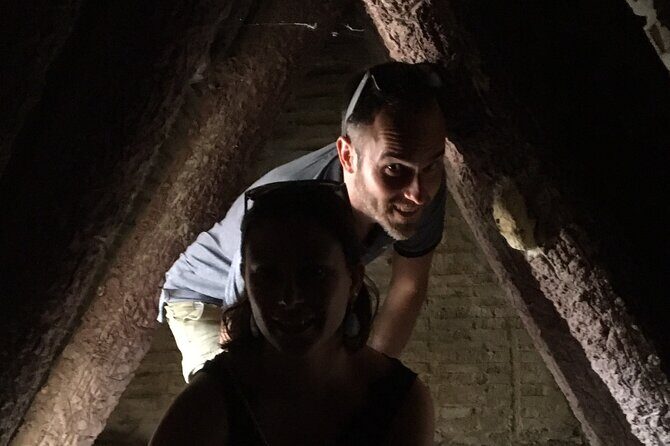
The day starts with a hotel pickup around 8:15 am in Hoi An, and you head out toward Son My (My Lai) with a guide who frames what you are about to see. Expect the mood to shift quickly. Even before you reach the main sites, you are being set up for the fact that this is a tragedy-centered visit, not a casual history stop.
A key part of the first phase is a 20-minute documentary you watch after arriving in the My Lai village area. This matters because it gives you a timeline and the basic stakes before you walk into the memorial space. Then the tour continues to the museum and the village dedicated to the massacre. You get about 1 hour 30 minutes here, which is important. Short stops at memorials can feel disrespectful; longer ones can feel overwhelming. This one sits in a workable middle where you can read, look, and absorb without feeling rushed.
What I like most about this opening is the way it asks you to slow down. You are not just collecting facts. You are seeing a place that exists to remember victims, and the guides I have seen take this route seriously tend to connect details to what people endured. If you are the type who gets emotional easily, plan on it here. If you can handle grief and uncomfortable questions, you will get far more out of the visit.
Potential drawback: if you prefer war history presented in a strictly classroom style, this visit is designed to hit you on a human level first. That is the point, but it can be a lot.
You can also read our reviews of more tours and experiences in Hoi An.



The Golden Pagoda in Quang Ngai as a visual and emotional break
After the heavy start, the tour pivots to Chùa Minh Đức (the Golden Pagoda) in Quang Ngai Province. This stop is shorter—about 1 hour—but it serves a real purpose. It breaks the day’s emotional intensity with a different kind of Vietnam: art, religion, and a landmark you can see from up close.
The standout detail is the temple’s Quan Am statue, described as the tallest in Southeast Asia. You can treat this like a cultural reset. You are still in central Vietnam’s history zone, but the focus is on faith and craftsmanship rather than wartime events.
What you gain from this stop is perspective. When a day is built entirely around conflict, your brain can get stuck in one mode. A major religious landmark forces a different pace: you look longer, notice architecture, and let your eyes rest.
Possible consideration: you may find yourself torn between appreciating the temple and thinking about the tragedy you just visited. That tension is normal. If you go in expecting it, the stop can feel more meaningful, not less.
Walking through the Ky Anh Tunnels
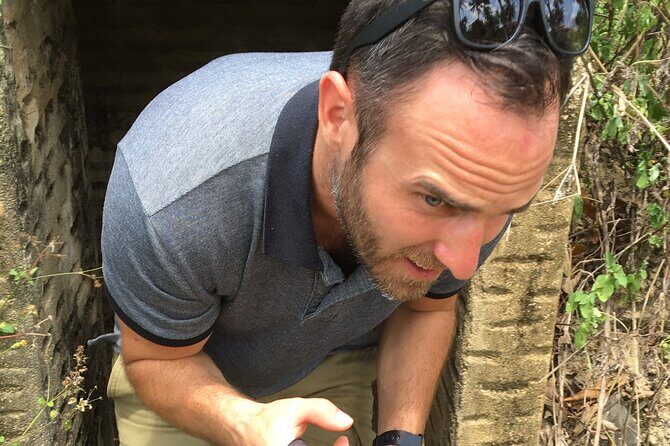
Next comes one of the most memorable parts of the route: the Ky Anh Tunnels. The tour frames this as a chance to walk where history hides, tied to the Vietnam War period and the Tet offensive in 1968.
This stop runs about 1 hour 10 minutes, and it’s exactly the kind of experience where the guide’s voice matters. A good guide will not just point out tunnel entrances. They’ll explain the logic behind the tunnels—movement, hiding, survival, and how communities adapted when the fighting got close.
Here’s why this stop is valuable: tunnels turn abstract war stories into something physical. You can’t fully understand them from photos. Even without special effects, the practical feel of the space helps you picture what daily life under pressure might have required. You will likely come out of this part with a stronger sense of what it meant to live close to danger, then keep going anyway.
Potential drawback: tunnel visits can feel tiring, even if the route is not described as extreme. If you have mobility issues, claustrophobia, or you just do not like enclosed spaces, it is worth thinking twice in advance.
A quick, sobering look at Chu Lai Air Base (Nui Thanh)
The last planned historical stop is Nui Thanh, tied to Chu Lai Air Base—a military airport operated by the US Marine Corps between 1965 and 1970. The tour includes an about 20-minute stop, and it’s described as being near Tam Kỳ city.
This part is shorter than the other stops, so treat it like a signpost. You are not getting a long reconstruction here. Instead, it gives you a geographic anchor for why this region mattered during the war years—an area with an active military presence and lasting traces.
Why I think the short timing works: by this point you have already spent time at the memorial and spent time inside the tunnels. Adding another long military stop would risk turning the day into one long list of sites. This gives you one more piece of the puzzle, then lets you head back without burning out.
If you want the emotional high point, it is not here. If you want a clear, factual punctuation mark at the end, it can be.
How the 8 to 9 hour timeline actually plays
On paper, this is an 8 to 9 hour day trip. In practice, what you feel is the day’s rhythm: transit between central Vietnam sites, then time blocks where you can shift mental gears.
You start at 8:15 am with pickup in Hội An. The tour is set up as a private experience, so your group does not have to share the day with strangers. That usually means fewer “wait here for the next pickup” headaches and a bit more flexibility if something takes longer than expected inside a museum or temple.
Also, you get admission tickets included for the memorial area, the Golden Pagoda, and the Ky Anh Tunnels. The Chu Lai Air Base stop is listed as free.
A small practical note: the tour requires good weather. If conditions are poor, you will be offered a different date or a full refund. So if you are booking near a rainy stretch, keep an eye on the forecast.

Price and value: what $94 buys you
At $94 per person, you are paying for a full-day, guided war-and-culture route with multiple paid entrances and transportation. You also get a mobile ticket and the peace of mind of confirmation at booking.
The value here is not just that you can check off four stops. It’s the way the tour combines three different modes of learning:
- a memorial designed for remembrance,
- a temple designed for cultural meaning,
- and tunnels designed for physical understanding.
That combination is rare for the price, especially when the tour includes entrance fees. It also helps that the guide role seems to be a big part of the success of the day. When you hear guides describe the subject with respect—often in the tone you would expect from Vincent—your time at each stop feels intentional rather than transactional.
One thing to weigh: if your only goal is quick photos or a light history stroll, you might feel the cost is high for what ends up being a very serious, reflection-heavy route. If you want to understand the places and the context, the pricing starts to make sense fast.
Best fit: who will enjoy this most
This tour fits best if you:
- want real context on central Vietnam war history around My Lai and the 1968 Tet period connection to the tunnels,
- like guided storytelling that stays respectful and grounded,
- and are comfortable with a sobering start before a calmer cultural stop.
It may be less ideal if you:
- are looking specifically for a pop-culture war story, or
- feel strongly uncomfortable with tunnels or memorial spaces.
It is also a good match for people who prefer private tours. With only your group participating, you can ask questions without feeling like you are interrupting a crowded schedule.
Practical advice before you go
Bring patience and a steady pace. This is not a “rush and repeat” kind of outing. Some stops (memorial and museum) naturally take longer because you will stop reading and looking more often than you planned.
A smart tip: go in with one question you want answered by the end of the day. For example, how did communities survive and reorganize during heavy fighting? Or what did the war change for ordinary people living in these areas? When you arrive at the next site, listen for the guide’s answer, rather than trying to memorize every fact.
Also, plan clothing that works for long sitting and walking. Tunnel areas may require extra comfort. If you know you get cold or uncomfortable indoors, pack accordingly.
Should you book this WAR Tour?
Book it if you want a day that mixes My Lai remembrance, Ky Anh tunnel context, and a cultural counterpoint at Chùa Minh Đức. For the $94 price, the combination of included admissions, private group setup, and a guide like Vincent who stays engaged and thoughtful is a strong value.
Skip it if you are hoping for a lighter war-themed day or for a different story line. This route keeps its focus on My Lai, the Chu Lai Air Base area (US Marine Corps operations timeframe), and tunnels used by Viet Cong during the war period described.
If you are ready for a serious, respectful route and you want to understand the places—not just visit them—this is one of those trips that can stay with you for a long time.
FAQ
What time does the tour start in Hội An?
The tour starts at 8:15 am, with pickup from your hotel in Hội An.
How long is the experience?
It runs about 8 to 9 hours total.
What are the main stops on the itinerary?
You visit Son My Memorial (My Lai), Chùa Minh Đức (Golden Pagoda), Ky Anh Tunnels, and Nui Thanh / Chu Lai Air Base.
Are admission tickets included?
Yes. Admission is included for My Lai (Son My), Chùa Minh Đức (Golden Pagoda), and Ky Anh Tunnels. The Chu Lai Air Base / Nui Thanh stop is free.
Is this a private tour?
Yes. It is listed as a private tour/activity, and only your group participates.
What is the cancellation policy?
You can cancel for a full refund up to 24 hours before the experience start time. If you cancel less than 24 hours before, the amount paid is not refunded. The tour also requires good weather; if canceled due to poor weather, you will be offered another date or a full refund.