REVIEW · HOI AN
WAR TRAILS TOUR to KY ANH TUNNELS & CHAM RUINED SANCTUARY
Book on Viator →Operated by Hoi An Cham Cham Travel · Bookable on Viator
A tunnel walk hits harder than photos. This half-day from Hoi An pairs Ky Anh Tunnels with the Chien Dan Cham Tower sanctuaries, guided by people like Mr. Thom who helped build and share stories from the conflict. I like that the tone stays human and grounded, and that Ky Anh feels like an off-the-radar battlefield set among rice fields rather than a polished show.
Two things stand out for me: the veteran-led tunnel guidance (not just facts, but how and why things were built) and the fact that you’re seeing a less-commercial war site than the famous alternatives. One consideration: the tunnel passages are dim, and you may encounter shallow water pools, so it’s not the most comfortable walking for people who dislike damp, low light, or tight-feeling spaces.
If you want history that has texture—soil, water, and specific local details—this is a strong use of a morning. In about 5 to 6 hours, you’ll also switch gears to Champa-era stonework and an inscription tied to King Harivarmadeva.
In This Review
- Key points to know before you go
- Why Ky Anh Tunnels Feel Different From the Big-Name War Sites
- Morning Pickup and How the Half-Day Timeline Works
- Stop 1: Walking the Ky Anh Tunnel System (1965–1967)
- How the Tunnel Details Connect to Survival (Not Just War Facts)
- Stop 2: Chien Dan Cham Tower and the East-Facing Sanctuaries
- The Noodles Stop: A Small Reset Between Two Big Worlds
- Price and Value: What $64 Buys You From Hoi An
- Who Should Book Ky Anh Tunnels and Chien Dan Cham Towers?
- Should You Book This War Trails Tour?
- FAQ
- How long is the War Trails Tour to Ky Anh Tunnels and Chien Dan Cham Tower?
- What time does the tour start?
- How much does the tour cost?
- What are the main stops on the tour?
- Are admission tickets included?
- How big are the groups?
- What happens if weather is bad?
- Is there free cancellation?
- Is pickup offered?
Key points to know before you go
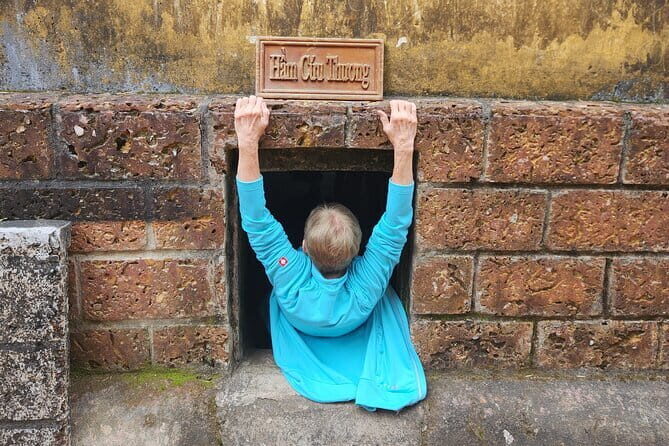
- Veteran connection through Mr. Thom: you’ll hear firsthand context from someone who helped build the tunnel network
- A lesser-visited war trail near Hoi An: expect a raw, rural setting rather than a theme-park vibe
- You’ll see purpose-built hiding routes: tunnels dug by the resistance from 1965 to 1967, about 32 km total in the system
- Chien Dan’s three east-facing sanctuaries: late 10th to early 11th century Champa architecture
- Local noodles break: a quick, simple reset between the two sites
- Small group size: up to 15 travelers, plus pickup offered
Why Ky Anh Tunnels Feel Different From the Big-Name War Sites
Ky Anh Tunnels are about evasion, survival, and timing. The tunnel system was built by the resistance (Northern Vietnam) during the most intense years of the Vietnam War struggle against America, from 1965 to 1967. The point wasn’t just hiding underground—it was hiding from detection while moving beneath villages, canals, and everyday life.
That’s why the experience tends to land differently than the big, heavily promoted war stops. Here, the story stays tied to the countryside of Quang Nam province and the way rural communities had to adapt. You’re not just looking at an attraction; you’re walking through engineering that was designed to disappear.
The guide element matters. Having someone like Mr. Thom involved in the storytelling gives you a link to how the system worked, and why so many details were necessary. It’s the difference between reading history and hearing it explained by the people who lived through its logic.
You can also read our reviews of more tours and experiences in Hoi An.



Morning Pickup and How the Half-Day Timeline Works
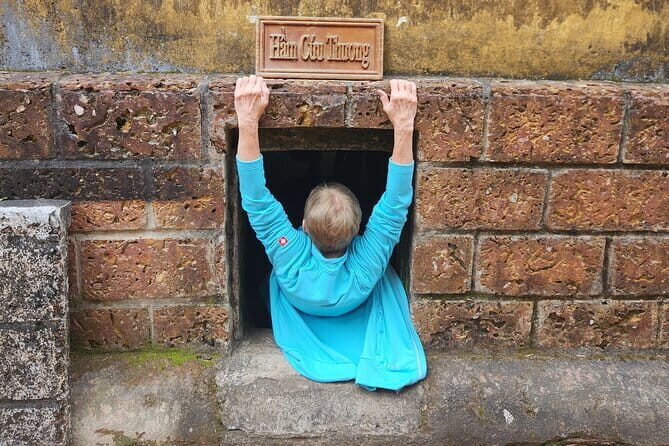
This runs as a morning-to-early-afternoon program. Pickup starts at 8:30 am in Hoi An, with the tour returning to the meeting point after the Cham site and noodles.
Plan for about 5 to 6 hours total. The day is paced so you can do both stops without feeling like you’re sprinting across the region. The Ky Anh tunnel visit is allocated around 1 hour 30 minutes. Then you shift to the Champa tower complex for roughly an hour, including time to look around and get oriented.
Because the tour depends on the outdoors, good weather is important. If the weather isn’t cooperative, the operator may offer a different date or a full refund. That’s not a minor detail here—getting through rural paths and tunnels is easier when everything is dry and visibility is better.
Stop 1: Walking the Ky Anh Tunnel System (1965–1967)
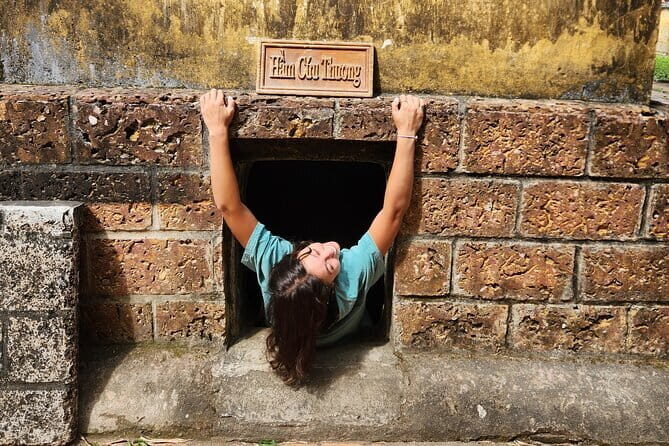
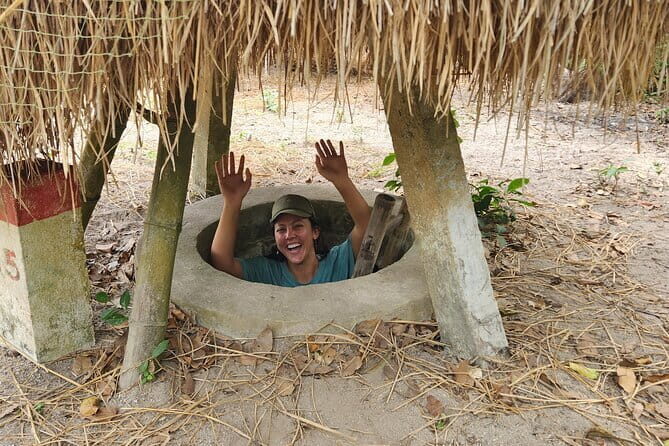
Ky Anh’s tunnel system was dug during 1965 to 1967, and the overall network is listed at around 32 km. You won’t see the entire thing in a short visit, but you will get a real sense of scale and purpose from how the passages relate to the surface world.
You’ll explore areas designed to slip beneath normal life:
- routes passing under villages
- sections going through or near houses, straw piles, bamboo bushes, and canals
- a hidden underground world meant to block U.S. forces from detecting movement and operations
What I like about this stop is how concrete it feels. The tunnel guidance is described as happening through dimly lit passages, with shallow water pools that make the underground feel real rather than staged. You’ll also get stories about the ingenuity behind warning systems—how people could react quickly without making noise or drawing attention above ground.
It’s also worth noting that the tour is built around the idea that you’re walking where history happened, not just standing beside a structure. The guide keeps connecting what you’re seeing underground to what it was protecting above.
How the Tunnel Details Connect to Survival (Not Just War Facts)
A lot of war tours list dates and names. This one tends to explain the mechanics—how a tunnel network could function as a living system for people trying to stay alive.
In the tunnel walk, you’re likely to notice how the design responds to detection. The system’s purpose was specifically to prevent U.S. army detection, which explains why so much effort went into hiding routes under daily-use spaces like village areas and canal networks.
The mention of shallow pools and low light isn’t just atmosphere. It signals that this environment was part of the real terrain people had to work with. Instead of a dry, curated set, you get conditions that feel closer to what the resistance side likely expected—wet spots, limited visibility, and a need to move carefully.
And then there’s the human layer. A guide who was part of the process, such as Mr. Thom, brings the stories down from textbook height. You’re not only learning what the tunnel system was; you’re learning why warnings and movement protocols mattered in a place where being noticed could have been deadly.
If you’re the kind of traveler who likes to understand how things work—how engineering meets survival—this stop will keep your attention.
Stop 2: Chien Dan Cham Tower and the East-Facing Sanctuaries
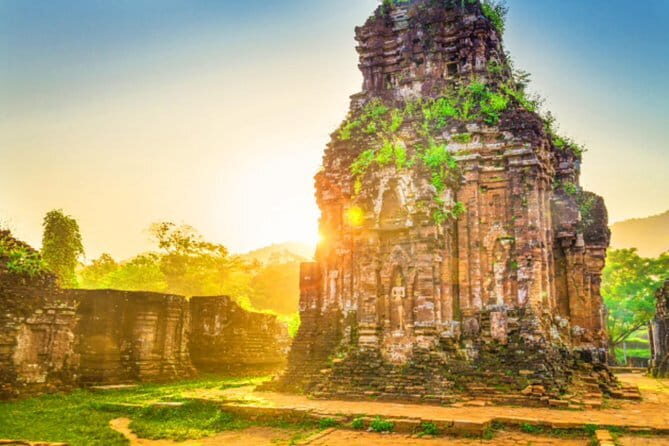
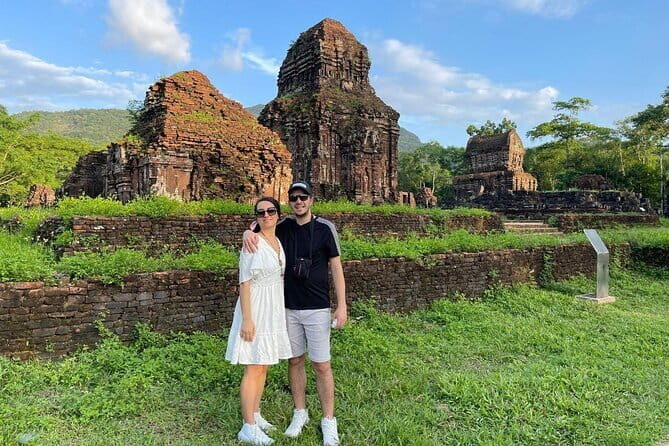
After the tunnel, the tour swings into a different kind of history: Champa-era stone architecture. Chien Dan Cham Tower is described as a set of three sanctuaries facing east, built in the late 10th to early 11th centuries.
This part is not long, but it’s packed with details you can actually use. The site includes a major inscribed stone known as the Chien Dan inscription. That inscription is described as definitive evidence that the towers were built during the reign of King Harivarmadeva.
The interpretation has a little uncertainty, too: it’s open to interpretation whether the king personally sponsored the monuments. I like that balance because it reminds you that archaeology sometimes gives you firm dates and rulers, while leaving some authorship questions unresolved.
So if Ky Anh gives you Vietnam War-era survival under villages, Chien Dan gives you older regional identity and how royal power expressed itself through sacred architecture. It’s an interesting pairing because you’re seeing how different eras used sacred space and hidden space for very different reasons.


The Noodles Stop: A Small Reset Between Two Big Worlds
Right after the Champa tower time, you’ll have local noodles before heading back toward your hotel.
That matters more than it sounds. You’ll start the morning in dim, damp conditions and end it among stone sanctuaries. A simple meal helps you switch mental gears and prevents the day from feeling heavy or rushed.
It’s also a practical touch: you don’t have to hunt for food on your own right after the tour. You get fed and then you’re back on your schedule.
Price and Value: What $64 Buys You From Hoi An
At $64 per person, this tour lands in the category of “worth it if you care about the topic.” You’re paying for:
- the guided Ky Anh tunnel visit (with admission ticket included)
- the Chien Dan Cham tower time (also with admission ticket included)
- hotel pickup in Hoi An
- a format that keeps group size small (up to 15)
In plain terms: you’re not just buying transport. You’re buying interpretation. That’s especially true for Ky Anh, where the value comes from explanation—why the tunnels were built, how warning systems worked, and what the underground experience was like for people connected to it.
The tour also tends to sell ahead—this is booked on average 24 days in advance—so if you’re traveling during a busy season, booking earlier can save you disappointment.
I’d call this good value if you’re coming specifically for war history beyond the usual headline stops. If your interest in Vietnam War history is light, you might feel that you’re paying for a deeper topic than you expected.
Who Should Book Ky Anh Tunnels and Chien Dan Cham Towers?

This tour is a strong fit if you:
- care about Vietnam War history and want an off-the-beaten-path battlefield
- like guides who can connect what you’re seeing to how it was used on the ground
- enjoy mixing time periods, going from 1960s tunnels to 10th–11th century Cham sanctuaries
- want pickup and a schedule that’s simple without planning
It may be less ideal if you:
- really dislike damp, low-light walking and shallow water pools
- want a completely comfortable, easy sightseeing day with minimal physical discomfort
One more note: the tour says most travelers can participate, and service animals are allowed. So for many people it should be workable, as long as you’re okay with the tunnel environment.
Also, the maximum group size is 15, and at least some bookings run with an additional driver and a more private feel. That tends to make Q&A easier and helps you move at a pace that fits the setting.
Should You Book This War Trails Tour?
Yes—if your heart is in the subject. Ky Anh Tunnels are the kind of place that rewards attention. The veteran-guided storytelling, including voices like Mr. Thom, is where the day earns its emotional weight. And then the Cham site gives you variety so the tour doesn’t feel like one long lecture.
If you only want “a war attraction” with minimal discomfort, you might prefer a more commercial option. But if you want history with real texture—earth, water, and specific explanations—this is a solid morning out of Hoi An.
FAQ
How long is the War Trails Tour to Ky Anh Tunnels and Chien Dan Cham Tower?
It takes about 5 to 6 hours total.
What time does the tour start?
Pickup starts at 8:30 am, and the tour returns to the meeting point afterward.
How much does the tour cost?
The price is $64.00 per person.
What are the main stops on the tour?
You visit Ky Anh Tunnel and then Chien Dan Cham Tower, with local noodles included between the two.
Are admission tickets included?
Yes. Admission tickets are included for both Ky Anh Tunnel and the Chien Dan Cham Tower stop.
How big are the groups?
The tour has a maximum of 15 travelers.
What happens if weather is bad?
This experience requires good weather. If it’s canceled due to poor weather, you’ll be offered a different date or a full refund.
Is there free cancellation?
Yes. You can cancel up to 24 hours in advance for a full refund.
Is pickup offered?
Yes, pickup is offered from hotels in Hoi An.