REVIEW · HOI AN
Cooking with Jolie in Hoi An
Book on Viator →Operated by HPT TRAVEL COMPANY LIMITED · Bookable on Viator
A home kitchen in Hoi An beats a restaurant. Cooking with Jolie takes you from the old-town sights to Jolie’s family home, and it feels grounded, not staged. I like the small-group setup and I especially like the market-to-menu start with fresh ingredients and coffee before you cook.
One thing to plan for: there’s no pick-up or drop-off, so you’ll want to be at 14 Lưu Trọng Lư with some cushion. The class also needs good weather, since the experience can be adjusted or refunded if conditions are poor.
In This Review
- Quick take
- Why Cooking with Jolie feels more real than a typical class
- Hoi An Ancient Town: the warm-up walk that sets the scene
- Japanese Covered Bridge: iconic, but also useful for learning
- Chuc Thanh Pagoda: a calmer pause before your kitchen work
- At Jolie’s home: market ingredients, coffee, and real cooking
- The market-and-farm feel (and why it’s worth it)
- Coffee first, then your cutting board
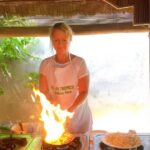
- The hands-on part: you do the cooking
- You eat what you make
- What you’ll actually make: four dishes plus repeatable technique
- Vegetarian option works (and it’s not an afterthought)
- Price and value: is $55 fair for 5 hours?
- Group size and guide style: more attention than most tours
- Tips so you leave confident (not overwhelmed)
- Who should book this class, and who might not love it
- Should you book Cooking with Jolie in Hoi An?
- FAQ
- What’s included in Cooking with Jolie in Hoi An?
- How much does it cost?
- How long is the experience?
- What dishes will I make?
- Is there a vegetarian option?
- Where does the tour start and end?
- Is pick-up and drop-off included?
- How big is the group?
- What happens if weather is bad?
- Is there free cancellation?
Quick take
- Small groups (about 10–12 max): more hands-on attention during cooking
- Market shopping for ingredients: you learn what to buy and why, not just what to cook
- Real family-home setting: you eat the results in the same home where the cooking happens
- Vegetarian-friendly: you’ll cook with vegetarian ingredients without feeling left out
- Lunch plus drinks included: water, tea, and coffee are part of the experience
Why Cooking with Jolie feels more real than a typical class
Hoi An is famous for food, but plenty of cooking classes still feel like a set. This one doesn’t. You’re in a family home, with the vibe of a real household that happens to host travelers. That matters because you don’t just get recipes. You pick up how Vietnamese cooks actually think: tasting, adjusting, and building flavor step by step.
I also love that the class is hands-on from the start. You’re not watching someone else do everything. With a professional chef guiding you, you learn techniques you can reuse later, even if you’re cooking in a small kitchen outside Vietnam.
And the best part is the flow. You see the old-town side of Hoi An first, then you shift gears into food shopping, coffee, and cooking. It turns your morning or afternoon into a full story—rather than a quick “cook and leave” stop.
You can also read our reviews of more cooking classes in Hoi An

Hoi An Ancient Town: the warm-up walk that sets the scene
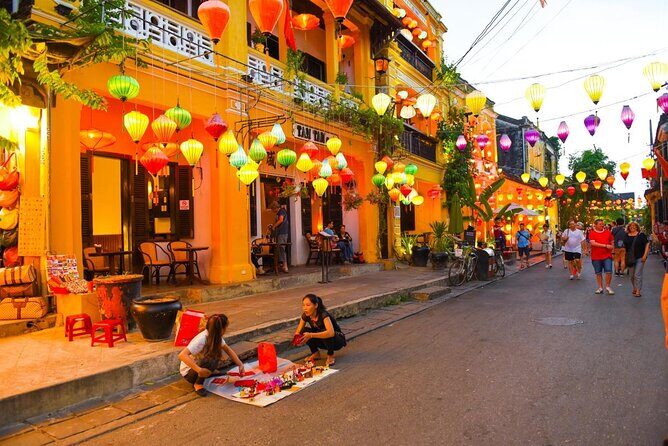
Stop 1 is Hoi An Ancient Town, and it’s a good opener. You get your bearings quickly. Even if you’ve already wandered the streets on your own, going with a guide helps you notice details you’d otherwise zip past—small rhythms of daily life, the way people move through the town, and the general atmosphere that makes Hoi An feel like Hoi An.
This stop also helps you settle into the class mindset. You’re not rushing straight to a stove. You’re getting oriented, building context, and letting Hoi An’s “everyday” feel sink in before the food part takes over.
Possible drawback: if you’re sensitive to crowds or lots of walking, the ancient-town streets can feel busy depending on the day and time. Comfortable shoes help here, and it’s worth pacing yourself.
Japanese Covered Bridge: iconic, but also useful for learning
Stop 2 is the Japanese Covered Bridge, one of the postcard sights in Hoi An. Yes, you’ll likely take photos. But more importantly, this is your moment to see a famous landmark and then connect it to the larger story of Hoi An as a historic trading town—where influences from different places show up in everyday life.
In a class like this, a landmark stop isn’t filler. It keeps the experience anchored in the town you’re visiting, so the cooking doesn’t feel disconnected from where you are.
Tip for a better moment here: keep your camera ready, then slow down and look beyond the bridge itself. The best photos often come from the lanes and storefronts around it, not just from the main structure.
Chuc Thanh Pagoda: a calmer pause before your kitchen work
Stop 3 is Chuc Thanh Pagoda. This is a nice change of pace after the busy streets and major photo point. You get a quieter setting that feels more reflective, and it can reset your brain before you start chopping, mixing, and tasting.
A pagoda stop also adds texture to the day. You’re seeing more than just streets and souvenirs—you’re seeing a place locals visit and respect.
Possible drawback: if you’re short on patience or you’re arriving right from a long travel day, this kind of stop can feel slower than you expected. The upside is that it makes the cooking segment feel more energizing when you reach the family home.
At Jolie’s home: market ingredients, coffee, and real cooking
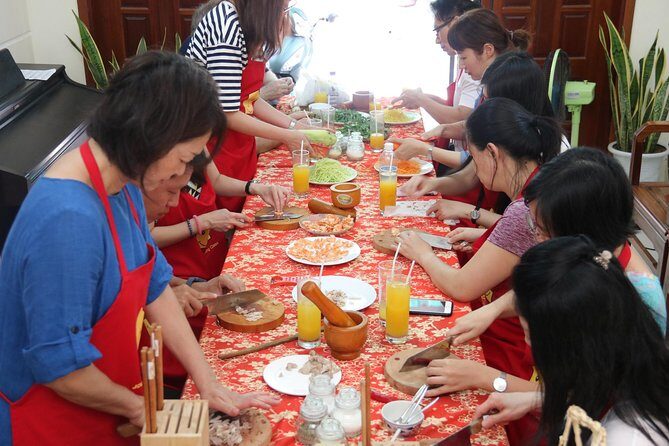
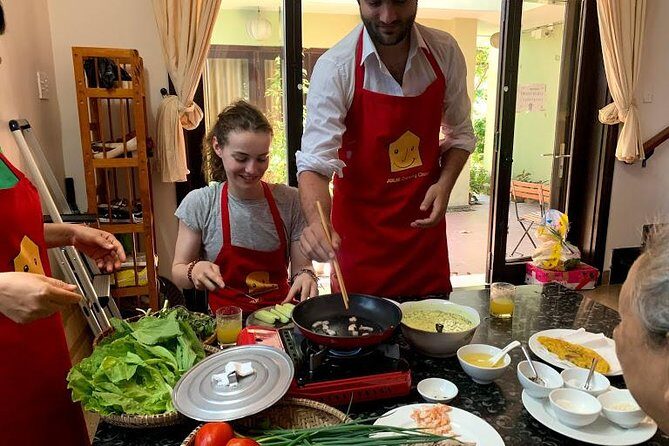
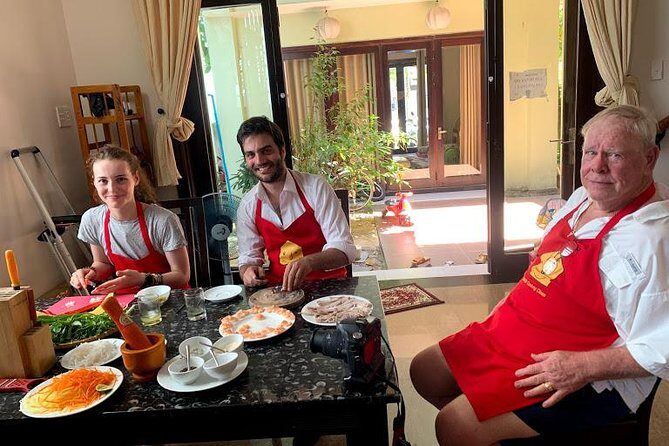
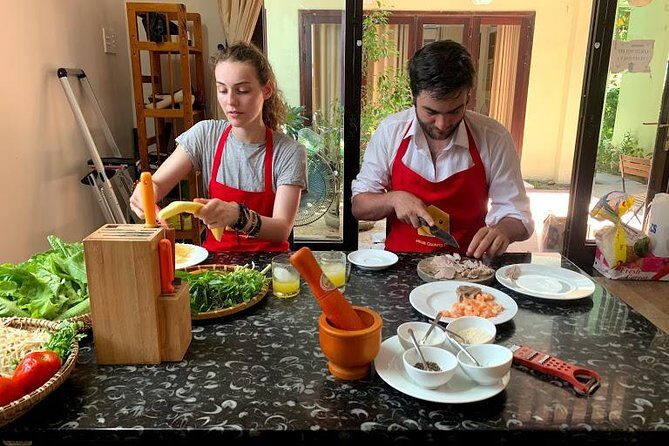
Stop 4 is the core: the Jolie Cooking Class in Jolie’s family home. This is where the experience earns its reputation.



The market-and-farm feel (and why it’s worth it)
You’ll pick up fresh ingredients at local sources before you cook. You’re not just buying random items. You can see local life around food—what’s available, what people choose, and what looks fresh.
For me, that’s the practical value. Once you understand what “good” looks like for common vegetables and herbs, your cooking at home becomes less guesswork. You start shopping with a brain, not just a list.
Coffee first, then your cutting board
Before cooking, you enjoy coffee. The class includes water, tea, and coffee, so you’re set up to stay comfortable during the whole 5-hour flow. Coffee also fits the mood in Hoi An—small pauses, slow conversations, and a break before you get to work.
The hands-on part: you do the cooking
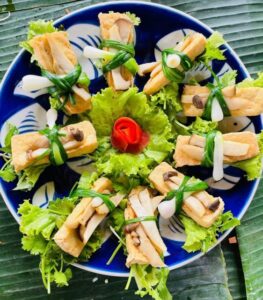
You’ll make 4 traditional Vietnamese dishes with guidance from a professional chef. The class is designed for people who want to learn technique, not just recreate one meal once.
The best cooking classes teach you the “how.” Here, you practice steps that make Vietnamese food feel logical: mixing, pan work, tasting, adjusting seasoning, and shaping dishes for texture and appearance. Based on past classes, you may also try fun technique-style tasks like shaping garnishes (for example, tomato-skin flower work) or flipping pancakes—small skills that make you feel surprisingly capable by the end.
You eat what you make
You don’t finish and run. You enjoy your dishes during the class. That’s important because taste is part of learning. You learn what the dish should be like, and it’s easier to repeat later when you’ve tasted it fresh from your own hands.
What you’ll actually make: four dishes plus repeatable technique
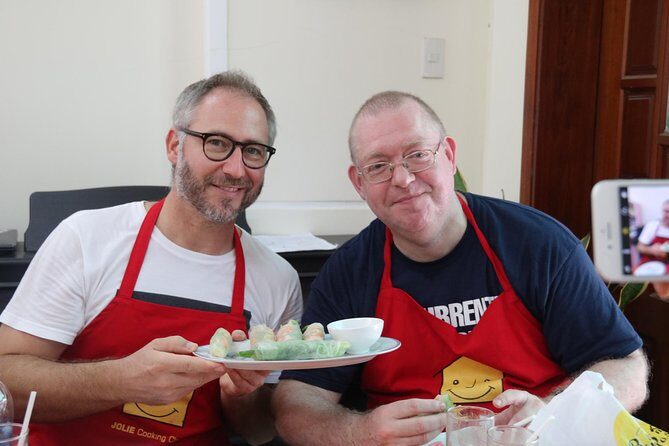
You’ll cook four traditional Vietnamese dishes, and the focus is technique and confidence. The specific menu can vary, but you’re still guaranteed the learning goal: by the end, you’ll know how to take fresh ingredients and turn them into a full Vietnamese meal.
Here’s how to think about the value. Even if you forget one dish name, you’ll remember the method. And when you’re back home, method beats memory.
You’ll also likely work with herbs and produce that are common in Vietnamese cooking. The class aims to source ingredients carefully (including fruit and vegetables, and organic options where possible), so the flavor base is strong. That’s why a class like this can change your home cooking more than a recipe-only workshop.
Vegetarian option works (and it’s not an afterthought)
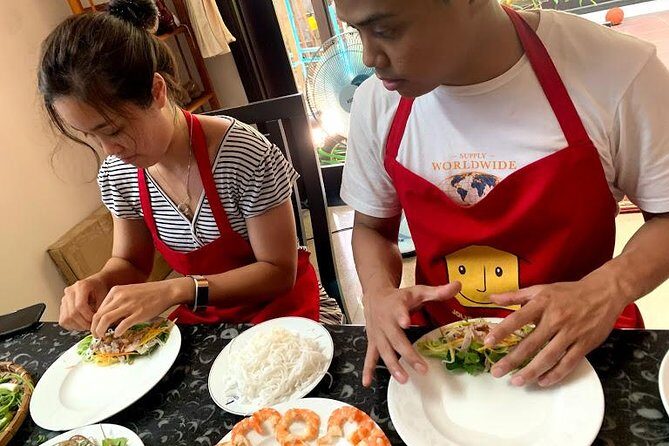
If you’re vegetarian, you’re welcome. The class explicitly accommodates vegetarians and uses vegetarian ingredients.
This matters because a lot of cooking classes say vegetarian-friendly, but then you end up with a sad substitution. Here, you’re part of the plan from the start, and you still make four dishes under the same guidance.
A practical move: tell the operator your dietary preference when you book, so the kitchen can prep accordingly. Then you can relax and focus on cooking.
Price and value: is $55 fair for 5 hours?
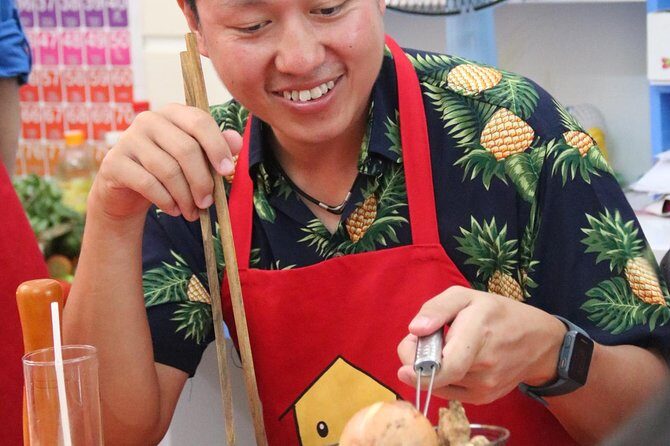
At $55 per person for about 5 hours, this class is priced like a serious half-day activity. On paper, that can sound “mid-range.” In practice, the value is in what’s included:
- Lunch is included
- Water, tea, and coffee are included
- You’re guided by a professional chef
- You get local ingredient sourcing (market/farm time)
- It’s a small group, so you get more real instruction time
- You make four dishes rather than one demo plate
Now the fine print you should factor in: pick-up and drop-off are not included. So if you’ll rely on taxis or rideshares to reach 14 Lưu Trọng Lư, add that cost to your mental math.
Also, if your date falls on a public holiday, there’s a $9 per person surcharge payable onsite. Finally, the experience requires good weather, so plan with flexibility if your trip includes stormy days.
When you add those factors, the experience still looks like solid value—especially if you like cooking and want ingredients-and-technique learning, not just a one-time meal.
Group size and guide style: more attention than most tours
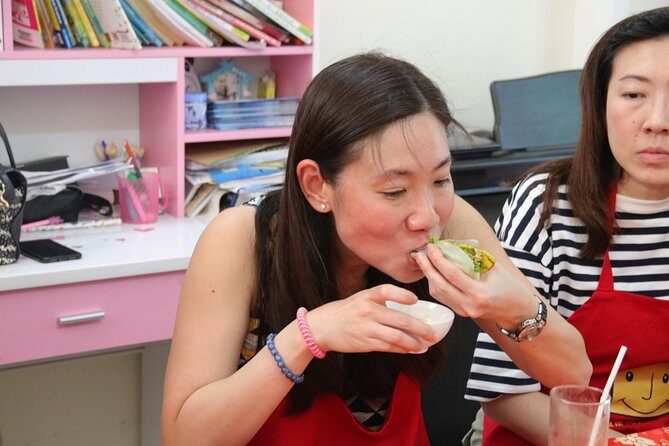
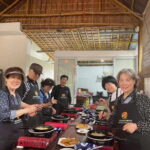
The class runs with a small cap: no more than 12 travelers (and often described as about 10 or fewer). That’s a big deal. When the group is small, the chef and guides can watch your technique, correct mistakes, and help you move at the right pace.
You’ll also notice the guide personality matters here. Names that have led past groups include Rosie, Hannah, Thuyen, and Kelly. Different teachers, same core vibe: friendly, interactive, and focused on getting you cooking, not just photographing.
If you’re traveling solo, this small-group format is also a plus. You end up talking with your cooking team while you work, and the class doesn’t feel like a lecture.
Tips so you leave confident (not overwhelmed)
- Come hungry. People strongly recommend arriving with room for a full meal. This is a 5-hour cooking block with lunch, so don’t show up stuffed.
- If your session is early in the day, consider skipping breakfast. You want your appetite ready for the market-to-cooking plan.
- Wear shoes that can handle uneven old-town walking and pagoda areas. You’ll be on your feet before you cook.
- Ask questions early. The biggest learning comes when you speak up about flavors and substitutions while you’re still in the cooking stage.
Who should book this class, and who might not love it
I think this is a great fit if you want more than a meal. Book it if you enjoy markets, want hands-on cooking practice, and like learning techniques you can repeat at home.
It’s also a solid choice if you’re traveling with someone who loves food but doesn’t want a full-day walking tour. This is structured, but not rigid—and you get both culture context and a kitchen payoff.
You might choose something else if you hate markets, dislike walking around town sights, or you strongly prefer not to depend on weather. Since the experience needs good weather, have a Plan B day in your itinerary.
Should you book Cooking with Jolie in Hoi An?
Yes—if you want a small-group, family-home cooking class with real instruction and included lunch. The $55 price makes sense because you’re not paying only for a meal. You’re paying for coaching, ingredient sourcing, and technique practice you can use again.
Book it especially if:
- you want a market-and-coffee start before cooking
- you want four dishes instead of one-and-done
- you need a vegetarian-friendly option that sounds thoughtfully handled
- you’re happy to meet at 14 Lưu Trọng Lư and handle your own transport
Skip it (or consider a different plan) if you need guaranteed pick-up, have tight time logistics, or you’re traveling during a period when weather is unreliable and you can’t be flexible.
FAQ
What’s included in Cooking with Jolie in Hoi An?
You’ll get lunch plus water, tea, and coffee during the class. The experience also includes “fun,” and the class is hands-on cooking.
How much does it cost?
It costs $55.00 per person.
How long is the experience?
Plan for about 5 hours.
What dishes will I make?
You’ll make 4 traditional Vietnamese dishes with a professional chef’s guidance.
Is there a vegetarian option?
Yes. Vegetarian guests are welcome, and vegetarian ingredients can be used.
Where does the tour start and end?
It starts at 14 Lưu Trọng Lư, Tân An, Hội An, Quảng Nam 560000, Vietnam and ends back at the same meeting point.
Is pick-up and drop-off included?
No. Pick up and Drop off are not included.
How big is the group?
The maximum group size is 12 travelers.
What happens if weather is bad?
The experience requires good weather. If it’s canceled due to poor weather, you’ll be offered a different date or a full refund.
Is there free cancellation?
Yes. You can cancel up to 24 hours in advance for a full refund. If you cancel less than 24 hours before the start time, you won’t get your money back.