REVIEW · HOI AN
Bay Mau Cooking Class with Market Tour and Basket Boat Ride
Book on Viator →Operated by Bay Mau Tour · Bookable on Viator
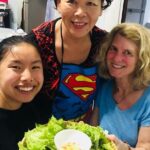
Coconut river afternoons make cooking taste better. This Bay Mau Cooking Class in Hoi An turns a meal into an entire half-day: you shop, ride, then cook four dishes with a local chef in a stilt house, and you get drinks while you work. I especially liked the hands-on traditional tools and how Rose (the friendly, fast, professional host/chef in the kitchen) keeps things moving.
The main thing to consider is simple: it runs about 5 hours, so it’s not a quick stop between beaches and errands.
In This Review
- Key highlights worth your time
- A 5-hour blend of cooking, shopping, and Bay Mau river time
- Meeting point: Trần Nhân Tông Village and a straightforward start
- Market tour: choosing ingredients like Vietnamese cooks do
- Bamboo basket boat ride in Bay Mau / Cam Thanh coconut village
- The cooking class: rice prep, rice paper, and hands-on technique
- Four dishes, including pho the traditional way
- Drinks, pace, and what’s actually included
- Who this tour fits best (and who might skip)
- Price and value: why $27 feels fair here
- A few small practical tips before you go
- Should you book Bay Mau Cooking Class with Market Tour and Basket Boat Ride?
Key highlights worth your time
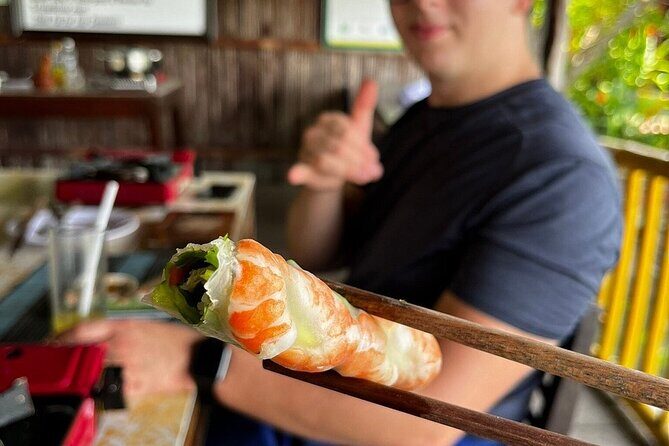
- Market tour first, then you cook using the ingredients you pick
- Traditional prep skills, like pounding rice and making rice paper
- Basket boat ride in the coconut zone, with time for fishing-style activities
- Four dishes in one class, including classic pho (beef noodle soup)
- Small group size (max 10) for a more hands-on feel
- Drinks included: unlimited mineral water and passion fruit juice
A 5-hour blend of cooking, shopping, and Bay Mau river time
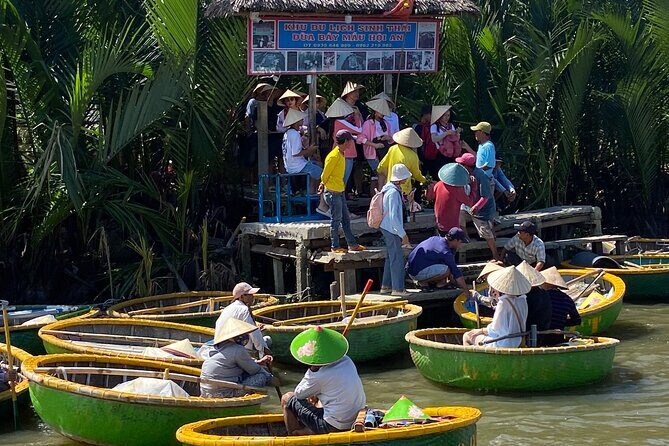
This is one of those Hoi An experiences that feels practical, not performative. You start with food basics you can actually use later: where ingredients come from, how they’re chosen, and what to do with them once you’re back home. Then you get a bamboo basket boat ride in the Bay Mau / Cam Thanh coconut village area, so you’re not stuck in a kitchen the whole time.
The format matters. You’re not just watching someone else cook. You’re doing key prep tasks with tools that look like they belong in a family kitchen: a stone mortar, a grinder, and a wooden pestle. That turns “I ate pho” into “I understand how the parts come together.” And because the group is limited to 10 travelers, the chef can actually keep track of you while you’re working.
If you’re the type who likes structured plans (pickup, a set route, a finished meal), you’ll appreciate the pacing. If you’re the type who hates schedules, you might feel the clock a bit. Either way, it’s long enough that you’ll want to start with a clear morning or early afternoon.
You can also read our reviews of more boat tours in Hoi An



Meeting point: Trần Nhân Tông Village and a straightforward start
The tour begins at Hoian Eco Coconut Tour, Trần Nhân Tông Village in Hội An, and it ends back at the same meeting point. That loop is convenient in a city where hopping between neighborhoods can eat time.
Pickup is offered, which helps if you’re staying a distance from Trần Nhân Tông Village or you don’t want to figure out the logistics mid-holiday. You also get a mobile ticket, so you’re not juggling paper.
The small-group size (max 10) is a real plus here. Smaller groups tend to move better during transitions—market, boat ride, and then the cooking session. It also usually means you’ll have more chances to ask questions while the chef is explaining techniques.
Market tour: choosing ingredients like Vietnamese cooks do

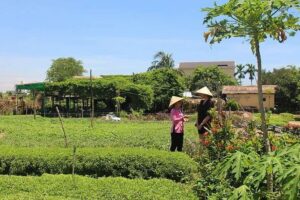
The market stop is more than a photo moment. You go shopping for the ingredients you’ll cook with, which makes the class feel connected from start to finish. You’ll learn how the main parts of Vietnamese cuisine fit together, and you’ll have a hand in picking what goes into your dishes.
You’re also learning something subtle: why some ingredients matter more than others. When you pick things yourself—fresh items, common cooking components—you understand what to look for later if you try Vietnamese cooking on your own. That’s the kind of knowledge that sticks.
One practical tip: go in with curiosity, not a tight “shopping list” mindset. Markets move fast, and the point is to learn the ingredients and the way the chef thinks, not to win a competition for the fastest shopper. Ask simple questions while you’re there, especially about what’s being used in the class.
Bamboo basket boat ride in Bay Mau / Cam Thanh coconut village
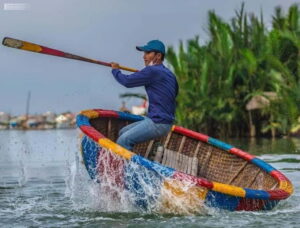
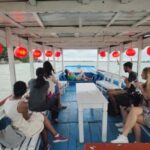
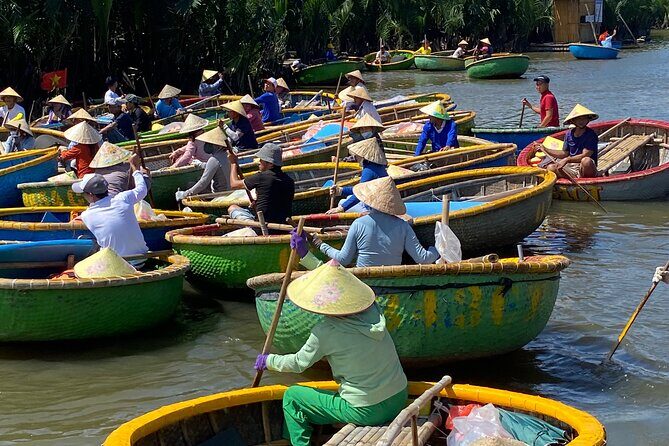
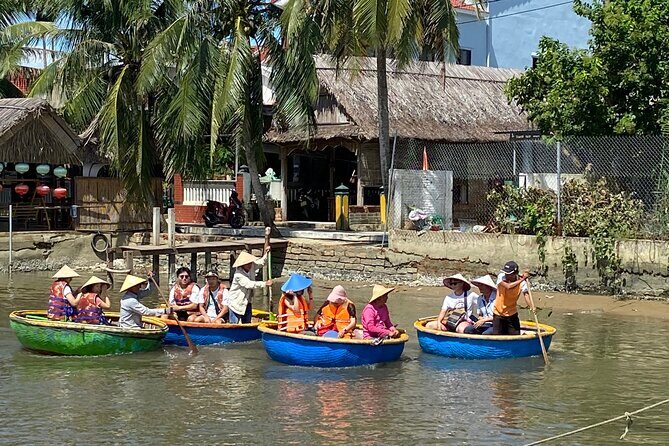
After shopping, you head to the coconut village area in Cam Thanh / Bay Mau for the bamboo basket boat ride. This is one of Hoi An’s most distinctive river experiences, because the ride isn’t about cruising in comfort. It’s about seeing the coconut waterways up close and understanding how people move through the landscape.
You’ll get scenic river views while you’re out there, and you may try activities that include fishing. Even if you’re not a serious fisherman (I’m not), it adds variety. It also gives you a natural break from the focus of market shopping and cooking prep.
What I like about placing the boat ride before the cooking session: it changes your pace. You shift from shopping mode into “fresh air, movement, and sights,” then you return ready to concentrate in the kitchen. It’s a smart flow for a day trip that otherwise could feel like back-to-back lessons.
The cooking class: rice prep, rice paper, and hands-on technique
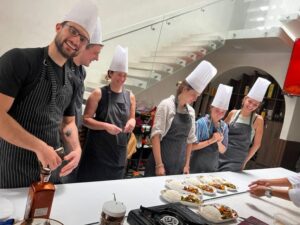
The cooking portion takes place in a charming stilt house, with river views in the background. That setting keeps you in the mood to cook instead of feeling like you’re taking a classroom course. And yes—this class is built around traditional techniques.
You’ll do several featured prep activities:
- pounding and separating rice
- grinding rice to make rice milk
- making rice paper
Those tasks aren’t random. Each one teaches a different step in Vietnamese cooking logic. Rice milk preparation and rice paper creation are especially useful if you want to understand how Vietnamese flavors get their texture and foundation. Rice paper is one of those ingredients people buy without thinking, but making it (even as part of a class) makes it feel like a real kitchen tool, not a mysterious packaged product.
The utensils are a big deal too. You won’t just use modern kitchen gadgets. You’ll use a stone mortar, grinder, and wooden pestle. Working with those tools slows you down just enough to learn the process properly. It’s also oddly satisfying to hear and feel the grinding and pounding—like the kitchen is alive.
If you care about “how,” not just “what,” this is where the tour earns its reputation. You’re not collecting recipes like stickers. You’re training your hands to understand the basics.
You can also read our reviews of more shopping tours in Hoi An


Four dishes, including pho the traditional way
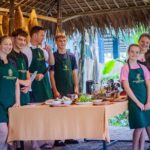
You’ll cook four dishes with the chef, and one of them is the famous pho (beef noodle) soup. That’s a huge draw because pho can feel intimidating if you’ve only ever had it from a restaurant. Here, you’ll follow instructions and learn the traditional way to approach it.
Beyond pho, you’ll prepare additional Vietnamese dishes as part of the four-course class. The key value is that you’re cooking multiple items in one session, not just one highlight dish. That helps you see how flavors and techniques connect across a meal.
A practical way to think about this: the class gives you both a crowd-pleaser (pho) and a broader skill set (rice prep and traditional tool use). If you’re a foodie, you’ll appreciate the variety. If you’re a home cook, you’ll appreciate that you’re learning process more than memorizing steps.
And because you’re working directly with fresh ingredients provided through the tour workflow, you won’t feel like you’re guessing what should go where. The ingredients you selected earlier in the market feed into the cooking session, which makes everything easier to follow.
Drinks, pace, and what’s actually included
You’ll be offered unlimited mineral water and passion fruit juice during the experience. That matters more than it sounds. When you’re cooking, tasting, and working with prep steps, hydration makes the whole day more pleasant.
Also, you’re not paying separately for the major components. For one price, you get:
- market tour and ingredient shopping
- bamboo basket boat ride in the coconut village area
- the cooking class in a stilt house with traditional utensils
- instruction to make four dishes
That’s good value in Hoi An standards because you’re not stringing together three separate bookings. It’s also good value in a learning sense: the market tour and cooking class reinforce each other, so the knowledge feels “applied,” not abstract.
In terms of pace, the class is designed to be workable in about five hours. You’ll move from stop to stop, learn, cook, and then taste what you made. If you’re hungry and want your energy to be used productively, this timing can be perfect.
Who this tour fits best (and who might skip)
This Bay Mau class is a great match if you want an authentic Vietnam experience that’s still practical. It’s especially good for:
- food lovers who want more than eating and photos
- people who enjoy hands-on activities (grinding, pounding, rice paper)
- anyone visiting Hoi An and wanting a day with culture that isn’t just walking streets
It’s also family-friendly in at least one real way: one of the standout notes from past participants was that a child around age 7 enjoyed it a lot. The activities are concrete and visual—boat ride, market choices, and cooking steps—so kids who get bored with lectures usually do better here.
Who might not love it? If you want a super relaxed afternoon with no structured steps, the market + boat + cooking flow might feel like a lot. And if you hate even mild mess-making (rice grinding and prep tasks can be hands-on), you might want to choose a more passive food experience instead. But if you’re willing to get involved, the whole point of the class is that you do.
Price and value: why $27 feels fair here
At $27 per person, this is priced like a full activity day: cooking instruction plus the market experience plus a boat ride, with drinks included. In many cities, paying for just one of those components can get you close to this amount once you factor in tour structure.
Here’s where the value really shows: the market tour isn’t a random add-on. It feeds the cooking. The cooking isn’t “one dish only.” You make four dishes, including pho, plus you practice foundational techniques like grinding rice and making rice paper. And the group size is capped at 10, which helps keep it interactive.
So you’re not just buying a meal. You’re buying a workflow: ingredient shopping → river village ride → kitchen prep and cooking → eating what you made. That kind of connected experience is worth more than a standalone class.
A few small practical tips before you go
- Come with a mindset of learning process, not perfection. Some prep steps take a bit of practice, and that’s part of the fun.
- If you’re sensitive to strong smells, remember cooking involves spices. You’ll still be in good hands, but it’s not a fragrance-free activity.
- Wear clothes and shoes you can move in. Grinding and cooking prep can be a little hands-on.
- Bring your appetite. You’ll cook and then taste your creations, so hunger isn’t something to manage—it’s the point.
Should you book Bay Mau Cooking Class with Market Tour and Basket Boat Ride?
I think you should book this if you want an experience in Hoi An that mixes food skills with real local life. The combination of market shopping, a basket boat ride in the coconut area, and an actual cooking session where you practice traditional prep steps (including rice paper and pho) makes it feel worth your time.
Book it now if you like hands-on learning and want to go home with more than memories. Skip it if you want a short, casual activity, or if you strongly prefer to watch rather than participate. If your goal is to understand Vietnamese cooking the practical way, this one delivers.