REVIEW · HOI AN
Farming with the Local Famers
Book on Viator →Operated by Tra Que Water Wheel · Bookable on Viator
Hoi An has a way of pulling you toward the old town. This farm tour pulls you outward instead, into Tra Que Herb Village, where daily work is the main attraction. I love the hands-on farming (seaweed to fertilizer, planting, watering) and the way the day ends with a real lunch after getting your hands dirty.
The schedule is active but not complicated, so you can follow along even if you’re not a farm person. One thing to consider: you should be ready for physical tasks like digging, making beds, transplanting, and spending time around ponds and gardens, so it’s not a sit-and-watch style tour.
What keeps it special is the human side. Guides like Spring, Xuan, Trang, and Kun (and the kind teaching approach people talk about) make the routines feel understandable, not just tour-performed.
In This Review
- Key things to know before you go
- Tra Que Herb Village: Farms, Ponds, and a Day That Feels Like Work (But Fun)
- Price and logistics: what you’re paying for and why it’s fair
- Getting started at the Tra Que Water Wheel: a good first landmark
- Welcome drinks and a village walkthrough you can actually follow
- Seaweed to fertilizer: the hands-on farming session
- Ponds and gardens: the part that makes everything click
- Bamboo basket boat and buffalo ride: moving through the farm landscape
- Head-Shoulder-Foot massage: the smart reset before lunch
- Traditional lunch: what you should expect
- What makes this tour stand out in Hoi An
- Who this tour is best for
- Weather and how to plan around it
- FAQ
- FAQ
- How long is the Farming with the Local Famers tour?
- What does the tour cost?
- Is lunch included?
- Do they offer pickup in Hoi An?
- How big is the group?
- What activities are included?
- Where does the tour start?
- Do I need good weather to go?
- What’s the cancellation policy?
- Should you book this in Hoi An?
Key things to know before you go
- Small group size (max 15): you’ll get more attention when you’re planting, digging, and rowing.
- Seaweed-to-fertilizer farming: a practical look at how local gardens feed the soil.
- Ponds plus working animals: buffalo, chickens, and ducks are part of how the place functions.
- Bamboo basket boat and buffalo ride: you don’t just learn, you move through the area.
- Head-Shoulder-Foot massage before lunch: a smart reset after hands-on work.
- Pickup and lunch included for $40: value comes from transport + food + activities, not just the sightseeing.
Tra Que Herb Village: Farms, Ponds, and a Day That Feels Like Work (But Fun)
Tra Que Herb Village is on the outskirts of Hoi An, and that location matters. You trade crowds and traffic for vegetable beds, ponds, and the kind of calm you only get when you’re near where food is grown. The tour is built around that everyday flow: you start with orientation, you move through the farms and water systems, and you end with a meal.
The biggest reason I think this experience works is that it’s not only about looking. You get to join the farming tasks—from using seaweed as fertilizer to helping with planting steps like digging and transplanting. Even if you do only part of the work, it gives you respect for the effort behind herbs and vegetables you normally see wrapped at markets.
And then comes the balance: after the hands-on part, you get a head-shoulder-foot massage and a traditional meal. It’s a clever way to keep the day from turning into just a workout. You’ll feel the difference between tiring yourself out and leaving the farm refreshed.
You can also read our reviews of more tours and experiences in Hoi An


Price and logistics: what you’re paying for and why it’s fair
At $40 per person for about 3 hours, you’re paying for a tight bundle: guided farm time, transportation from Hoi An, welcome drinks, and lunch. You’re also getting a small-group setup (up to 15 people), which matters because it keeps the pace from feeling rushed.
This isn’t a cheap add-on that dumps you at a gate. The value here is in the flow of the day: someone else plans the order of activities, you don’t have to figure out timing between ponds, gardens, and the meal. Plus, the tour offers pickup in Hoi An and uses a mobile ticket, so you can keep things simple.
One more practical note: confirmation is received at booking, and the activity runs near public transportation. That’s useful because if you’re staying slightly outside the main center, you’re not stuck making a long, stressful commute on your own.
Getting started at the Tra Que Water Wheel: a good first landmark
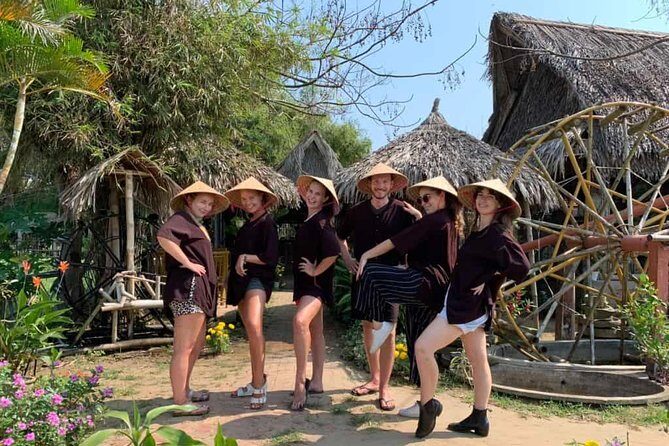
Your tour begins with Stop 1: Tra Que Water Wheel. Even if you don’t know what it does mechanically, starting here gives you a sense of place. It’s a clear landmark that links the whole visit to water management—exactly the kind of element you’ll keep seeing once you’re in the ponds and garden areas.
I like the idea of this first stop because it sets expectations. The day isn’t just herbs in planters. It’s herb farming tied to water, soil, and a living system that includes fish and irrigation-style connections.
Welcome drinks and a village walkthrough you can actually follow
After you’re settled, you’re greeted with welcome drinks. It sounds small, but it helps you start in a relaxed mode instead of jumping straight into work.
From there, you get a guided tour of the village, including the village’s history and what makes Tra Que different. The point of this part isn’t trivia bingo. It helps you understand what you’re about to do with your hands—why seaweed matters, why ponds matter, and how the different elements connect.
If you’re the type who likes context, this segment is worth paying attention to. It turns the later steps—fertilizer, beds, watering—into something with meaning rather than just a list of tasks.
Seaweed to fertilizer: the hands-on farming session
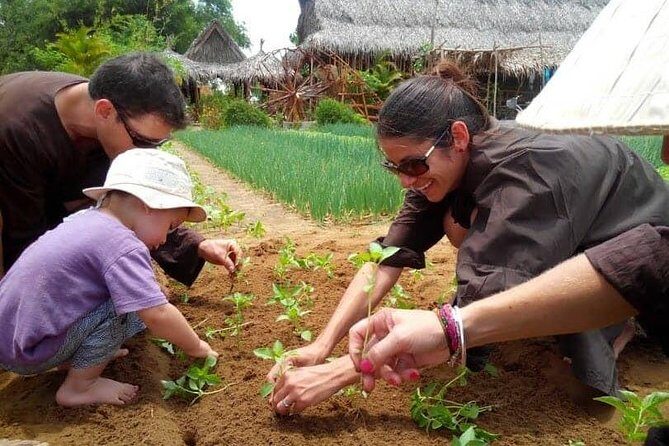
This is the heart of the experience. You’ll farm with local farmers in the vegetable village area and learn how their riparian ecosystem works in plain, practical steps.
Here’s what you can expect during the farming part:
- learning the history and purpose of the herb village
- picking seaweed to use as fertilizer for vegetables
- visiting ponds and the areas where fish and water systems support farming
- working around the animals that are part of daily farm life (including buffalo, plus birds like chicken and duck)
- joining in planting tasks such as digging, making beds, transplanting vegetables, and watering
A key detail: you don’t need to be strong or experienced. The tour is designed for participation. You’ll follow the guide’s lead as they show you what to do and why. And because this is a small group, it’s easier to step forward and get help if you’re unsure.
One caution though: this is real farm work. Even if the pace is guided, you should expect mess, sun, and physical movement. Wear clothing you don’t mind getting dirty, and plan to take things at the farm speed, not the city speed.





Ponds and gardens: the part that makes everything click
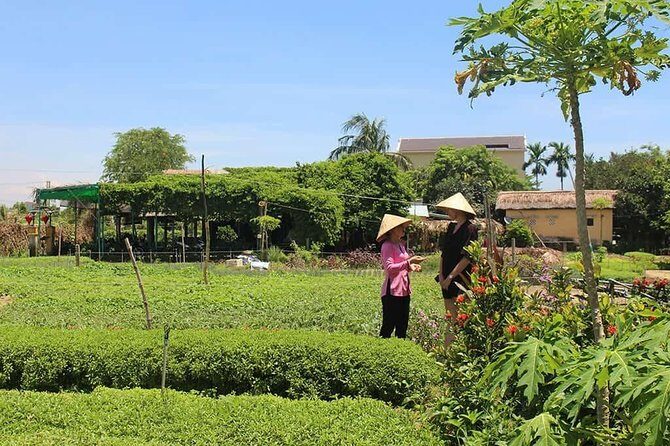
As you move through farms, ponds, and vegetable gardens, you’ll start seeing patterns. The ponds aren’t just decoration, and the beds aren’t random rows. They’re part of a system—water, soil, plants, and animal life all interlocking.
This is also where the small-group format pays off. You can ask questions, and you won’t feel like you’re constantly waiting for the whole group to catch up. You’ll notice details more clearly: different plant areas, how the beds are formed, and how watering fits the day.
If you want a tour where you can ask why something is done a certain way, this is a good match.
Bamboo basket boat and buffalo ride: moving through the farm landscape
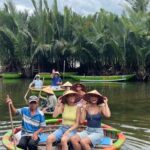
After the farming tasks, you’ll do the fun transportation pieces: a bamboo basket boat and a buffalo ride.
These activities matter because they break up the day. You go from hands-on work to actually traveling across and through the water-based parts of the village. The bamboo boat option keeps you close to the ponds without feeling like you’re stuck in a classroom.
The buffalo ride adds another layer. It’s not just for photos; it’s a way to experience how the farm world is laid out, with routes and water channels that locals use as part of daily routines.
The main consideration here is comfort and balance. If you’re cautious with rides, take it slowly and listen to the guide’s instructions so you feel steady.
Head-Shoulder-Foot massage: the smart reset before lunch
Next comes relaxation: a body massage, often described as a Head-Shoulder-Foot style. After digging, transplanting, and walking around ponds, your body will be grateful.
This isn’t just a random add-on. It functions like a pacing tool for the whole experience. You get active time first, then you get restored before the meal.
And if you’re traveling with kids or you’re worried about the day getting too tiring, this massage moment is a relief. It gives everyone a calmer stretch before sitting down.
Traditional lunch: what you should expect
Lunch is included, and it’s served after the farm and relaxation steps. The goal is to let you enjoy the result of the day—food that fits the setting instead of a generic meal stop.
Some days and group experiences may include cooking-related elements before you eat, depending on how the host plans the flow. What you can count on from the tour structure is that lunch comes after farming and massage, and it’s positioned as a natural finish to the farm work.
Practical tip: if you’re doing hands-on tasks, you’ll likely want to hydrate and then take your time with lunch. This is a good moment to slow down and let your body recover from the farm effort.
What makes this tour stand out in Hoi An
In Hoi An, it’s easy to only scratch the surface: old streets, lanterns, and quick photo stops. This tour gives you a different angle. You get out of the tourist rhythm and into a place where the main story is how food systems work.
The most praised aspect across different guide experiences is the teaching. Guides like Spring and Xuan are known for explaining herbs and farm routines in a way that feels patient and clear. And with guides such as Trang or Kun, the vibe tends to be welcoming and practical, not stiff or scripted.
That approach changes your whole experience. When you understand what seaweed fertilizer does, or why beds get prepared a certain way, you stop thinking of the visit as entertainment. You start thinking of it as a window into how people live and grow food.
Who this tour is best for
This fits best if you:
- want something more local than a standard city tour
- enjoy hands-on activities (gardening basics, watering, helping prepare beds)
- like animals and waterways as part of the story
- would appreciate a built-in break with massage before eating
It might not be ideal if you:
- want a purely sightseeing-only day
- hate getting dirty or doing light physical work
- have limitations with riding or spending time outdoors near ponds
Good news: the time commitment is short—about 3 hours—so you can still enjoy Hoi An afterward without losing your whole day.
Weather and how to plan around it
The tour requires good weather. If poor weather cancels it, you’ll be offered a different date or receive a full refund. That’s important because the activities involve outdoors time around gardens and water.
I’d plan this earlier in your Hoi An schedule so you have flexibility if the first attempt gets weathered out. And if you’re packing, think farm day: sun protection and comfortable clothing for walking.
FAQ
FAQ
How long is the Farming with the Local Famers tour?
It’s approximately 3 hours.
What does the tour cost?
The price is $40.00 per person.
Is lunch included?
Yes. Lunch is included.
Do they offer pickup in Hoi An?
Yes, round-trip transportation from Hoi An is included, with pickup offered.
How big is the group?
The tour has a maximum of 15 travelers.
What activities are included?
You’ll do farming with local farmers, visit farms, ponds, and gardens, row a bamboo basket boat, take a buffalo ride, and get a head-shoulder-foot massage before lunch.
Where does the tour start?
Stop 1 is the Tra Que Water Wheel.
Do I need good weather to go?
Yes. The experience requires good weather. If it’s canceled due to poor weather, you’ll be offered a different date or a full refund.
What’s the cancellation policy?
You can cancel for a full refund up to 24 hours in advance. If you cancel less than 24 hours before the start time, the amount you paid isn’t refunded.
Should you book this in Hoi An?
If you want a short, hands-on break from the usual Hoi An sightseeing loop, this is a strong choice. The combination of farming work + pond activities + buffalo and bamboo boat + massage + lunch gives you a full story arc in just a few hours, and the small group size keeps it personal.
Skip it only if you’re looking for a quiet, low-effort photo tour. Otherwise, book it with confidence. You’ll leave with a clearer idea of how local vegetables and herbs actually happen, and you’ll have eaten a meal that makes sense for the day you just lived.