REVIEW · HOI AN
Hue City Tour Full Day – Depart from Da Nang / Hoi An
Book on GetYourGuide →Operated by CONNECTTRAVEL · Bookable on GetYourGuide
Hue feels like two trips in one. You get mountain views on the way in, then classic royal Hue once you arrive—Hai Van Pass and Imperial Citadel included. I like that this is a small group setup, capped at 12, so the day doesn’t feel chaotic.
Two things I especially enjoyed: the way the stops connect (pagoda, tomb, citadel) and the quality of the guiding. Guides like Dingh and Mr Sang were clearly set on making the sites easy to picture, not just recite details. It helps that pickup/drop-off is handled door-to-door from Da Nang or Hoi An.
The one drawback to keep in mind is the pace. With early pickup (around 7:00–8:30am) and a late finish (about 6pm from Da Nang / 7pm from Hoi An), you’ll cover a lot of ground in one long 11-hour day. If you prefer a slow, low-effort sightseeing rhythm, this schedule may feel tight.
In This Review
- Key Things You’ll Notice On This Hue Day Trip
- Hue From Da Nang or Hoi An: How the Day Is Built
- Morning Drive: Hai Van Pass Views and Lap An Lagoon Time
- Khai Dinh Tomb: When Two Worlds Meet in Stone
- Lunch in Hue: How Food Fits the History Stops
- Imperial Citadel of the Nguyen Dynasty: 520 Hectares of Power
- Thien Mu Pagoda: Hue’s Oldest Pagoda Stop
- Getting Back: The Long Ride Out and a Smooth Finish
- Guide Quality Makes the Difference: Dingh, Sang, and Thommy
- Price and Value: Is $45 a Smart Deal for a Hue Highlights Day?
- Should You Book This Hue City Tour Full Day?
- FAQ
- What time does the tour pick me up from Hoi An and Da Nang?
- What main stops are included in the day?
- Are entrance tickets included?
- How large is the group?
- What’s included in the price, and what isn’t?
- When do we return to Da Nang or Hoi An?
Key Things You’ll Notice On This Hue Day Trip
- Small-group feel (up to 12 people) for easier questions and smoother timing
- Hai Van Pass viewpoints plus a stop at Lap An Lagoon on the drive
- Khai Dinh Tomb with mixed Western–Eastern architecture and very detailed decor
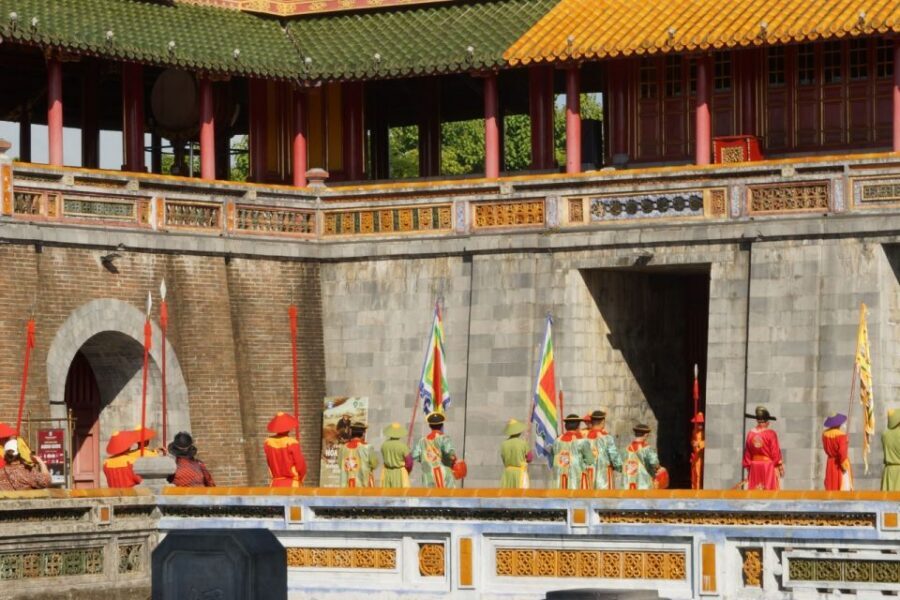
- Imperial Citadel (Nguyen Dynasty) across a huge 520-hectare complex
- Thien Mu Pagoda as Hue’s oldest pagoda, built in 1601
- Lunch included with Hue speciality dishes and bottled water on the way
Hue From Da Nang or Hoi An: How the Day Is Built
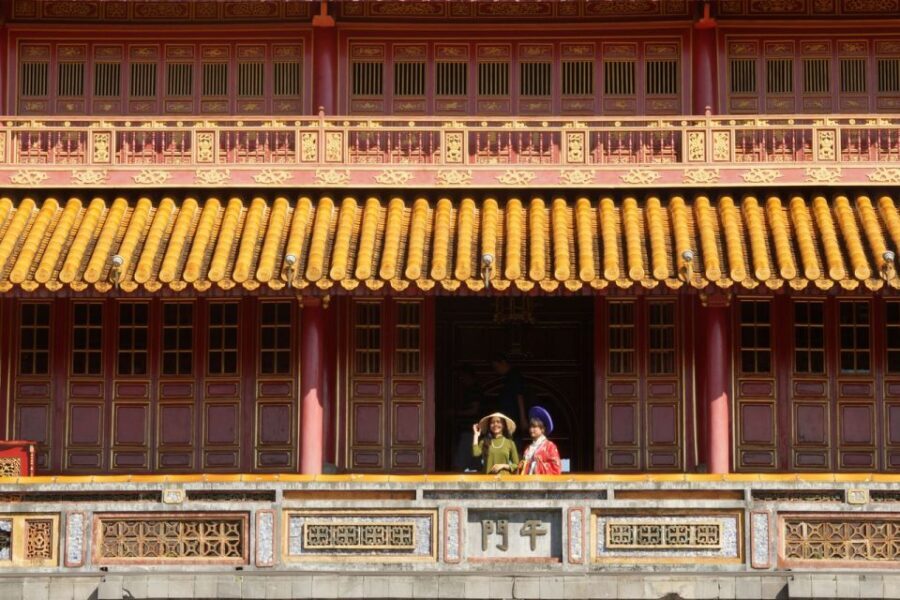
This tour is designed as a full-day hits-the-essentials loop. You start with pickup from your hotel, then head toward Hue with scenic breaks built in, not just a straight drive. From there, it’s a classic sequence: royal power (tomb and citadel), spiritual Hue (Thien Mu pagoda), and a Hue food stop where you can actually refuel.
I like that you’re not piecing together tickets and transport on your own. Entrance tickets for the Hue Imperial Citadel and Khai Dinh Tomb are included, and you’re traveling in a new air-conditioned vehicle. That means your energy stays on the sights, not on logistics.
One more practical benefit: English is covered by a live guide, so the day makes sense even if you don’t know Vietnamese history already. And with a small group (limited to 12), you’ll usually get better timing at entry points and more room for questions.
You can also read our reviews of more city tours in Hoi An



Morning Drive: Hai Van Pass Views and Lap An Lagoon Time

Your day starts early. Pickup is typically 7:00–7:30am from Hoi An and 8:00–8:30am from Da Nang. After that, you head toward Hue with a stop plan that focuses on scenery, not just transit.
A big highlight is the Hai Van Pass. Many transport routes use the tunnel, but here you have the option to go up the pass instead and enjoy the views. This is the stretch that bends around the Truong Son mountain range between Hue and Da Nang, with mountains, blue sky, and green forest scenery. Even if you’ve seen photos of the pass before, it hits different when you’re actually on the road and looking outward.
Then you stop at Lap An Lagoon. It sits beside Bach Ma forest and Lang Co beach area, and it’s described as a large brackish lagoon (about 800 hectares). What I like about this stop is that it’s not a random bathroom break; it’s an on-the-spot chance to understand the geography that shapes coastal Hue province—water, forest edges, and wildlife habitats.
If you’re prone to getting travel-weariness early, bring something small for comfort (water is provided, and you’ll have plenty of time to sit before the next major walk). The best strategy here is to treat the drive as part of the experience, not time you’re wasting.
Khai Dinh Tomb: When Two Worlds Meet in Stone
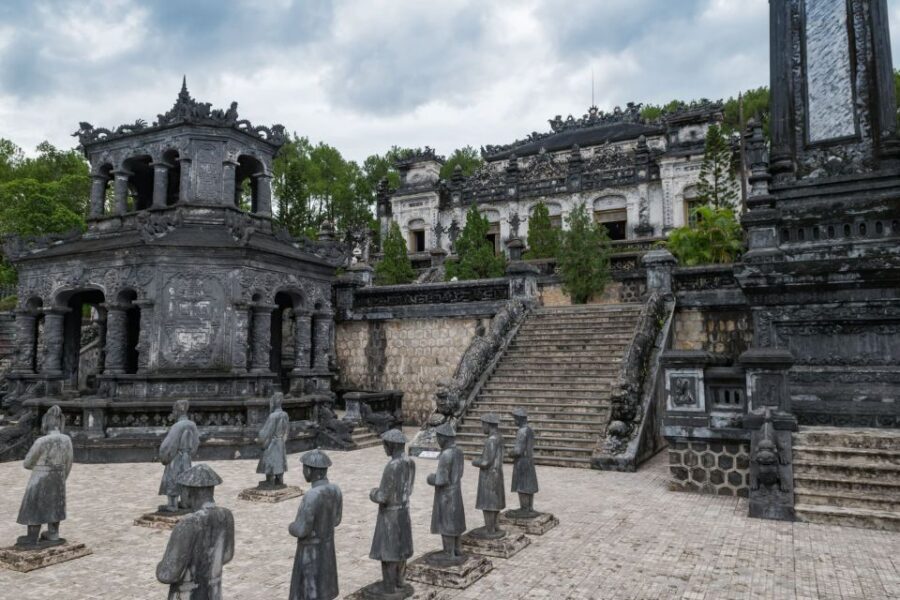
Next up is Khai Dinh Tomb, the resting place of the 12th Emperor of the Nguyen Dynasty (ruled from 1916 to 1925). His tomb was completed in 1931, and it’s known for a fusion of Western and Eastern architectural styles. That blend is a big part of why this tomb draws repeat attention—details aren’t only traditional; they mix influences in ways you don’t expect from an imperial site.
You’ll also see why this stop isn’t just about standing in front of a gate. The description focuses on the tomb’s “intricate details” and “lavish decorations,” so expect your time here to be about looking closely and letting the guide help you connect design choices to the era.
One tip from how guides tend to approach this kind of site: give yourself permission to slow down for a few minutes at key viewpoints. This is the type of monument where small details are the point, not just the overall structure.
The pacing here matters. You’re coming from the morning drive, then shifting into a more quiet, reflective space. It’s a good transition before the larger scale of the Imperial Citadel.
Lunch in Hue: How Food Fits the History Stops
By around 12:30pm, you’ll have lunch at a local restaurant with Hue speciality dishes. Lunch is one of those “simple” parts of a tour that can make or break the day. Here, it’s built in—so you’re not hunting for food between major attractions.
From the way people describe the meal, the lunch experience is a highlight. One of the best notes in the feedback is that the meal was among the most satisfying they’d had across similar trips. I take that seriously: included meals often end up being average, so a meal that people remember usually means you’re not being rushed through something bland.
Also, bottled water is included. On a long day with several walking segments, that matters more than it sounds—especially after a scenic morning drive.
If you’re sensitive to spice or have dietary restrictions, this is the moment to think ahead. The only thing you can control is your order and portion size; the tour already handles the restaurant stop.
Imperial Citadel of the Nguyen Dynasty: 520 Hectares of Power
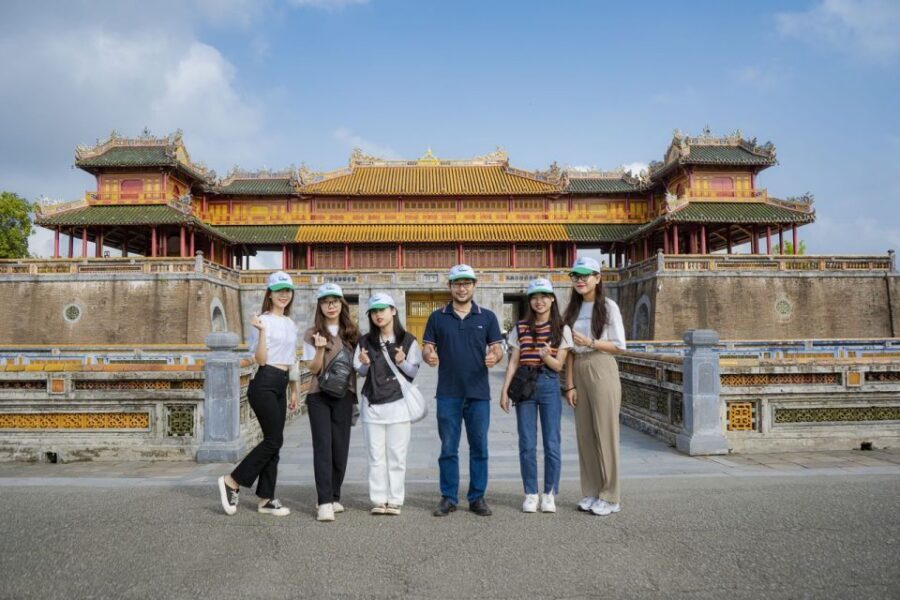
After lunch, you move into the heart of royal Hue: Imperial Citadel, home of Vietnam’s last royal dynasty, the Nguyen Dynasty. The site is enormous—described as a complex of around 100 monuments across 520 hectares.
What makes this more meaningful than a “big fortress” stop is the human scale behind the structure. The citadel was both a working space and a private residence. It was the former residence of 13 emperors, along with concubines and eunuchs. That detail changes how you see the site. You’re not just looking at walls; you’re imagining daily life inside a power center that shaped centuries.
A practical note: with a space this large, you won’t walk every corner of it. You’ll likely focus on key areas within the citadel complex. That’s fine, as long as you recognize the strategy: you’re seeing the essentials, not trying to do “everything in one day.”
If you want to make the most of your time here, watch for the guide’s phrasing about function—where people lived, where the court worked, and how the complex was organized. That’s where a good guide turns a giant site into something your brain can actually hold.
You can also read our reviews of more tours and experiences in Hoi An





Thien Mu Pagoda: Hue’s Oldest Pagoda Stop
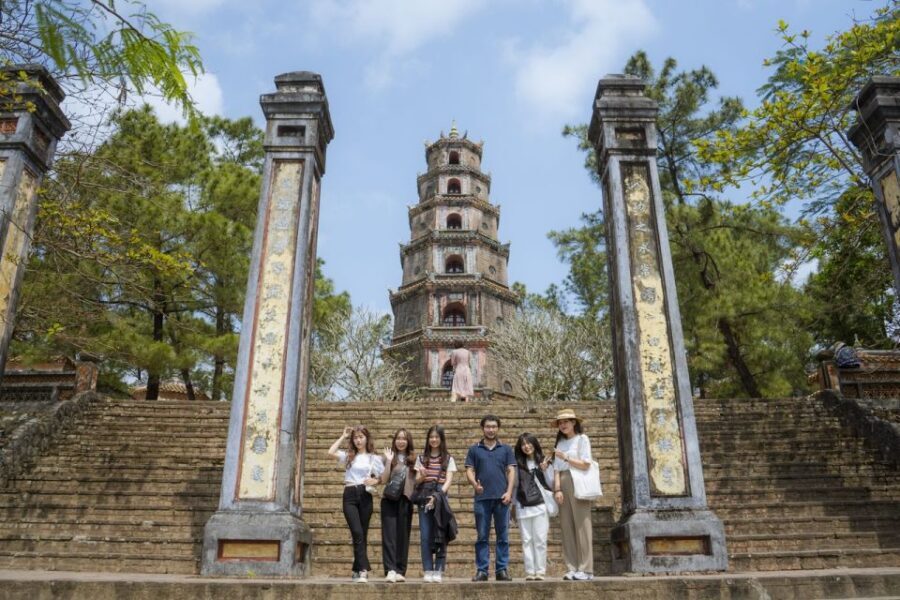
Next you’ll visit Thien Mu pagoda, described as the oldest pagoda in Hue city. This is a seven-story pagoda built in 1601, and it’s still standing—so it’s also a living piece of the city’s long religious timeline.
The way the stop is framed is important: you don’t just take photos. You get a chance to learn about Vietnamese Buddhism and why the pagoda matters to the local community. For me, that makes a big difference. A spiritual site without context can feel like another monument. With context, it becomes a window into how traditions are maintained.
This stop also gives you a change of pace from the earlier royal focus. Tomb and citadel are about power and memory. A pagoda visit shifts the mood toward continuity and community meaning.
Timing-wise, you’re balancing daylight and the end-of-day return plan. Try to keep your energy steady—don’t burn it all on the first walk into the pagoda grounds. Save some attention for the viewpoints and architectural details.
Getting Back: The Long Ride Out and a Smooth Finish
At about 4:00pm, you begin your return journey to Da Nang or Hoi An. Arrival times are approximate but helpful for planning: about 6pm back in Da Nang and around 7pm in Hoi An.
This is the moment where you’ll feel the “full day” truth. You’ve gone from mountains to lagoon to tomb to citadel to pagoda, and your body will remind you you started early. If you plan dinner or a night activity afterward, I’d keep it flexible. You’ll be tired, but it’s the kind of tired that comes from seeing a lot, not from chaos.
The good news is that transportation is part of the included value: pickup/drop-off, bottled water, new air-conditioned vehicle, and a driver who stays on time at meeting points.
Guide Quality Makes the Difference: Dingh, Sang, and Thommy
On tours like this, the guide is the real multiplier. You can only handle so many stones and gates before it turns into blur. The notes you provided make it clear the guides are doing more than reading facts.
Dingh stood out for being funny and interesting, with plenty of information that didn’t put people to sleep. Mr Sang was praised for clearly explaining the history behind each stop, and for helping make the scenery feel connected to the story. Thommy also got strong marks for being entertaining alongside the facts.
What that tells me as a reader is that the tour isn’t meant to be purely transactional. The guiding style matters, and the descriptions you shared point to real effort—especially on keeping the pace readable and the day engaging even during the long drive.
When you choose a small-group tour, you’re buying time with a guide. In this case, the guide names matter because they’re linked to how people actually felt during the day.
Price and Value: Is $45 a Smart Deal for a Hue Highlights Day?
At $45 per person, this tour has good odds of being a solid value for most people doing a first visit to central Vietnam. Why?
First, you’re getting included transport from either Da Nang or Hoi An, plus air-conditioned vehicle comfort. Second, entrance tickets for Hue Imperial Citadel and Khai Dinh Tomb are included, so you’re not adding those costs later. Third, you get an included lunch with Hue speciality dishes, bottled water, and travel insurance. You’re also working with a live English-speaking guide and a small group limited to 12 participants.
The main “cost” isn’t money; it’s time and energy. Because it’s a full-day schedule, you should book it only if you’re genuinely ready for the long day pattern. If you want Hue at a slower tempo, you might feel rushed.
So here’s the honest way to think about it: if you’re short on time and want a concentrated introduction to royal Hue plus a stop at the oldest pagoda, this price looks fair. If you already planned separate transport and only want one or two of these sites, you may not get the same value.
Should You Book This Hue City Tour Full Day?
I’d book it if you fit this profile: you’re based in Da Nang or Hoi An, you want the main Hue landmarks in one day, and you appreciate a guide who can explain the why behind the stones. The small group size, hotel pickup/drop-off, and included tickets make the day feel organized rather than stressful.
I wouldn’t rush to book if you dislike long schedules or you’re the type who wants hours of free wandering. This tour is built for highlights. You’ll see a lot, but it’s not built for lingering.
If you’re on your first Hue visit and you want to come away understanding the city’s royal and spiritual sides, this is a straightforward, high-value way to do it—especially with the guide impact people highlighted, from Dingh to Mr Sang to Thommy.
FAQ
What time does the tour pick me up from Hoi An and Da Nang?
Pickup is usually 7:00–7:30am from Hoi An and 8:00–8:30am from Da Nang.
What main stops are included in the day?
You’ll visit Hai Van Pass, Lap An Lagoon, Khai Dinh Tomb, Hue Imperial Citadel, and Thien Mu pagoda, plus lunch at a local restaurant with Hue speciality dishes.
Are entrance tickets included?
Yes. Entrance tickets to Hue Imperial Citadel and Khai Dinh Tomb are included.
How large is the group?
The tour is a small group, limited to 12 participants.
What’s included in the price, and what isn’t?
Included: hotel pickup and drop-off (Da Nang/Hoi An), tickets to Imperial Citadel and Khai Dinh Tomb, English speaking guide, air-conditioned vehicle, meals as mentioned, bottled water, and travel insurance. Not included: meals/drinks not mentioned and personal expenses.
When do we return to Da Nang or Hoi An?
Return begins around 4:00pm. You’ll arrive approximately 6pm in Da Nang and 7pm in Hoi An.