REVIEW · HOI AN
Farming & Cooking Class in Hoi An – Small Group Tour
Book on Viator →Operated by Cooking Class in Tra Que Organic Vegetable Village · Bookable on Viator
Tra Que is not just a backdrop. It is a real vegetable village where you’ll farm, cook, and eat what you make in one smooth 5-hour block. I love the way the day starts at a local market and then moves straight into the farm, so you see the ingredients before you touch the knife. I also love the hands-on cooking: you chop, mix, and cook dishes like green papaya salad and fish in clay pot instead of just watching. One possible drawback to plan for: the experience depends on good weather, and some parts outdoors may be adjusted or shifted if conditions aren’t great.
This is a small-group style tour (maximum 15), with hotel pickup offered and an English-speaking local guide and chef. You’ll get farming tasks like hoeing soil, collecting seaweed, and transplanting and watering, plus a break with a traditional foot massage using medicinal herbs. By the end, you’re not only eating a great lunch—you’re leaving with recipes and techniques you can actually repeat at home.
If your idea of a good Hoi An day includes food, country calm, and doing rather than just looking, this one fits. If you want lots of free time for browsing old streets or beach lounging, you’ll have to balance this against the rest of your schedule.
In This Review
- Key highlights you will feel right away
- Why Tra Que farming and a Hoi An cooking class work so well together
- From hotel pickup to the local market: where your meal starts
- Tra Que Vegetable Village: hands-on farming you can actually picture later
- A break with a traditional foot massage before you cook
- Cooking class mastery: papaya salad, spring rolls, banh xeo, and clay-pot fish
- Vegetarian and special diets
- The meal you earn: eating what you cooked, plus practical takeaways
- How the $38 price stacks up for a 5-hour food-and-farm day
- Timing, small group size, and what to plan for
- Should you book this Hoi An farming and cooking class?
- FAQ
- Is pickup from my hotel included?
- How long is the tour?
- What do you cook during the class?
- Is lunch included?
- Do they accommodate vegetarian or special diets?
- Is there a small group size limit?
- Does the tour include the farming part?
- What is included besides the cooking class?
Key highlights you will feel right away
- Market-first ingredients: you select what you’ll cook in a local produce market before the kitchen starts.
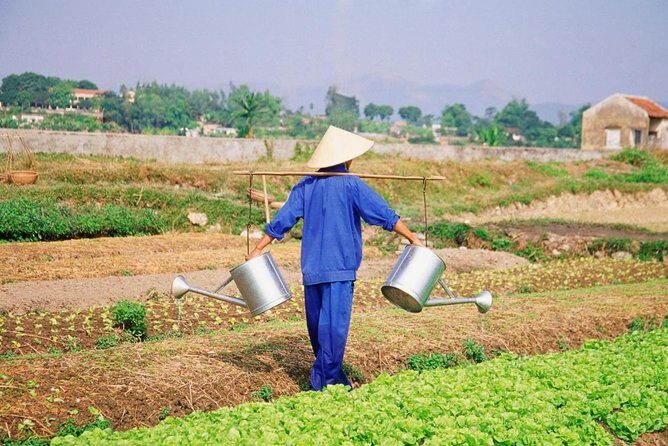
- Real farm work at Tra Que: you do tasks like hoeing, transplanting, watering, and even collecting seaweed.
- Traditional foot massage break: a herbal foot massage gives your legs a breather before cooking.
- Crisp, practical Vietnamese recipes: papaya salad, spring rolls, Vietnamese pancake (banh xeo), and fish in clay pot.
- Small group cap of 15: more time with the guide and better hands-on help.
Why Tra Que farming and a Hoi An cooking class work so well together
I like this experience because it matches how Vietnamese cooking is actually taught: learn ingredients, learn technique, then cook and eat as a group. Starting at the market means you do not just memorize recipes. You understand what’s seasonal and why certain herbs matter for flavor.
Then Tra Que Organic Vegetable Village adds a second layer. This is not a themed set. You cycle through rice fields and quiet villages, walk through the garden to spot the herbs and vegetables you’ll use, and then do hands-on farming with a local farmer. The day makes a lot more sense when you’ve pulled weeds, watered plants, or collected seaweed with your own hands.
And yes, the cooking is the payoff. You’re not stuck with one dish. You make multiple classics, including dishes that can be intimidating if you only learn from a cookbook.
You can also read our reviews of more cooking classes in Hoi An
From hotel pickup to the local market: where your meal starts
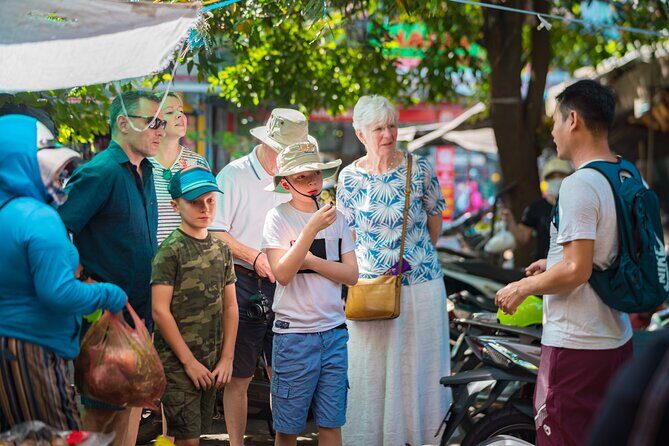
Your morning or afternoon kicks off with a local guide meeting you at your hotel (pickup is offered). From there, you head to the local market where you choose ingredients for the dishes you’ll cook later. This is one of the most useful parts for me, because the chef and guide can point out vegetables and herbs you might not recognize in a supermarket back home.
Expect explanations of produce you’ll see in Vietnamese cooking—especially the kinds of greens and herbs that bring a sharp, fresh balance to dishes like papaya salad and spring rolls. You also get to match ingredients to flavors as you go, instead of learning only at the stove.
Then the tour shifts into motion: you cycle through rice fields and peaceful villages on the way to Tra Que. It’s a calmer segment of the day, and it helps you transition from city food shopping into countryside farming. If you’re the type who gets annoyed by travel days with no time to breathe, this pacing is a win.
Tra Que Vegetable Village: hands-on farming you can actually picture later
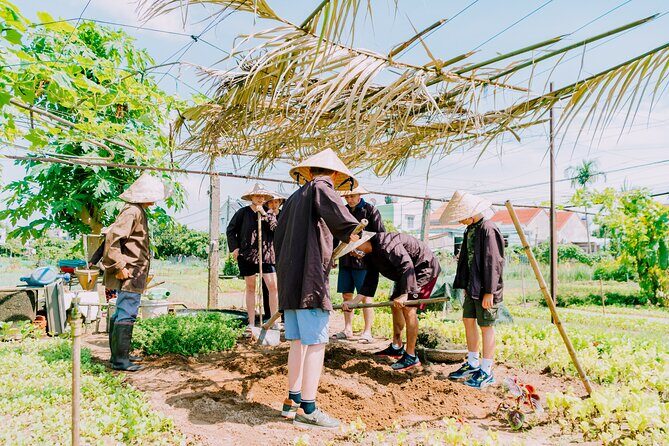
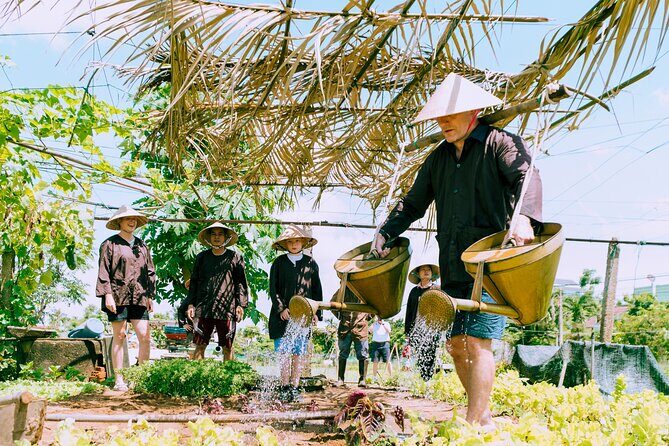
Tra Que Vegetable Village is where the tour earns its keep. You do more than walk around taking photos. You take part in farming activities guided by a local farmer, and you’ll likely touch several parts of the growing process.
Based on the tour flow, you can expect tasks such as:
- hoeing soil
- collecting seaweed
- transplanting and watering
Those may sound like small actions, but they change how you think about vegetables. Hoeing helps you see how soil preparation affects plant health. Transplanting and watering show the daily care behind the harvest. Collecting seaweed connects you to how coastal ingredients can appear in local food traditions.
You then take a walk through the garden where you discover culinary herbs and vegetables. This part matters because Vietnamese cooking relies heavily on fresh herbs. When you can point to the plant and remember the smell or texture from the garden, the recipes stick faster when you’re back in your kitchen.
One practical note: you’ll be outdoors for parts of this section. Wear something comfortable and plan for sun. If you prefer shoes with grip, choose them—farm paths and gardens do not always behave like sidewalks.
A break with a traditional foot massage before you cook
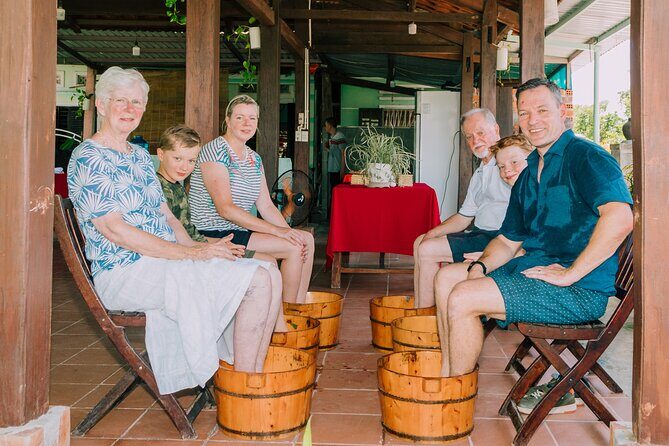
After the farming activity, you get a break, and then comes a traditional foot massage. The tour specifies a health treatment using medicinal herbs. For most people, it’s a welcome reset after using your legs and standing in garden areas.
I like this pacing because it prevents the day from feeling like a straight line of effort. Farming can be physical. Then cooking is physical too—chopping, mixing, and cooking over heat takes stamina. The massage gives you a small recovery window so you can stay present when the chef teaches technique.
If you’re someone who tends to skip “extra” wellness moments while traveling, don’t treat this as a luxury add-on. It’s timed for a reason: it helps you enjoy the cooking class rather than just power through it.
Cooking class mastery: papaya salad, spring rolls, banh xeo, and clay-pot fish
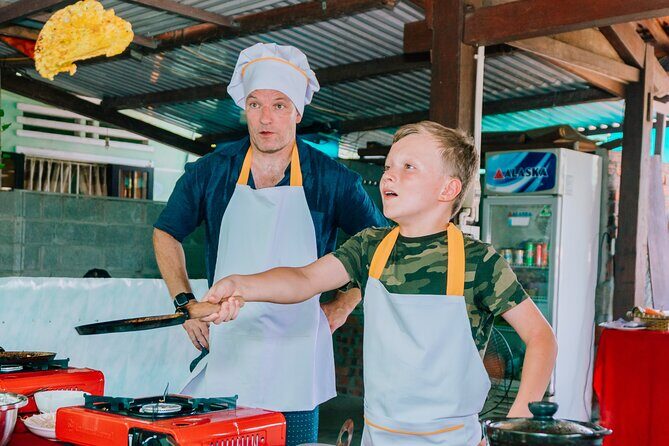
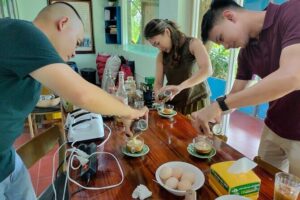
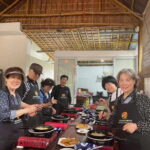
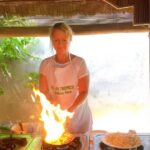
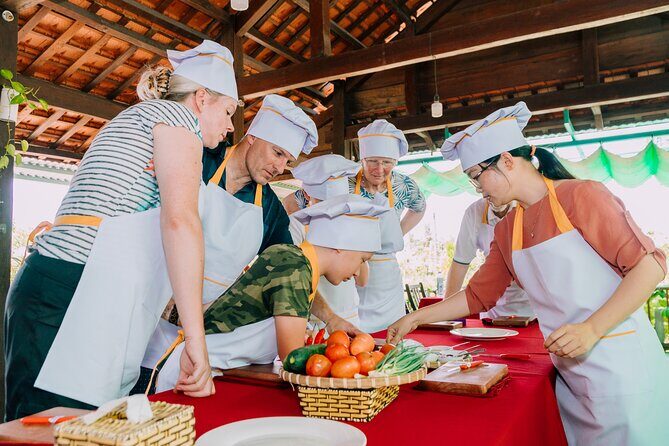
The cooking class is the heart of the experience, and it runs for about two hours. You learn how to prepare several dishes, with demonstrations from the chef and hands-on practice with your group.
You’ll learn to make:
- green papaya salad
- banh xeo (a Vietnamese crispy pancake)
- spring rolls
- fish in clay pot
Green papaya salad is all about balance. If you’ve ever eaten it and thought it was sharp, tangy, and addictive, this is where you learn why. The key is timing and texture—how you shred, how you mix, and how the flavors come together.
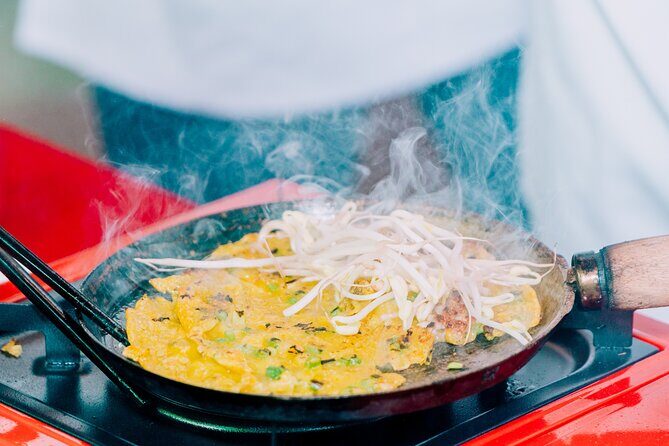
Banh xeo can be a tricky one for home cooks, because it is both delicate and crispy. Getting hands-on guidance helps you understand the batter consistency and the heat needed to get that crisp edge without turning it into a flat disappointment.
Spring rolls are another classic where technique matters. You’re learning rolling discipline and ingredient balance so they don’t turn soggy or fall apart.
Fish in clay pot is the dish that often feels like a restaurant special. Clay pot cooking is about gentle heat and keeping flavors concentrated. When you cook it yourself, you understand why the aroma tastes so different from pan-frying.
Also, the tour includes individualized instruction in a private-class style setup. Even if you’re part of a small group, you should feel like you can get questions answered without a long delay.
You can also read our reviews of more tours and experiences in Hoi An
Vegetarian and special diets
If you request vegetarian or another special diet, the tour notes that you can accommodate it. That matters here because several dishes can be adjusted, but fish is explicitly listed, so planning ahead is smart.
If you are vegetarian, message your needs when booking. If you’re gluten-free or have other restrictions, the best move is to share details in advance so the team can adapt what’s possible.
The meal you earn: eating what you cooked, plus practical takeaways
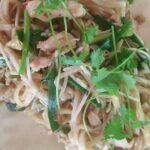
After cooking, you eat what you made. The tour doesn’t treat the meal as an afterthought—it’s part of the learning arc. When you taste your own papaya salad and then compare it to what you remember from restaurant versions, you catch the differences immediately.
I also love that you’re not left with only one dish to remember. You’ll taste a spread that includes:
- green papaya salad
- spring rolls
- banh xeo
- fish in clay pot
- plus other dishes prepared during the class
That variety helps you figure out what you want to recreate at home. Some recipes are more about fresh herb flavor. Others are about batter or cooking timing. After a day like this, you’ll usually know which skills you can repeat easily and which need a bit more practice.
You’ll leave with new recipes and cooking techniques you can use later. The real value is not just having the names of dishes—it’s understanding process: how ingredients are chosen, how fresh herbs are used, and how heat and timing change the outcome.
How the $38 price stacks up for a 5-hour food-and-farm day
At $38 per person for about 5 hours, this is priced like a bargain compared to many Hoi An cooking classes that include only a kitchen lesson and a lunch that feels generic. Here, you get multiple components bundled together.
Included highlights:
- lunch
- private transportation
- English-speaking guide/local chef
- bottle of mineral water
- traditional foot massage
- farming with farmer
There’s a logic to the pricing: you’re paying for transportation to the countryside, a guided market selection, active farm work, a massage break, and then a guided cooking session with multiple dishes. If you’re comparing to doing these activities separately, the “combo” is the point.
The tour also caps at 15 travelers, which tends to improve the teaching-to-waiting ratio. In practical terms, you’re more likely to get real help when you’re flipping pancakes or assembling rolls.
Timing, small group size, and what to plan for
You can choose morning or afternoon options. Either way, plan for a full half-day that is structured and active.
Because it’s a small group with a maximum of 15 travelers, you should expect a friendly, guided pace rather than a rushed factory line. That group size helps a lot during the cooking portion, where everyone needs space and attention.
Pickup is offered, which saves you time and hassle—especially if you’re staying near the old town and don’t want to figure out transport.
One more consideration: good weather is required. Since parts of the experience happen outdoors (market walking, cycling, garden time, farming), you’ll want to keep an eye on conditions. If weather is poor, the tour may be rescheduled or refunded.
Should you book this Hoi An farming and cooking class?
I’d book this if you want an authentic-feeling day that connects food with the way it’s grown. It’s especially good for people who:
- like hands-on experiences rather than sitting and watching
- want practical Vietnamese cooking you can repeat at home
- are curious about Tra Que Vegetable Village beyond photos
I’d think twice if you hate getting a bit muddy or standing for farming tasks, or if you’re looking for a low-effort class. Also, because fish is specifically listed, vegetarian or special diets need a clear request upfront.
FAQ
Is pickup from my hotel included?
Yes. Pickup is offered, and a local tour guide meets you at your hotel to start the day.
How long is the tour?
It runs about 5 hours (approx.).
What do you cook during the class?
You learn to prepare green papaya salad, banh xeo, spring rolls, and fish in clay pot, plus other dishes during the cooking session.
Is lunch included?
Yes. Lunch is included, and it’s the meal you eat after cooking.
Do they accommodate vegetarian or special diets?
Yes. Vegetarian and special diet options are available if you request them.
Is there a small group size limit?
Yes. The experience has a maximum of 15 travelers.
Does the tour include the farming part?
Yes. You participate in farming activities with a local farmer at Tra Que Vegetable Village.
What is included besides the cooking class?
The package includes private transportation, an English-speaking guide/local chef, a bottle of mineral water, a traditional foot massage, and farming with the farmer.