REVIEW · HOI AN
Hoi An Ancient Town Tour: Japanese Covered Bridge & Old House from Hoi An
Book on Viator →Operated by TripGuru · Bookable on Viator
Hoi An rewards early risers. This guided tour is built for that exact feeling, mixing Hoi An Market street life with photo time at the Japanese Covered Bridge. I like how it starts with real local activity and then moves into heritage spots where your guide adds useful context. One catch: the bridge can be partly covered by construction or restoration, which can limit your views.
The pacing works well if you want a structured highlights loop without turning Hoi An into a checklist. You’ll get pickup and an English-speaking guide, plus bottled water, and the whole thing runs with a small group size (up to 9), so it’s easier to ask questions while you walk. Just be ready for the fact that entrance fees are not included, and you’ll still need to budget for sites like Hoi An Old Town or pottery-related stops depending on what’s scheduled that day.
In This Review
- Key things to know before you go
- A morning market in Hoi An that feels like the real town
- Cantonese Assembly Hall and the pottery stop: history you can actually see
- The Japanese Covered Bridge photo stop: what if it’s under renovation?
- Handicraft tour time: trades, souvenirs, and how to shop without stress
- How the 6-hour format plays in real life (walking + small group)
- Price and value: what you get vs. what you’ll likely pay extra
- Where this tour is strongest—and where it can frustrate you
- Who should book this Hoi An Ancient Town tour
- Should you book this tour?
- FAQ
- What time does the tour start?
- How long is the tour?
- Is pickup included?
- Is lunch included in the price?
- Are entrance fees included?
- Is there an English-speaking guide?
- What group size should I expect?
- Is the Japanese Covered Bridge always fully visible?
Key things to know before you go
- Morning market stop: you start early enough to catch the town in full swing before it gets too busy
- Assembly hall storytelling: you’ll hear why Hoi An has multiple Chinese and Japanese assembly halls and how they’re decorated
- Pottery museum watch-time: you’re not just shopping—you can see locals working with ceramics
- Japanese Covered Bridge photo plan: a guide helps you find the best angles, even if restoration is going on
- Handicraft tour + shopping: you’ll learn traditional trades and then have time to browse souvenirs if you want
- Small group comfort: with a max of 9 people, the tour feels more personal and less rushed
A morning market in Hoi An that feels like the real town
The tour starts at 8:00 am, with pickup and drop-off from central Hoi An. That matters more than it sounds. Hoi An is much easier to enjoy when you’re not trying to find your first stop on your own right as the day begins.
Your first stop is Hoi An Market, and the timing is the point: locals wake up early, so you get the colorful, everyday rhythm—fresh fruit, vegetables, and seafood that were harvested locally that same morning. You don’t need a food tour mindset for this to be worth it. Even if you’re not buying anything, it’s a fast way to learn how locals think about the day: what’s being sold now, what’s popular, and what the town considers normal.
Tip: keep your camera ready, but also leave space for browsing without rushing. A market visit works best when you let your guide’s comments set the scene, then you take a few slow minutes to look at stalls and details.
You can also read our reviews of more tours and experiences in Hoi An.



Cantonese Assembly Hall and the pottery stop: history you can actually see

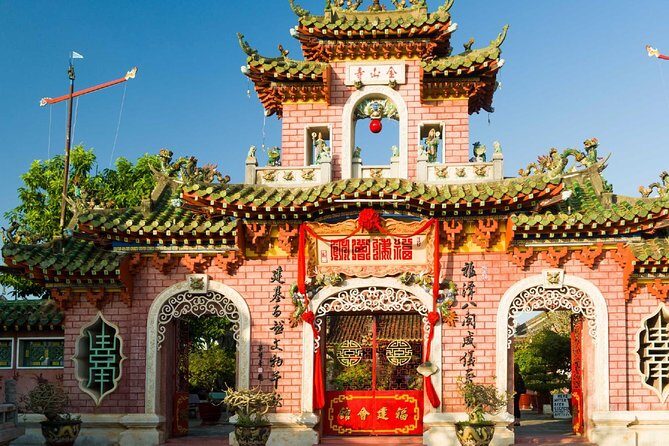
After the market, you head to an assembly hall, specifically one tied to Cantonese influence. Hoi An’s layout is packed with these Chinese and Japanese assembly halls, and this is where your guide really earns their keep. They’ll explain the history and point out the traditional decorations, so the building stops being just a pretty façade.
This part is also useful for photography. Assembly halls usually have strong symmetry and lots of carved details, and with a guide you’re less likely to spend your time guessing where to stand. You’ll also learn why these buildings exist in the first place—what they meant to communities and why they became such a visible feature of town life.
Right after that, there’s a stop at a pottery museum, where you can watch locals at work. This is a smarter pairing than it seems. The assembly hall connects you to cultural community structures; the pottery workshop shows you the day-to-day trades that kept families working and earning through the years.
What to watch for: focus on the process more than the finished products. When you see hands moving through steps, the souvenirs make more sense—and you’ll be better at spotting quality without needing a hard sell.
The Japanese Covered Bridge photo stop: what if it’s under renovation?
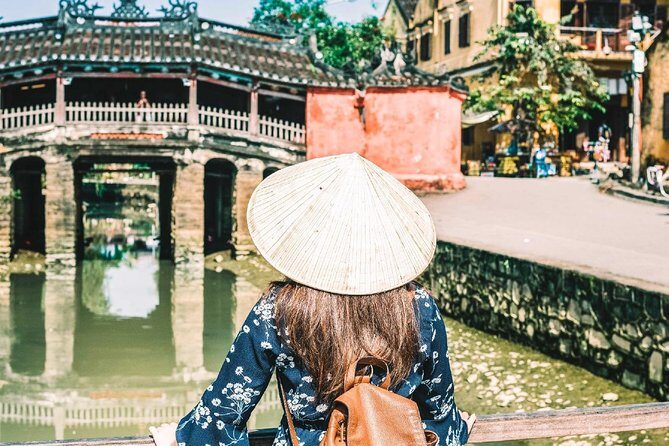
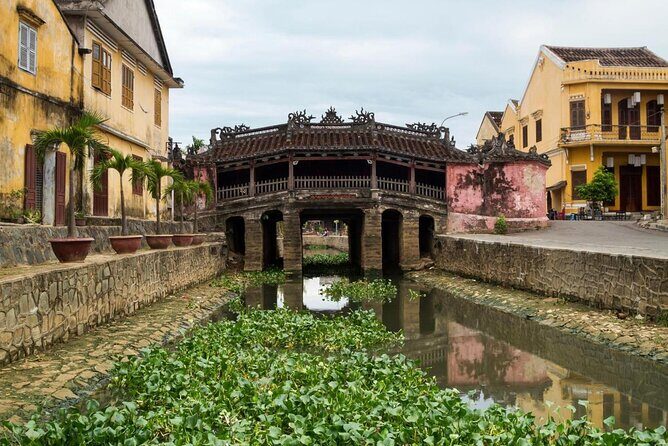
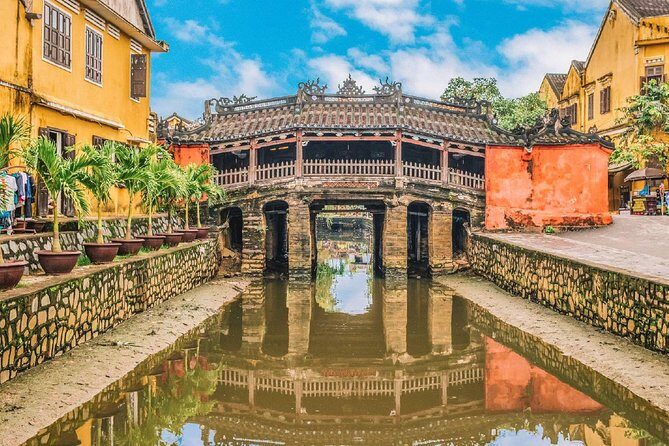
The Japanese Covered Bridge is the reason many people come to Hoi An—and the tour gives you a dedicated window to photograph it. The bridge is known as an elegant pink structure built during the Japanese occupation, and your guide shares the big historical idea: it divided the city at the time, then later became a beloved symbol instead of a barrier.
Here’s the practical issue you should plan around: the bridge can be under restoration. Some visitors report that in those moments the bridge is partially blocked by steel construction, and you might only catch fragments of the view rather than the full classic photo.
If you get a day like that, don’t treat it like a failure of planning. Treat it like a different kind of experience. Use the moment to:
- take photos from a few angles (even partial views can look dramatic)
- ask your guide what parts are still visible and where the best lines are
- shoot details—arches, textures, and any exposed sections—so you still come away with solid pictures
Also, keep your expectations flexible. The bridge is famous, yes, but the surrounding area and the story you hear still make this a meaningful stop even when the full frame isn’t available.
Handicraft tour time: trades, souvenirs, and how to shop without stress
The tour finishes the morning with a handicraft-focused segment. This is longer than a quick look through a shop, about 1 hour 45 minutes, and it’s designed for two goals: learning how locals make a living and giving you time to shop if you want.
This is where your guide’s explanation turns sightseeing into something more practical. You’ll hear how traditional trades work in Hoi An, and you’ll get a window into what people actually buy day to day versus what’s made for tourists. Even if you don’t end up purchasing, you’ll walk away with a better sense of what you’re looking at when you’re wandering the streets later.
This is also where you can handle your souvenir strategy. If you like crafts, you can browse with more confidence because you understand the basics behind materials and production. If you don’t want to shop, you can use the time for questions and then move on when you’re done.
Shopping tip: set a “buy later” rule for yourself. If you spot something tempting, take a photo, note the price, and decide after you’ve seen a bit more. That keeps you from making a rushed decision when you’re tired or the shop is trying to close sales fast.
How the 6-hour format plays in real life (walking + small group)
This experience runs for about 6 hours. That’s long enough to feel like you’re getting traction—market, assembly hall, bridge, pottery, handicrafts—without it turning into a full-day marathon.
The group size cap (maximum 9 travelers) is a major quality factor. Smaller groups usually mean:
- your guide can pause for questions without losing the whole schedule
- it’s easier to hear stories while you’re standing still for photos
- you don’t feel swallowed by a crowd at each stop
Transport is also handled for you. You get air-conditioned vehicle pickup and drop-off from central Hoi An, and the tour includes bottled water. That’s not just comfort—it helps in Vietnam’s heat, especially on a morning start.
Also note the tour is described as “good weather required.” If the day turns wet or stormy, the provider may offer a different date or a full refund. That matters because part of the value here comes from being able to walk between sites and stop for photos.



Price and value: what you get vs. what you’ll likely pay extra
At the time this was listed, the price shows $0.00 per person. Even if that’s a special promotion, it’s still worth evaluating the underlying value:
Included
- pickup and drop-off from central Hoi An
- air-conditioned vehicle
- English-speaking tour guide
- bottled water
Not included
- lunch
- personal expenses
- entrance fees for places listed separately such as Hoi An Old Town, Pottery Village, Basket Boat Ride, and Camh Village
This is a key budgeting point. The main stops you’ll likely cover (market, assembly hall area, Japanese bridge, and the pottery/handicraft portion) are part of the guided flow, but entrance fees can add up depending on what your day includes and whether specific areas charge.
So think of it like this: the tour pays for guidance and time structure. You cover food and entry fees on top. If you’re trying to keep costs low, consider bringing a snack for later or planning to eat after the tour rather than expecting lunch included.
Where this tour is strongest—and where it can frustrate you
This tour shines if you want:
- a guided path through Hoi An’s most recognizable highlights
- explanation that connects the buildings to the people who lived there
- a pottery and handicraft stop that’s more than a shopping detour
It can frustrate you if:
- you were specifically counting on an unobstructed Japanese Covered Bridge photo
- you arrive with a strict budget and didn’t plan for entrance fees
- you don’t want any souvenir browsing time
And if the bridge is partially hidden by restoration gear, you’ll want to lean into the workaround: details, angles, and the story your guide is sharing. It’s not the same as the perfect postcard view, but it’s still Hoi An—and the guide helps you get the most from what’s visible.
Who should book this Hoi An Ancient Town tour
I’d recommend this for you if you:
- enjoy walking tours but don’t want to plan every turn
- like your sightseeing paired with context (history + trade life)
- want a small group experience that doesn’t feel like a cattle line
- plan to do some extra independent wandering afterward and want an easier start
I’d skip it if you:
- only care about one single photo and you’re not okay with the bridge being under restoration
- strongly prefer self-guided visits with zero structured stops
- want lunch included in the price
Should you book this tour?
If your goal is to get your bearings in Hoi An and hit the big-name spots with a guide who can explain what you’re seeing, this tour is a solid move. The best value comes from the mix: market morning for real atmosphere, an assembly hall stop for cultural context, and a pottery/handicraft segment that shows how people actually make things.
Just go in with realistic expectations about the Japanese Covered Bridge if restoration is underway, and double-check how entrance fees are handled for the specific sites you care about. If you do that, you’ll end up with a day that feels practical, guided, and genuinely useful for the rest of your time in town.
FAQ
What time does the tour start?
The start time is 8:00 am.
How long is the tour?
It runs about 6 hours.
Is pickup included?
Yes. Pickup and drop-off from central Hoi An are included.
Is lunch included in the price?
No. Lunch is not included.
Are entrance fees included?
No. Entrance fees are not included, and they can apply for sites like Hoi An Old Town and pottery- or village-related areas.
Is there an English-speaking guide?
Yes, the tour includes an English-speaking tour guide.
What group size should I expect?
This tour has a maximum of 9 travelers.
Is the Japanese Covered Bridge always fully visible?
Not necessarily. The bridge can be under renovation or covered by construction at times, which may limit the view.