REVIEW · HOI AN
Hoi An: Bay Mau Eco Cooking Tour
Book on Viator →Operated by Bay Mau Eco Cooking Tour · Bookable on Viator
Vietnamese cooking starts with rice pounding. This Bay Mau Eco Cooking Tour turns Hoi An’s Cam Thanh Coconut village into a real food workshop, starting with market shopping for fresh herbs and ingredients and ending with you making rice paper and other staples.
I especially like how much time you spend doing the work yourself, not just watching. I also like the door-to-door flow, which keeps the day easy to manage in the middle of a busy Hoi An itinerary.
One thing to consider: the schedule can feel fast-paced, with several activities packed into a half-day. If you’re the type who wants a slow, wander-at-your-own-speed pace, you might feel a little rushed during the cooking part.
In This Review
- Key things to know before you go
- How the Bay Mau Eco Cooking Tour runs (and why it feels efficient)
- The market stop: your first lesson in Vietnamese flavor
- Cam Thanh village and the rice workshop you can’t fake
- Rice tools, station flow, and the pace question
- Your lunch or dinner: the payoff of cooking what you chose
- Bay Mau coconut forest by basket boat: fun, but plan for real conditions
- Price and value: is $35 worth it?
- Who should book this tour (and who might not)
- Should you book the Hoi An Bay Mau Eco Cooking Tour?
- FAQ
- What time does pickup happen?
- Where does the tour pick you up and drop you off?
- How long is the Bay Mau Eco Cooking Tour?
- Is this a private tour?
- What meals are included?
- Does the class teach rice-related techniques?
- Is there a boat ride included?
- What’s included in the price, and what is not?
- What happens if the weather is bad or I cancel?
Key things to know before you go
- Market shopping with purpose: you pick ingredients first, then cook with what you chose
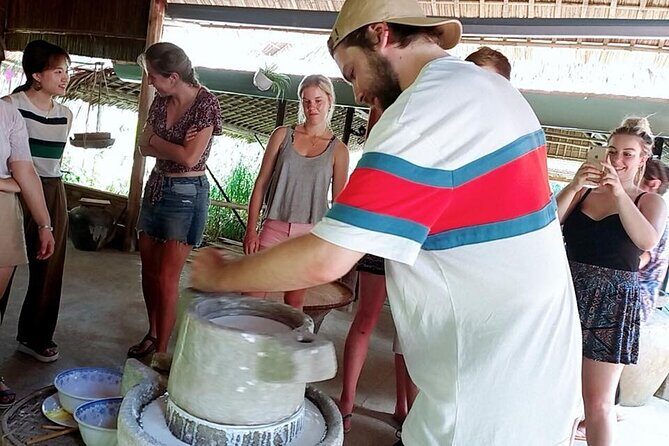
- Cam Thanh rice skills: pounding rice, separating rice, grinding for rice milk, and making rice paper
- Traditional tools get used: stone mortar and grinder, plus a wooden pestle style setup
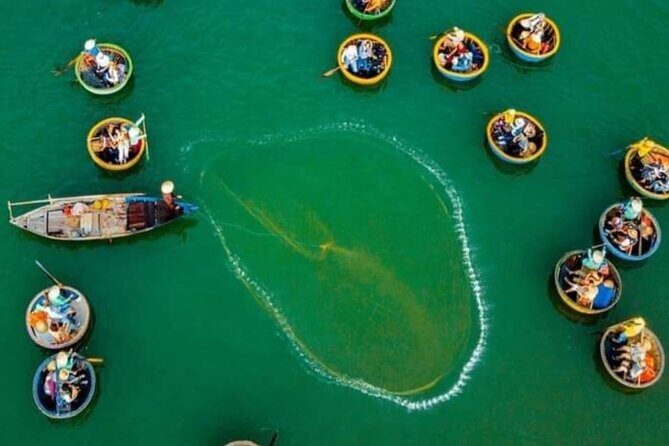
- Bay Mau basket-boat ride: explore the coconut forest by coracle-style basket boat
- You eat what you cook: lunch or dinner is included, prepared by your own hands
- Central hotel transfers: pick up and drop off by car in Hoi An (mobile ticket is used)
How the Bay Mau Eco Cooking Tour runs (and why it feels efficient)
This is a 4-hour 40-minute, hands-on class built around a simple idea: start with ingredients, learn the craft, then sit down to eat your work. Hotel pickup is around 8:20am, and you’re back at your hotel by 1:00pm—a great shape for a day when you want culture and food without losing the whole afternoon.
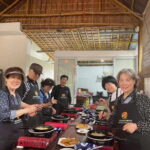
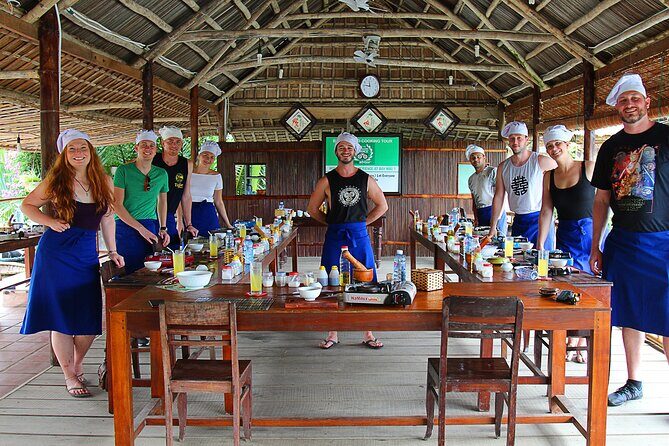
It’s also set up as a private tour/activity, meaning you won’t be squeezed into a big group scramble. That usually matters with cooking classes, because the guide needs to see what you’re doing at the mortar, at the griddle, and at the prep stations.
Transfers are part of the deal. You’ll get a free car ride from a central Hoi An hotel area (Hoi An only), and you’ll return the same way. That reduces the “how do I get there” stress, especially if you’re staying in the old town zone and don’t want to negotiate transport mid-morning.
You can also read our reviews of more cooking classes in Hoi An

The market stop: your first lesson in Vietnamese flavor
Your morning kicks off at a local market where the guide helps you understand what drives Vietnamese cooking. You’ll look at main ingredients you’ll use later, with a focus on herbs and spices and how they fit together as flavors, not just random items in a basket.
I like market stops like this because they change the way you cook later. When you’ve already handled the ingredients—smelling, choosing, and hearing what each one does—you don’t just follow instructions. You understand why the dish tastes the way it does.
Expect more than a quick browse. The goal is to select fresh produce for your class, so you can actually cook with the ingredients you picked. If you’re a foodie, this part is also the most direct way to learn what’s normal in Vietnamese kitchens, since Vietnam’s “flavor” often comes from a combination of herbs, aromatics, and seasoning choices.
Practical note: markets can be busy. Go in with comfortable shoes and a phone that’s ready for photos, but keep your attention on the guide’s ingredient explanations. Those details tend to be the difference between a tasty meal and a dish that tastes genuinely Vietnamese.
Cam Thanh village and the rice workshop you can’t fake
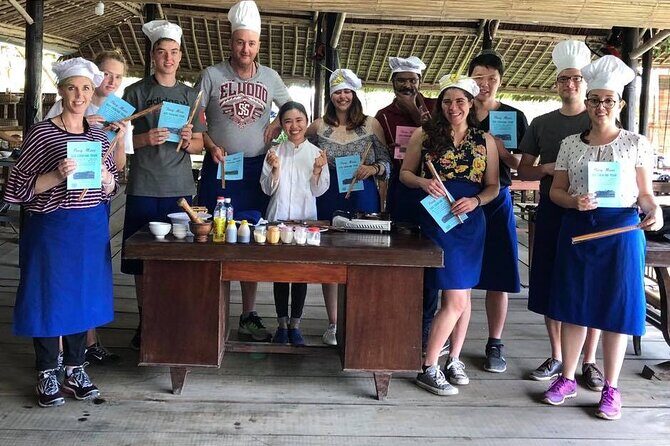
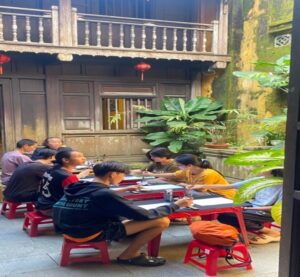
After the market, you head to Cam Thanh Coconut village area to start the real craft. This is where the tour earns its name as a “eco cooking” experience, because the focus isn’t only on recipes. It’s on traditional technique—especially around rice.
You’ll experience rice prep steps that most cooking classes skip:
- Pounding and separating rice
- Grinding rice to make rice milk
- Making rice paper
- Using traditional tools like a stone mortar/grinder and a wooden pestle style setup
The rice parts are the star. Pounding rice builds a feel for texture changes. Grinding for rice milk shows you how a basic grain becomes a usable cooking ingredient. Rice paper isn’t just something you buy—it’s something you create, which makes every step after that feel more meaningful.
What I’d pay attention to here: consistency. When you grind, it’s usually the texture that determines whether the rice milk behaves as expected and whether later steps work smoothly. When you make rice paper, your timing and technique matter more than you’d think from watching it once.
Also, don’t worry if you’re not “good at cooking.” This tour is built for instruction. Your job is to follow along closely, ask questions when you’re unsure, and accept that hands-on rice work takes a few tries.
Rice tools, station flow, and the pace question
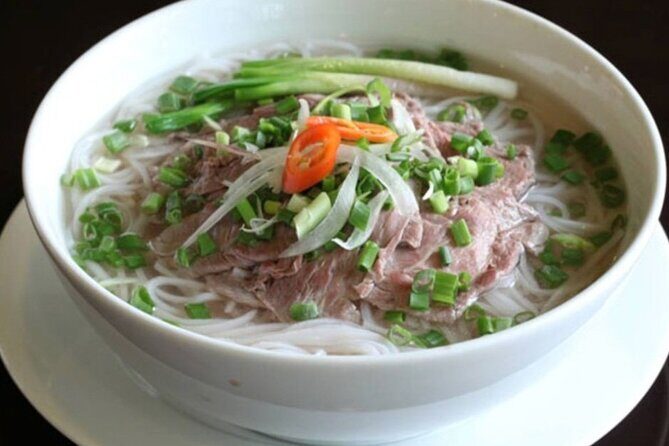
The tour uses the kind of tools you associate with Vietnamese kitchens rather than a modern cooking school setup. You’ll see and use stone mortar and grinder equipment along with a wooden pestle. That’s part of the value: you’re not just tasting Vietnamese food, you’re seeing how it’s physically made.
Still, pacing matters. Some people feel the cooking portion can run quickly, because the day combines market time, village technique time, and a boat ride. If you’re the type who processes slowly or wants extra time to re-check steps, you may need to lean on the guide for reassurance and clarification when something feels rushed.
In a class like this, the guide’s job is balancing the group so everyone can finish and eat. That’s not always the same as giving every person a leisurely pace. If you want maximum calm, bring a “do my best, ask questions, then enjoy the result” mindset.
My practical advice: treat the rice steps like mini lessons. Focus on the technique you can control—grinding consistency, keeping station tools tidy, and watching the guide’s timing. Once you do that, the rest of the cooking often clicks faster.
Your lunch or dinner: the payoff of cooking what you chose
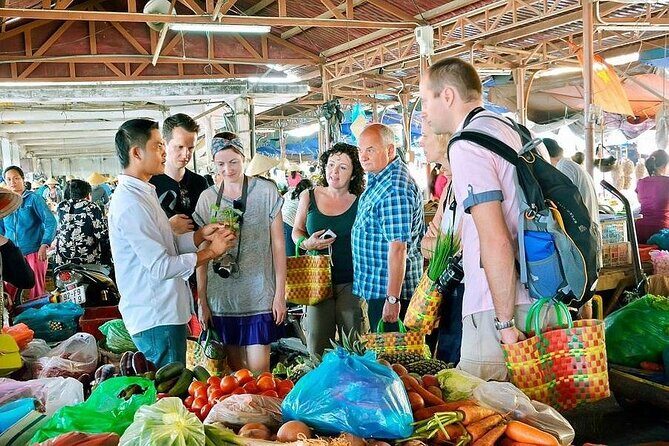
After the rice and prep work, you eat a lavish lunch or dinner included with the tour. The key part is that you’ll enjoy the dishes you helped prepare, which is where the market stop and the rice technique become more than education.
Eating what you cooked changes everything. You notice the herb balance. You recognize how the spices you saw earlier actually show up in the final taste. And you can evaluate what you did well—or what you’d do differently next time.
Is it a restaurant meal? Not exactly. It’s more like a guided home-style feast, designed to showcase Vietnamese ingredients and techniques you learned earlier. That’s also why it’s a smart half-day activity: you finish with a full meal, not just a snack and a recipe card.
Bring an appetite. Even if you’re not a huge eater, you’ll likely want a second look at the food you make—especially because you’ve already done the hands-on steps that most people skip.


Bay Mau coconut forest by basket boat: fun, but plan for real conditions
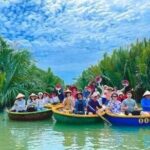
The tour includes a basket-boat ride through Bay Mau coconut forest, sometimes described as the Mekong Delta feel in the heart of Hoi An. You’ll switch to a unique bamboo basket boat to explore the water area around the coconut forest and village setting.
I love this part when it feels relaxed and quiet, because the boat ride is a change of pace from kitchen work. You go from pounding rice to gliding through waterways, and it helps the day feel like more than just a cooking class.
Here’s the practical side. The ride can be affected by local conditions and route specifics. One consideration to keep in mind: parts of the ride may pass under structures, which can reduce the scenery. If your top priority is a cinematic, postcard-only experience, temper expectations a bit and treat the boat as an authentic village activity rather than a cruise.
Also, remember that this is still a guided experience. If anything unexpected comes up during the boat portion—extra offers or pressure to buy add-ons—stick to your plan and be clear about what’s included. Your ticket already covers the core boat ride and the meal.
Price and value: is $35 worth it?
At $35 per person, the value comes from what you’re not paying separately. This fee covers:
- An English-speaking guide
- Hotel pickup and drop-off in central Hoi An
- A basket boat ride in the coconut forest
- Your lunch or dinner
- A bottle of water
- The cooking class itself
If you try to assemble this on your own—private guide, transport, a boat ride, and a cooking class—it usually adds up fast. What makes this price feel reasonable is that the day is packaged as a complete flow: get ingredients, learn techniques, ride a boat, and then eat.
Where the value improves most is when you care about process. If you want to learn rice paper, rice milk, and traditional rice prep tools, this is a great fit for the money. If you only want to eat and take a quick photo, you’d likely get less out of the class time.
In other words: this is best viewed as a skills-focused cultural morning with food at the end, not a casual cooking demo.
Who should book this tour (and who might not)
You’ll likely enjoy this tour if you want:
- A hands-on Vietnamese cooking class in Cam Thanh
- Real technique practice (especially rice prep and rice paper)
- Market learning that gives you better instincts for Vietnamese flavors
- A half-day schedule that doesn’t swallow your entire day
It may not be ideal if you:
- Hate time pressure and want a super slow class
- Expect the boat ride to be nonstop scenic perfection
- Are only interested in tasting food and not in tools and technique
For footwear, plan for comfort. You’ll be moving between market areas, village settings, and boat access zones. Wear shoes you can stand and walk in, and keep in mind you might deal with damp surfaces around waterways.
Should you book the Hoi An Bay Mau Eco Cooking Tour?
I think this is an easy yes if you want more than a menu swap. If you like learning how food is made—especially rice techniques—and you want a simple half-day plan with transfers, boat time, and a full meal included, this tour is strong value.
Book it if your ideal Hoi An day includes Cam Thanh village culture, a market that teaches you what to buy and why, and a cooking class where you actually help produce the meal. Skip it if you’re chasing a slow, leisurely day or if you mostly want a scenic boat ride and could care less about rice paper and rice milk craft.
If the weather is bad, the tour can be adjusted. This experience requires good weather, so plan to be flexible.
FAQ
What time does pickup happen?
Pickup is scheduled for around 8:20am from your hotel in Hoi An.
Where does the tour pick you up and drop you off?
Free car pick-up and drop-off is included for Hoi An only. You’ll return to your central hotel after the tour.
How long is the Bay Mau Eco Cooking Tour?
The duration is about 4 hours 40 minutes.
Is this a private tour?
Yes. It’s listed as a private tour/activity, so only your group participates.
What meals are included?
Lunch or dinner is included, and it’s food you prepare yourself during the class.
Does the class teach rice-related techniques?
Yes. You’ll learn to pound and separate rice, grind rice for rice milk, and make rice paper using traditional tools.
Is there a boat ride included?
Yes. You’ll ride a basket boat to explore the Bay Mau coconut forest area.
What’s included in the price, and what is not?
Included: English-speaking guide, hotel pick-up/drop-off (Hoi An only), basket boat, lunch or dinner, cooking class, and a bottle of water. Not included: tips and other personal extras.
What happens if the weather is bad or I cancel?
Good weather is required. If the experience is canceled due to poor weather, you’ll be offered a different date or a full refund. You can cancel for a full refund up to 24 hours in advance.