REVIEW · HOI AN
Hoi An Countryside Discovery Tour By Motorbike – Local food
Book on Viator →Operated by TC Hoi An Travel · Bookable on Viator
Hoi An by motorbike, away from crowds. This half-day trip takes you into the Thu Bon River delta on a scooter, then rewards you with hands-on crafts and a real meal with a family. I especially love the mix of purple crab fishing and the DIY food lesson where you make rice paper. One thing to consider: you’ll sit on the back of a motorbike for most of the day, so it’s best if you’re comfortable with short rides and uneven lanes.
This tour also feels like a break from the Old Town routine, because you’re moving through smaller roads that bigger vehicles can’t reach. I like that transfers are handled for you, with pickup and drop-off from your central Hoi An hotel and a professional driver the whole way. The main drawback is weather—bad conditions can change plans—so it pays to have a flexible attitude.
In This Review
- The Big Picture: why this Thu Bon delta day feels different
- 5 key moments you should care about
- Motorbike ride rules: sitting pillion, lanes, and what “moderate fitness” means
- Stop 1 in the villages: traditional woodworking at Kim Bong (and carving your name)
- Cam Thanh on the water: basket boat time and bamboo-boat purple crab fishing
- Rice paper and sleeping mats: mat weaving then making rice paper
- The local home meal: why the food tastes better when you share the space
- Guides in action: English help from Tai or Cường
- Price and value: why $55 can work if you want “doing,” not just looking
- Logistics you’ll feel on the day: timing, weather, and comfort
- Should you book this Hoi An countryside discovery tour?
- FAQ
- How long is the Hoi An countryside motorbike tour?
- Where does the tour take place?
- Do you pick up travelers from hotels?
- What transportation do you use?
- What activities are included?
- Is any food included?
- Are entrance fees included?
- What about the fuel and guide?
- What isn’t included in the price?
- What is the cancellation policy?
The Big Picture: why this Thu Bon delta day feels different
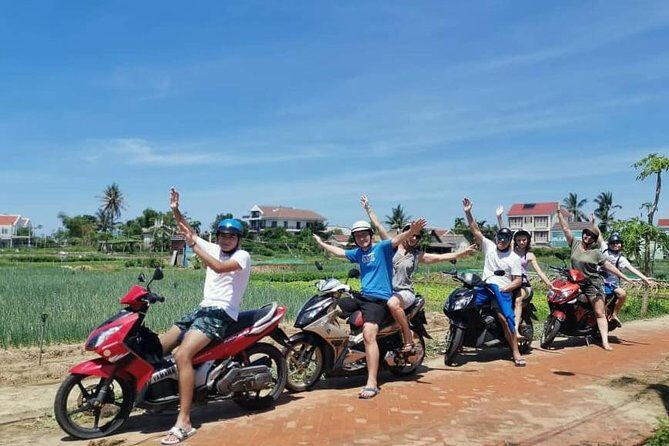
Hoi An is famous for its lanterns and craft shops. This tour points you in the opposite direction: rural lanes, river work, and village crafts that aren’t staged for tourists. It’s not just sightseeing. You’re doing things that locals do, from mat weaving to rice paper making, and you’re eating where that life happens.
The heart of the experience is simple: you travel by motorbike to places where the pace is slower, the roads are narrower, and the interactions feel more human. Along the way, you get a boat ride, a bamboo-boat crab catch, and a meal at a local home—each one adding another layer to how the Thu Bon delta supports everyday life.
5 key moments you should care about
- Professional motorbike driving keeps you focused on the road views and the stops
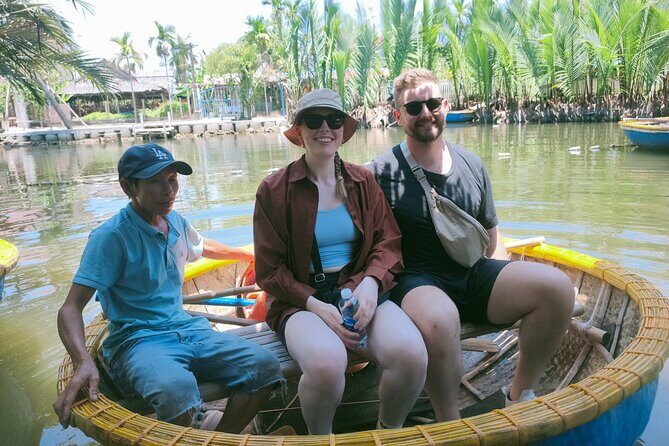
- Basket boat + purple crab fishing gives you a hands-on look at river food work
- Kim Bong carpentry village lets you carve your name in wood as a keepsake
- Mat weaving and rice paper making turn local craft into something you can take home
- Light meal at a local’s home is part of the experience, not an add-on
You can also read our reviews of more food & drink experiences in Hoi An

Motorbike ride rules: sitting pillion, lanes, and what “moderate fitness” means
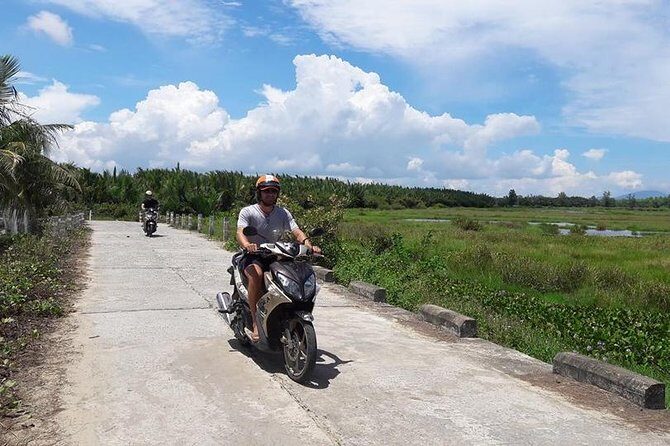
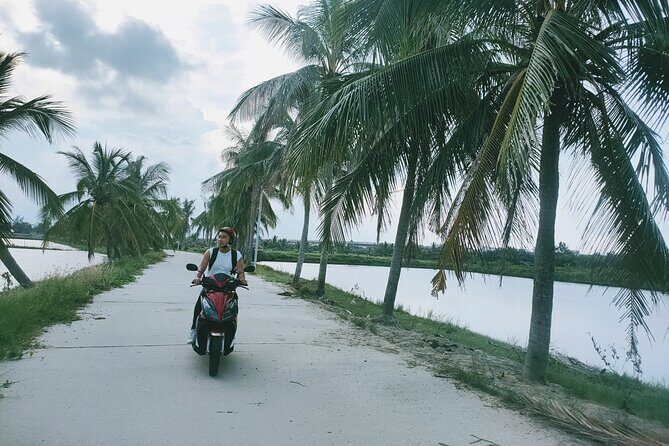
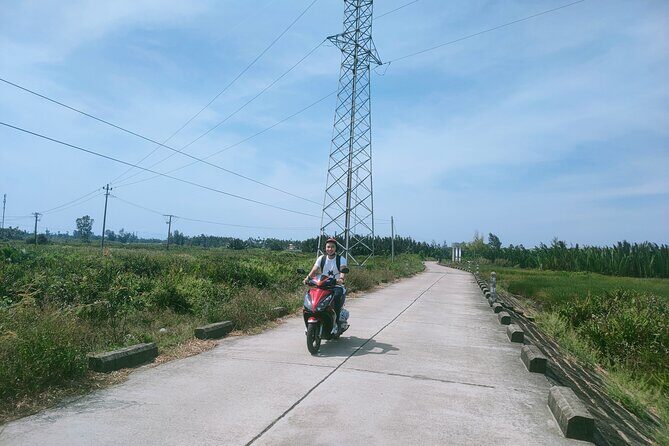
This is a motorbike tour through the countryside, and that shapes the whole day. You sit behind the rider on a professional driver, and the guide manages the timing and English explanations. In practice, that means you’re not steering or navigating, which lowers the stress level.
Still, the tour asks for moderate physical fitness. That likely comes down to getting on and off the bike, walking short distances at each stop, and climbing into boat setups without drama. If you know scooters bother your back or you get motion-sick easily, you’ll want to think twice.
One more practical note: the tour is designed to reach lanes and byways bigger vehicles can’t reach. That’s the point, but it also means expect tighter turns, busier intersections when you’re near villages, and the occasional bumpy patch.
Stop 1 in the villages: traditional woodworking at Kim Bong (and carving your name)
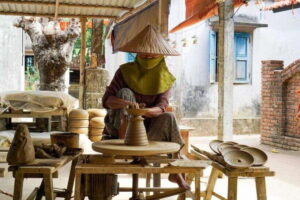
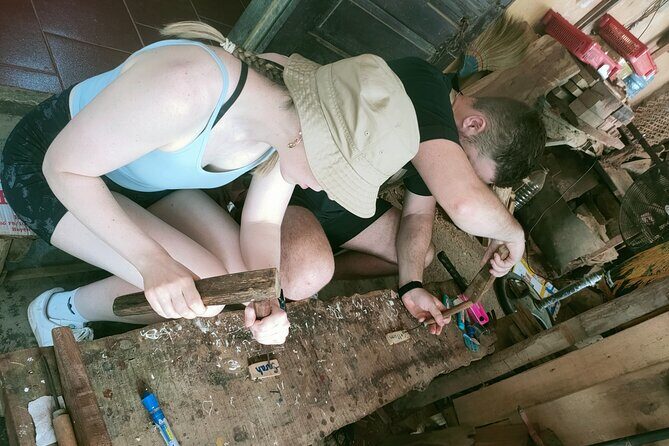
Your first major culture stop is a traditional woodworking village connected with Cam Kim, often described through the Kim Bong carpentry tradition. You’ll watch artisans at work, which is one of the best ways to understand craft without needing a lecture.
The fun part is the hands-on touch: you can carve your name on wood as a keepsake. That small souvenir matters more than you’d think. A carved name makes the day feel tangible, and it also helps you slow down and pay attention to how tools and techniques shape the final product.
What I like most about this stop is the contrast to Hoi An’s Old Town shopping. Here, the skill is the product. You’re not browsing for an item; you’re seeing how the item gets made.
A possible consideration: if you’re expecting a big showroom-style explanation, this stop is more about observing and participating than about a deep technical course.
Cam Thanh on the water: basket boat time and bamboo-boat purple crab fishing
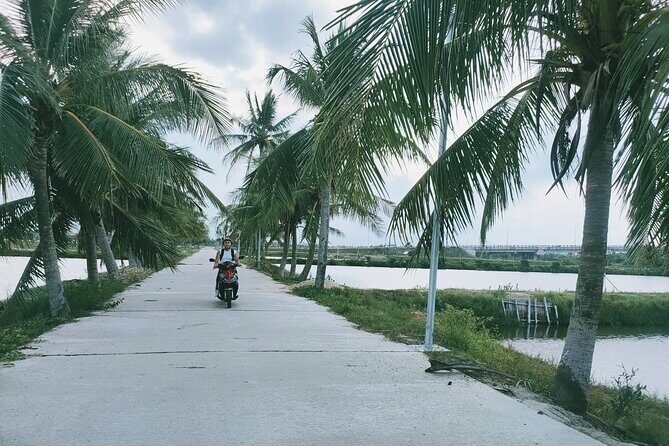
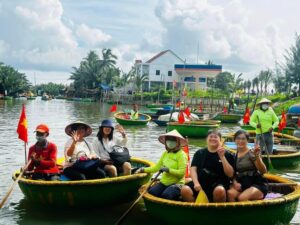
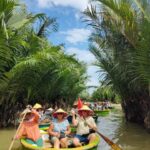
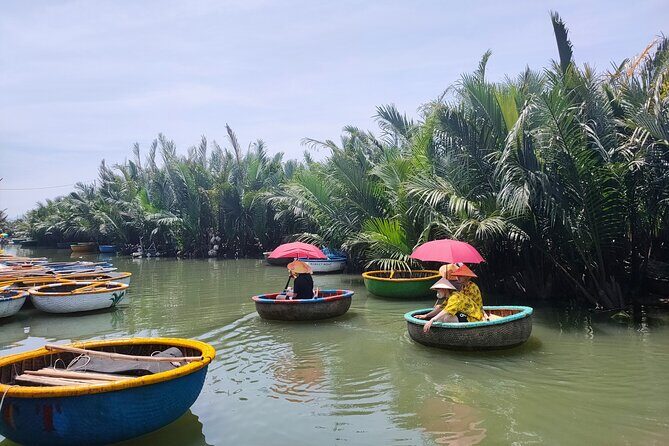
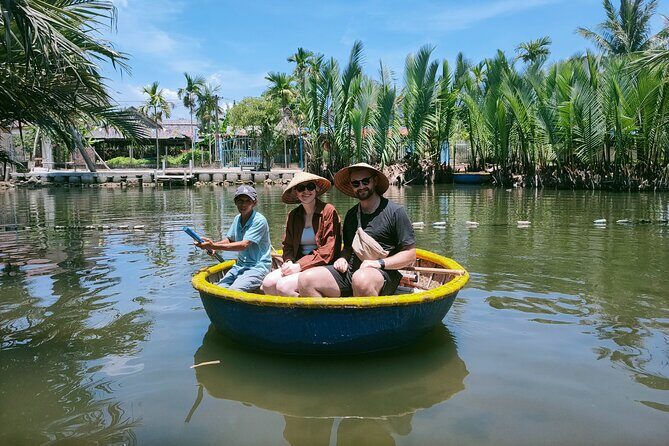
Then the tour turns toward the water—Cam Thanh village—where daily life in the delta makes sense fast. You ride in a basket boat, which is a quick way to feel the river’s scale and the rhythm of small waterways.
After that comes the highlight many people remember: fishing for purple crabs from a bamboo boat. It’s not just a photo moment. You’re actively involved in the fishing, which makes it feel real instead of staged.
Why this matters: the Thu Bon delta isn’t only scenery. It’s food, work, and local knowledge. Watching craft is great, but water-based activities show you how the region produces something people eat and sell.
If you’re the kind of person who likes getting your hands dirty (even a little), you’ll probably love this part. If you prefer low-contact activities, you might find the fishing portion more intense than expected.
Rice paper and sleeping mats: mat weaving then making rice paper
Next, the tour shifts from wood and water to craft you can literally taste and touch.
You’ll meet a mat weaving family, and you’ll directly participate in the weaving process. The tour specifically includes making/working with a weaving sleeping mat, so you’re not just watching someone else do the work. You’ll also spend time learning how to make rice paper, a traditional food that has supported local life for generations in the area.
I like this sequence because it connects ideas. Mat weaving teaches patience and repeated motions. Rice paper making turns that patience into something edible. Even if you don’t walk away as the next artisan, you’ll come away with a clearer sense of why these crafts are still practiced.
What to consider: hands-on craft can be a bit messy. If you’re picky about keeping your clothes perfect, plan to wear something comfortable.
You can also read our reviews of more tours and experiences in Hoi An




The local home meal: why the food tastes better when you share the space
The final major stop is a light meal at a local’s home. This isn’t a buffet-style restaurant stop. You’re eating with a family in their own space, and the meal includes special local dishes made for visitors as part of the tour.
The “light meal” label is important. This is likely not a full, heavy-feeling lunch that replaces an entire day of eating. It’s meant to be satisfying, but it’s still a half-day format.
Why the home meal is valuable: you’re not only tasting food. You’re also seeing how hospitality is woven into daily life. Several guides credited for this tour are praised for keeping the experience relaxed while making explanations clear, which makes the meal feel like part of the story rather than a hard stop on a schedule.
Guides in action: English help from Tai or Cường
The experience leans hard on the guide. Many people come away praising guides such as Tai and Cường for clear English and a friendly approach. One review notes Tai being patient and going above and beyond to accommodate a daughter with special needs, which says a lot about how the guide handles real-life situations, not just a perfect group.
I also like that the tour includes an English-speaking guide and is structured enough that you’re not wondering what’s happening next. You get explanations during transitions, and you learn the why behind each stop rather than only collecting pictures.
Price and value: why $55 can work if you want “doing,” not just looking
At $55 per person for about 4 hours, this tour can be a good value if you care about hands-on experiences. What you’re paying for isn’t only the guide.
You’re also paying for:
- Two-way transfers from a central Hoi An hotel
- A professional motorbike ride (you sit behind the driver)
- Included activities: mat weaving and rice paper making
- Boat time: basket boat and bamboo boat crab fishing
- Entrance fees, fuel, and bottled water
- A light meal at a local home
If you were trying to recreate these separately, the time and coordination would add up fast. The price looks especially fair when you want at least three “real” experiences (craft + boat fishing + home meal) in one half-day.
The only caution is expectation-setting. If your ideal tour is mostly walking, museum-type stops, and long sit-down breaks, a motorbike-heavy format might feel like too much motion for the money.
Logistics you’ll feel on the day: timing, weather, and comfort
This is a half-day experience with pickup and drop-off, so you’re not losing a full day to travel time. The tour also ends back at your hotel, which is a big practical win in Hoi An where traffic and crowds can slow you down.
Weather can affect things. The tour states it needs good weather, and if it’s canceled for poor conditions, you’ll be offered a different date or a full refund. That flexibility is useful in Vietnam where plans can change.
For comfort, focus on basics that match the day: being okay with short walking between stops, and being comfortable sitting behind a driver on a motorbike. The tour includes safety by having a professional rider throughout.
And yes, insurance isn’t included—there’s an insurance fee not included list—so you’ll want to make sure your own travel coverage is set.
Should you book this Hoi An countryside discovery tour?
Book it if you want:
- Real countryside life around the Thu Bon River delta, not just Old Town strolling
- Hands-on crafts like rice paper making and mat weaving
- A memorable activity like purple crab fishing from a bamboo boat
- A guide-driven day with pickup and drop-off so you don’t wrestle logistics
Skip it (or think hard first) if:
- You hate motorbikes or get motion-sick easily
- You want a lot of long rest time with minimal movement
- Your plan can’t flex with weather changes
If you fit the first group, this tour is the kind of half-day that keeps paying off in your head after you leave—because you’re not only watching Vietnam. You’re doing part of it.
FAQ
How long is the Hoi An countryside motorbike tour?
It runs about 4 hours.
Where does the tour take place?
The experience is in Hoi An, Vietnam, focusing on the Thu Bon River delta and nearby villages.
Do you pick up travelers from hotels?
Yes. Pickup is offered from central Hoi An hotels, and the tour returns you back to your hotel.
What transportation do you use?
You travel on a motorbike with a professional driver, and you sit behind the rider.
What activities are included?
The tour includes visits and activities such as woodworking in a carpentry village, basket boat riding, purple crab fishing from a bamboo boat, mat weaving participation, and rice paper making.
Is any food included?
Yes. You get bottled water and a light meal at a local’s home with local dishes.
Are entrance fees included?
Yes. All entrance fees are included.
What about the fuel and guide?
Fuel and an English speaking guide are included.
What isn’t included in the price?
The tour notes that an insurance fee is not included.
What is the cancellation policy?
You can cancel up to 24 hours in advance for a full refund. It also notes the experience requires good weather, and if it’s canceled due to poor weather, you’ll be offered a different date or a full refund.