REVIEW · HOI AN
Cooking Class Lunch/ Dinner with Local Chef in Coconut Village
Book on Viator →Operated by Happy Tour · Bookable on Viator
Banh xeo starts with a pan sizzle. This Hoi An cooking class pairs a friendly local chef with a practical menu you can actually make, then you sit down for lunch or dinner after about 3 hours total. It’s aimed at helping you cook Vietnamese food with confidence, not just snapping a few photos.
I like two things most: the chef prepares the ingredients, but still teaches you what to look for and the Vietnamese names behind the dishes. I also like that you eat what you cook the same day, with a menu that includes both savory mains and fresh, punchy sides.
One thing to consider: it’s a group tour (combined with other participants, max 10), so if you want lots of one-on-one attention, you may have to be a bit more direct with your questions.
In This Review
- Key highlights at a glance
- A 3-hour Hoi An cooking class that turns food into skills
- Your local chef’s teaching style: ingredients, Vietnamese names, and quick confidence
- The cooking menu: banh xeo, spring rolls, papaya salad, and lemongrass chicken
- How the day flows: cooking first, then eating your lunch or dinner
- Vegetarians can cook Vietnamese here, with smart substitutions
- Price and value: why $23 can feel like a deal in Hoi An
- Logistics that matter: pickup, group size, and what to expect back at the start
- Who should book this cooking class in Coconut Village?
- Should you book the Cooking Class Lunch/Dinner in Coconut Village?
- FAQ
- How long is the cooking class?
- Is pickup offered?
- What’s included in the cooking menu?
- Is it suitable for vegetarians?
- How big is the group?
- Where does the tour start and end?
- Is there free cancellation?
Key highlights at a glance
- Full Vietnamese menu in ~3 hours: banh xeo, cha gio, goi du du, chicken with lemongrass, and more
- Chef-led, ingredient-smart learning: you’ll learn how to choose quality ingredients, not just follow steps
- Market-style context (when included): guides often explain what you’re cooking with and why it matters
- Vegetarian-friendly adjustments: substitutions like mushrooms, tofu, and eggplant are provided if needed
- Max 10 people with pickup options: small enough to feel personal, large enough to stay lively
A 3-hour Hoi An cooking class that turns food into skills
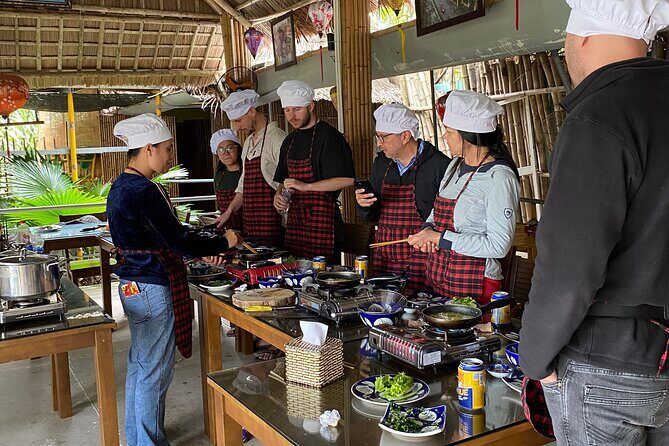
If you’re in Hoi An and you want something more useful than another walking route, this kind of class makes sense. You’re not just watching someone cook. You’re learning how Vietnamese dishes are built—flavor balance, texture, and timing—so you can recreate them later.
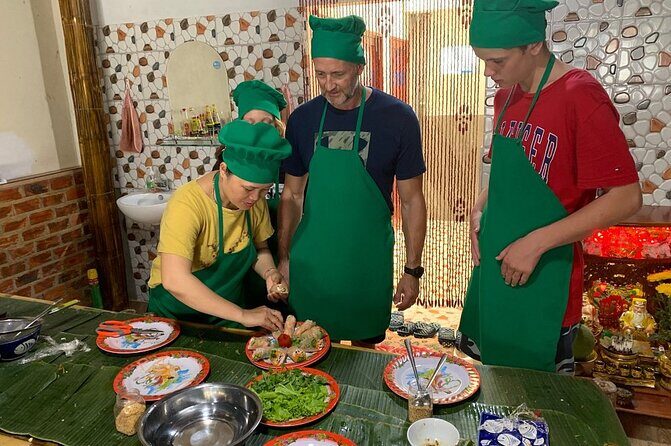
The format is straightforward: a two-hour cooking session led by a local chef, followed by enjoying the food you made for lunch or dinner. For a day that’s already full of sights, this length is a good fit. You get real kitchen practice without losing your whole afternoon or evening.
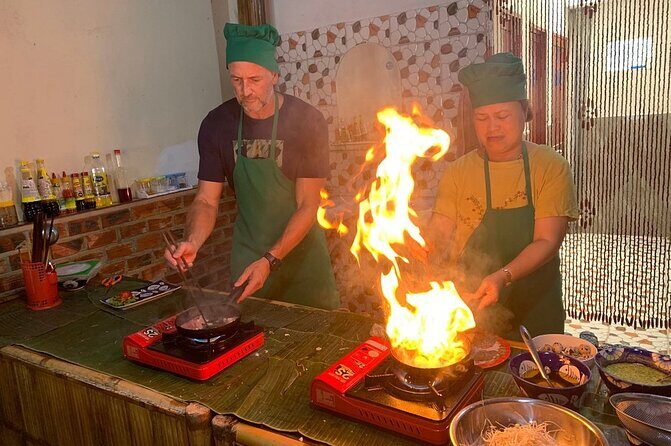
A big value point here is that the chef handles the heavy prep. That means you’re not stuck on the slow parts while everyone else plates. Instead, you focus on technique: making batter for banh xeo, assembling and frying cha gio, and mixing the bright, tangy elements in papaya salad (goi du du).
You can also read our reviews of more cooking classes in Hoi An


Your local chef’s teaching style: ingredients, Vietnamese names, and quick confidence
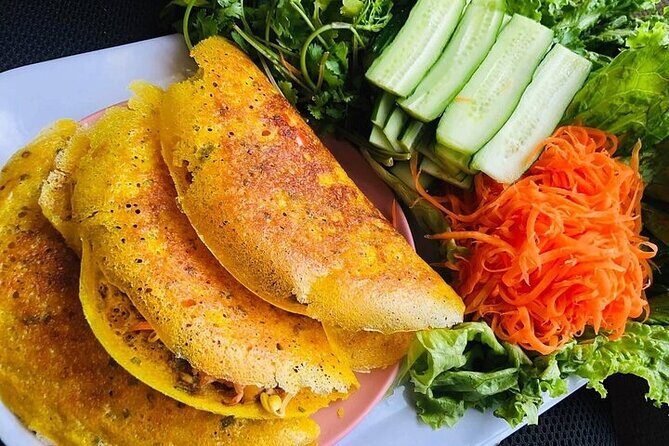
This class is designed for beginners. That’s not an insult—it’s the point. The chef prepares the ingredients, but still teaches you how to choose the best ones and explains the dish names in Vietnamese as you go.
That approach matters. If you only memorize steps, you’ll struggle when you’re back home and can’t find the exact brand or produce. But if you learn what quality looks like—like picking the right greens, vegetables, or aromatics—you’ll be able to adapt.
You may also get guidance from a host who really knows how to translate the culture of the food. Past participants have mentioned guides like Anna, as well as guides named Linh and Ling, who made the market part (when included) feel clear and informative. The common thread is the same: friendly, enthusiastic teaching, plus practical tips you can use the next time you cook Vietnamese at home.
The cooking menu: banh xeo, spring rolls, papaya salad, and lemongrass chicken
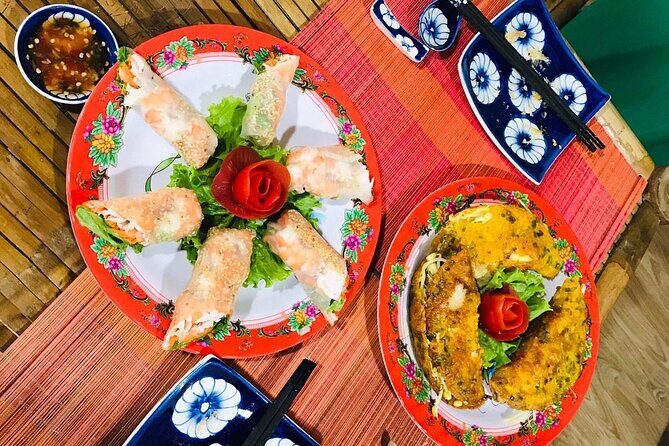
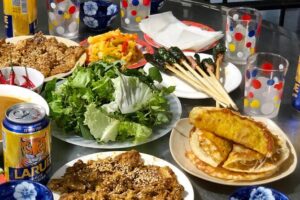
You’ll cook a set menu that covers crunchy, savory, sour-fresh, and comforting. Even if you only remember one dish, you’ll leave with a better sense of how Vietnamese meals come together.
Here’s what’s on the menu:
- Sua gao (rice milk)
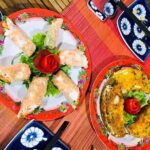
- Banh xeo (rice pancake)
- Cha gio (spring rolls)
- Goi du du (papaya salad)
- Ga chien (chicken with lemongrass)
- Com trang (steamed rice)
- Seasonal fruit
Let’s translate what that means for your palate and your technique.
Banh xeo is a rice pancake with a crisp edge and a soft center. It’s the kind of dish that makes people say wow because it looks fancy, but it’s very doable when you understand batter texture and heat control. You’ll also get the idea that this isn’t just a pancake—it’s a platform for fresh herbs and a balanced filling.
Cha gio, or spring rolls, teach you assembly and frying logic. You’ll handle the “wrap and seal” part and then see how frying changes everything: the wrapper turns crisp while the inside stays juicy. It’s an excellent dish to practice because it’s measurable—if the roll is tighter, it fries more evenly.
Goi du du (papaya salad) is where you learn Vietnamese flavor chemistry in a bowl. Papaya brings a mild base. Then you build on salty, sour, and a little sweetness, plus crunch from vegetables. If you’ve only had sweetened versions of papaya salad before, this is the more traditional, sharper side of the dish.
For the main comfort plate, ga chien (chicken with lemongrass) gives you aroma and depth. Lemongrass is one of those ingredients that instantly makes a dish feel Vietnamese, even if you don’t eat it often at home.
Finally, com trang (steamed rice) is the stabilizer. It’s not flashy, but rice is what makes many Vietnamese meals feel complete. And seasonal fruit is a smart finish—it’s a palate reset, not a heavy dessert.
How the day flows: cooking first, then eating your lunch or dinner
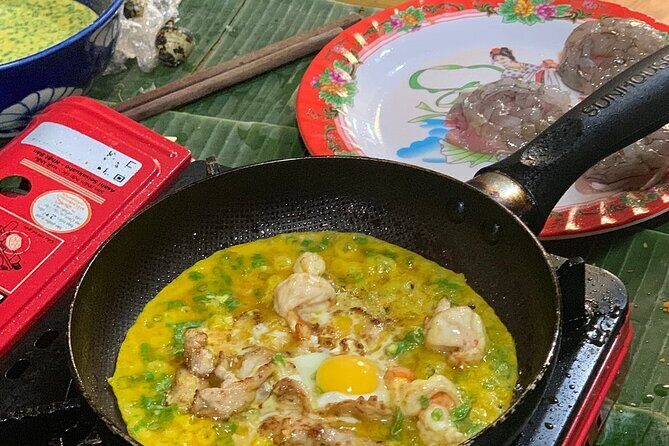
The timing is designed to keep you moving. You’ll spend about two hours in the kitchen learning the dishes, then you’ll eat what you made. That matters because you can taste the result immediately and connect flavor to technique while it’s still fresh.
Also, the class is described as part of a Coconut Village experience in and around Hoi An. Even if the exact schedule can vary day to day, the experience is set up to feel like more than a kitchen room. Some versions can include a coconut boat trip as an extra, and that kind of add-on pairs well with cooking—sights in the morning, food at the table later.
One practical tip: treat this as both a cooking class and a food lesson. Don’t wait until the end to ask questions. If you’re unsure about how something should taste while you’re mixing—ask during the session. The chef teaching style is built for quick corrections, not waiting until you’ve already plated a dish you can’t fix.
Vegetarians can cook Vietnamese here, with smart substitutions
If you’re vegetarian, you’re not stuck sitting out. The class notes that ingredients will be changed into vegetables when needed, using options like:
- mushrooms
- tofu
- eggplant
The menu can also change based on what’s available. That’s actually a good sign. It means you’re cooking with what the kitchen can source fresh, rather than using the same rigid ingredients every day.
In practical terms, this matters for how you learn. You still get the cooking techniques—battering, rolling, frying, mixing, and balancing flavors—but with substitutes that fit Vietnamese cooking styles. You’ll also get a clearer idea of how dishes can flex while keeping their character.
You can also read our reviews of more tours and experiences in Hoi An


Price and value: why $23 can feel like a deal in Hoi An
At $23 per person, this class lands in the affordable zone for Hoi An food experiences. The value is not just the price tag—it’s what’s included.
You’re getting:
- chef-led instruction
- all ingredients prepared for you (so you can focus on cooking)
- multiple dishes, not one
- a full lunch or dinner from what you make
- a group size that stays small (max 10)
When you compare that to doing a cooking class that includes only one dish, or paying for a single meal that doesn’t teach you anything, the math starts to make sense. Here, you’re paying for an edible lesson plan.
Also, timing value is real. About 3 hours keeps you from losing half a day to a long tour format. If you’re doing other Hoi An activities—trading streets for river time, lantern viewing, or day trips—this is easier to slot in.
Logistics that matter: pickup, group size, and what to expect back at the start
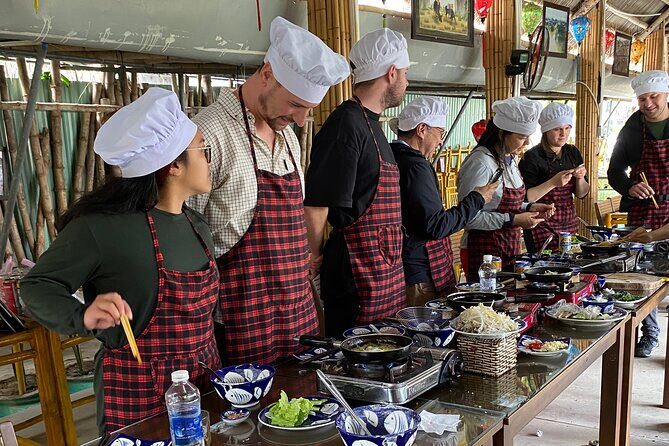
The class is a group tour with a maximum of 10 travelers and it may be combined with other participants. That keeps costs down, but it also means the chef’s attention is shared. The best strategy is simple: be ready with a couple of clear questions you want answered before the busiest moments.
Pickup is offered, and the meeting point is at Hoi An Village Experience by Mr CuCẩm Thanh. The activity ends back at the meeting point, which is handy if you’re lining up other plans for the same day.
It’s also noted as near public transportation and uses a mobile ticket. If you like staying flexible, that convenience helps.
What should you bring? The tour data doesn’t specify items, so you’ll want to stick to general common sense for a cooking class: comfortable clothes you can get a little warm in, and footwear that’s easy to move in. If you’re going in rainy season, you may also want a plan for damp weather, since Hoi An can be unpredictable.
Who should book this cooking class in Coconut Village?
This is a strong match if:
- you want a hands-on Vietnamese cooking experience without a steep learning curve
- you like the idea of cooking multiple dishes instead of one showpiece
- you want something that includes a meal, so you’re not paying for the class and then going hungry
- you’re traveling with family and want a fun, structured activity
The experience also fits vegetarians because substitutions are handled in the cooking process.
You might consider skipping (or at least temper expectations) if:
- you want a private class with heavy one-on-one coaching
- you’re looking for a long, multi-hour program focused on deep theory rather than cooking output
- you’re extremely time-crunched and need something shorter than about three hours
Should you book the Cooking Class Lunch/Dinner in Coconut Village?
Yes—if your goal is practical cooking skills plus a satisfying meal. The combination of a chef that teaches ingredient choice and dish context, plus a menu that covers both fried, fresh, and aromatic Vietnamese flavors, is the right kind of package for the price.
Book it especially if you care about tasting the result right away. The format is built for learning through action: mix, roll, fry, cook, then eat what you made. If you’re vegetarian, this is one of the better options in Hoi An because the class specifically plans for veggie substitutions like tofu, mushrooms, and eggplant.
My only caution is about the group setup. It’s small, but it’s still shared. If you’re the type who asks many questions, go in ready with your top priorities so you get the most out of the chef’s time.
FAQ
How long is the cooking class?
The class lasts about 3 hours total.
Is pickup offered?
Yes, pickup is offered.
What’s included in the cooking menu?
You’ll cook and eat from a menu that includes sua gao (rice milk), banh xeo, cha gio, goi du du (papaya salad), ga chien (chicken with lemongrass), com trang (steamed rice), and seasonal fruit.
Is it suitable for vegetarians?
Yes. The ingredients can be changed to vegetables, such as mushrooms, tofu, and eggplant, and the menu can adjust based on availability.
How big is the group?
It’s a group tour with a maximum of 10 travelers, and it can be combined with other participants.
Where does the tour start and end?
It starts at Hoi An Village Experience by Mr CuCẩm Thanh in Hội An, Quảng Nam, Vietnam, and ends back at the meeting point.
Is there free cancellation?
Yes. You can cancel for a full refund up to 24 hours in advance. If you cancel within 24 hours of the start time, the amount is not refunded.