REVIEW · HOI AN
Vietnamese Cooking Class in Historical Hoi An Restaurant
Book on Viator →Operated by Green Mango · Bookable on Viator
Soy sauce has a backstory. In Hoi An, this Vietnamese cooking class happens in a heritage-listed 180-year-old building, and it focuses on the why behind Vietnamese flavors, not only the how. I like that you cook, eat what you make, and then get a digital recipe book to recreate the dishes later. One possible drawback: the class can feel fast and very hands-on, so if you want slower, deeper explanations, plan to ask questions during the lesson.
You’ll also get real choice. This class offers five different five-course menu themes, so you can steer your experience toward essentials, street-style, Hanoi favorites, or veggie-friendly options. And because the school is right in old town, it’s easy to fit into your day without extra hassle.
In This Review
- Key things that make this class worth your time
- A Cooking School in a 180-Year-Old Hoi An Landmark
- Price and Timing: Does $33 Feel Like a Win?
- Five Five-Course Menus: Pick the Story You Want to Cook
- How the Class Actually Works in 3 Hours
- Chefs, Energy Level, and the Home-Cooking Tips That Matter
- Optional Market Visit: When Ingredients Come First
- Dining Included: You Leave With a Full Belly and Real Satisfaction
- What You Take Home: A Digital Recipe Book You’ll Actually Use
- Practical Logistics That Make This Easy in Hoi An
- Who This Cooking Class Is Best For
- Should You Book This Vietnamese Cooking Class in Hoi An?
- FAQ
- How long is the Vietnamese cooking class in Hoi An?
- What does the price include?
- Where do I meet the tour?
- Can I choose what menu we cook?
- Is the market visit included?
- Is alcohol included?
- Is this a private experience?
- What happens if the weather is bad?
- What is the cancellation policy?
Key things that make this class worth your time
- 180-year-old, heritage-listed setting inside the ancient town area
- Five-course menu themes (Essentials, Balancing Act, Street Eats, Hanoi Streets, Veggie Eats)
- Sit-down meal using what you cook, so you leave fed and happy
- Digital recipe book emailed after class for home practice
- Chefs with a modern take on tradition, led by the creative Head Chef Hai Nguyen
- Optional market visit, if you want to understand ingredients first
A Cooking School in a 180-Year-Old Hoi An Landmark
The biggest wow-factor is the room you’re in. The class is held in a heritage-listed building that’s about 180 years old, right in the heart of Hoi An’s ancient town. That matters more than you might think.
When cooking is tied to the setting, you learn differently. Instead of feeling like you’re cramming in a show-and-tell cooking demo, you’re in a place that feels like it has always been part of daily life. The restaurant behind the school has been an institution since 2004, with locations in Cat Ba, Hanoi, and Hoi An, which gives the whole operation a polished, practiced feel.
And the leadership is not random. Head Chef Hai Nguyen is known across Vietnam for a modern, creative approach to traditional dishes. Translation for you: you’re not just copying old-school recipes. You’re being taught how Vietnamese cooking logic works, so you can adapt at home.
You can also read our reviews of more historical tours in Hoi An



Price and Timing: Does $33 Feel Like a Win?
For $33 per person, you’re getting a 3-hour class (approx.) plus a dinner that’s part of the experience. That price is easier to justify than many cooking classes that charge more for only the cooking part and leave you to figure out dinner later.
A good value sign here: the class includes both the making and the eating. If you’re paying for a skill, it’s worth it when the meal at the end proves the technique. You don’t just watch food become dinner—you build it, plate it, and then sit down with it.
A note on what’s not included: alcohol. There’s a cocktail bar on-site, and drinks range from 40,000 VND to 200,000 VND. If you want a mocktail or something low-key, you can still plan on that being your extra spend.
Five Five-Course Menus: Pick the Story You Want to Cook
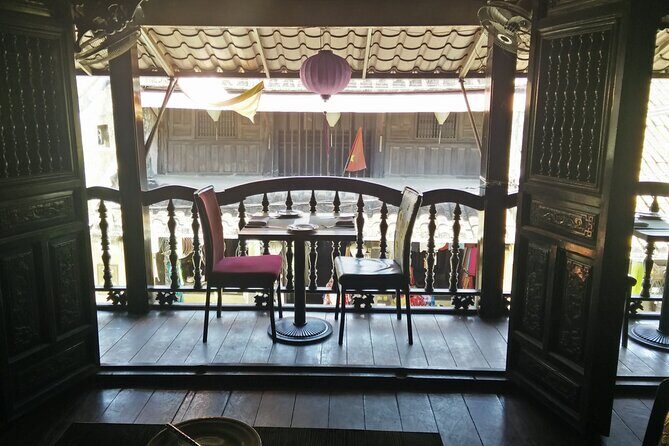
This is one of the smartest features of the whole experience. You choose from five different five-course menus, and each one represents a different side of Vietnamese cuisine and culture:
- The Essentials (the default if you don’t choose)
- Balancing Act
- Street Eats
- Hanoi Streets
- Veggie Eats
Why I like this for planning: it lets you tailor your time. If you’re in Hoi An for a short visit and want the most foundational flavors first, Essentials is a sensible move. If you’re craving the vibe of casual Vietnamese eating, Street Eats gives you that angle. And if you’re traveling with a vegetarian (or you just want a lighter cooking day), Veggie Eats is built for that.
One practical tip: when you book, you should tell them your menu choice. The class does not treat this like a minor option—it shapes the whole cooking sequence and what you’ll end up eating.
How the Class Actually Works in 3 Hours
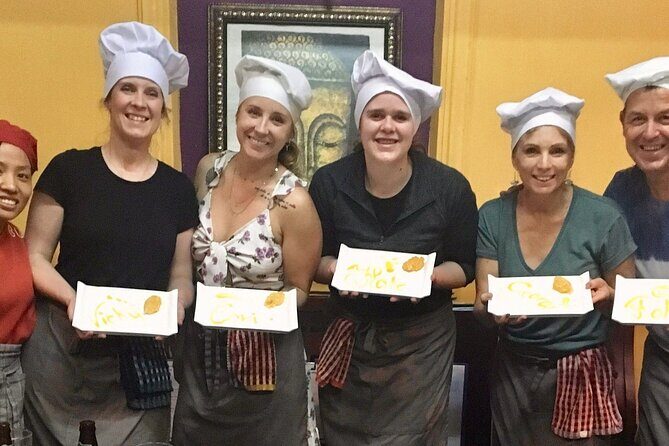
The class runs in a hands-on cooking school format, and from the way it’s described, it’s not a long lecture. You’ll learn essential ingredients and why they matter in Vietnamese cuisine, then move into cooking steps and tasting your results.
Here’s what you can realistically expect during those ~3 hours:
- You settle in and get your menu track
You’ll be working toward a five-course set, so even though it’s a group class, there’s a clear finish line.
- Ingredient learning happens alongside the cooking
The focus is on traditional dishes plus practical home-kitchen tips. That means you’re not just learning recipes—you’re learning how Vietnamese flavor building is structured.
- You cook and assemble multiple items
Expect the class to be active. It’s not designed to drag. One review feedback that matches the format: some people find it a bit sprint-like and prefer more explanation. If that’s you, don’t wait for the end—ask during the action.
- You sit down and eat what you made
Dinner is included, and it’s part of the experience, not an afterthought. This is where the class “pays off” because you get to taste your own output in a proper sit-down setting.
- Your digital recipe book lands after the class
You’ll receive a digital recipe book emailed to you after. This is great value because it supports what you do next at home, where you’ll want clear steps.
Chefs, Energy Level, and the Home-Cooking Tips That Matter
A cooking class is only as good as its instructor energy and how well they translate for normal home cooks. Here, the setup is built around that idea: you learn not just traditional recipes, but also tips and tricks for recreating dishes in your own kitchen.
Also worth noting: the school’s reputation and leadership. The Head Chef, Hai Nguyen, is described as renowned for modern creative takes on traditional dishes. That usually shows up as teaching that’s both practical and flexible—exactly what you want when your kitchen at home is not the same as theirs in Vietnam.
Instructors can vary by class, but you may be taught by chefs such as Pinky, Que, or Jam—and the common thread in the way they’re described is that they keep things friendly and moving. If you love food as an experience and not just a craft assignment, that style works well.
And if you’re worried about the pace: you can still get what you came for. Just go in with a mindset of participating, watching, asking quick questions, and taking notes from the digital recipe book afterward.
You can also read our reviews of more cooking classes in Hoi An



Optional Market Visit: When Ingredients Come First
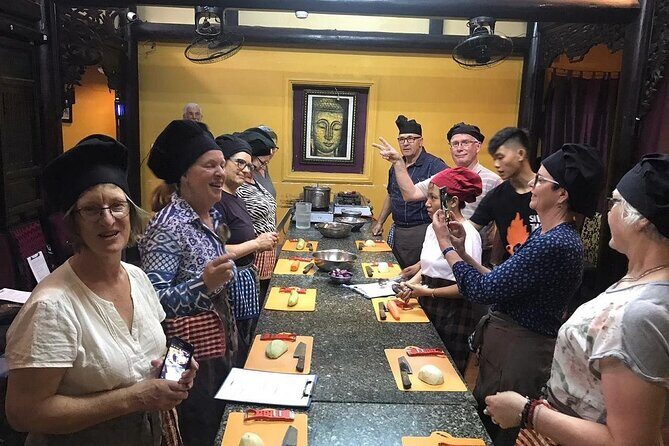
The market visit is optional, and it’s the add-on that shifts the class from cooking to ingredient storytelling. If you choose it, expect a bit more time tied up in sourcing and understanding what Vietnamese cooking depends on.
Why you might want it: market context helps everything click. When you see ingredients in the local environment—fresh herbs, sauces, and staples—you start to understand what makes Vietnamese flavor work and how cooks think about balance, texture, and aroma.
Why you might skip it: the core experience already includes cooking and dinner in about 3 hours. If your schedule is tight, you can still get a complete class without the market side trip.
Also, remember this: the experience requires good weather, and if conditions are poor, they may offer a different date or a full refund. So if you add the market tour, it’s smart to plan your day with flexibility.
Dining Included: You Leave With a Full Belly and Real Satisfaction
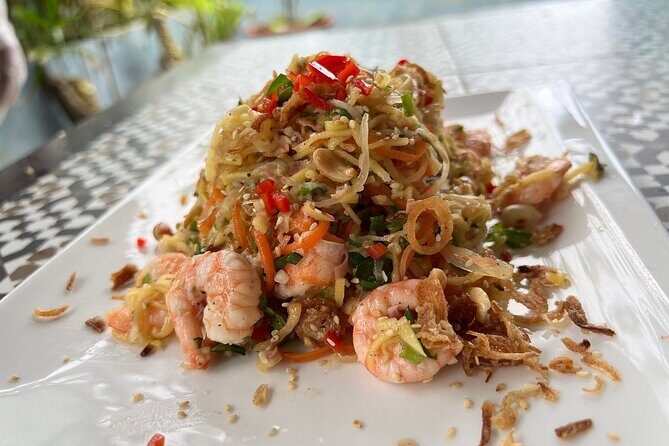
Many “cooking classes” end with a few tastings and a promise that you’ll learn the rest. Here, dinner is included, and it’s sit-down, using what you prepare.
That changes the whole feel. You’re not only cooking—you’re experiencing the meal as it’s meant to be served. It’s also a confidence builder for home cooking. After you eat, you understand what the final dish should taste like, and then your digital recipe book becomes easier to follow.
If you’re the type who learns best by doing, this format is your friend. You cook, then you eat, then you remember.
What You Take Home: A Digital Recipe Book You’ll Actually Use
The class includes a digital recipe book emailed after the class. This is one of those small inclusions that makes a big difference, because it helps prevent the most common cooking-class problem: you take photos during the class, but nothing is organized enough to cook from later.
A digital book also means you can use it on your phone while you cook, and you can re-read it without digging through paper notes.
If you choose the menu theme that matches what you want to cook most, the recipe book becomes a practical souvenir instead of a travel folder that never gets opened.
Practical Logistics That Make This Easy in Hoi An
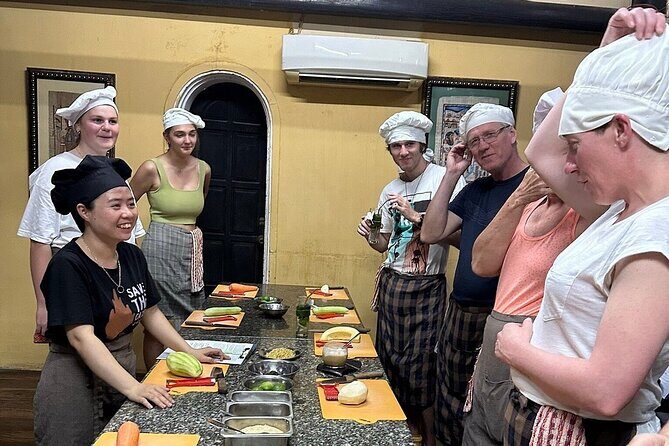
You meet at Green Mango Restaurant, at 54 Nguyễn Thái Học, Phường, Hội An, Quảng Nam 563800. The class ends back at the meeting point.
This matters because Hoi An is walkable, but it’s still nice when you’re not dealing with mystery pickup points. It’s also described as private, meaning only your group participates. That can be a real plus if you’re traveling with friends or family and want less waiting and more hands-on time.
You’ll also see mobile ticket mentioned, which is usually a convenience move—less paper to manage while you’re out exploring.
Who This Cooking Class Is Best For
This class fits a few specific types of travelers well:
- Food lovers who want more than a demo
You’re cooking and then eating what you make.
- Visitors who like culture through everyday life
The class frames Vietnamese cooking with ingredients and cultural context.
- Groups who value a more private feel
Since it’s described as private for your group, it can feel more personal than large crowd setups.
- Vegetarian travelers who don’t want to miss the experience
Veggie Eats is a dedicated menu theme, not an afterthought.
- People who want repeat value back home
The digital recipe book helps you keep going after the trip.
If you’re ultra sensitive to pace—if you need long explanations and slow step-by-step guidance—this might still work, but you should plan to ask questions early and often.
Should You Book This Vietnamese Cooking Class in Hoi An?
Yes, I’d book it if you want a cooking class that feels like a real dinner experience, not a rushed performance. The combination of a heritage-listed 180-year-old setting, a choice among five five-course menu themes, and a sit-down meal is strong value for $33—especially because you also get a digital recipe book after.
I’d think twice if you know you hate fast-moving group classes. The style can feel chop chop for some people, and if slow instruction is what you need, you’ll want to be proactive about questions.
If you’re on the fence, pick your menu theme carefully: Essentials if you want the foundation, Street Eats if you want the casual street-food vibe, and Veggie Eats if you’re traveling vegetarian or just want lighter cooking.
Bottom line: if you want to leave Hoi An with hands-on Vietnamese cooking skills and a meal you helped make, this is a smart, practical choice.
FAQ
How long is the Vietnamese cooking class in Hoi An?
It runs for about 3 hours.
What does the price include?
The class price includes dinner and a digital recipe book that will be emailed after the class.
Where do I meet the tour?
You start at Green Mango Restaurant, 54 Nguyễn Thái Học, Phường, Hội An, Quảng Nam 563800, Vietnam. The experience ends back at the same meeting point.
Can I choose what menu we cook?
Yes. You can choose from five different five-course menus: The Essentials, Balancing Act, Street Eats, Hanoi Streets, and Veggie Eats. The default is The Essentials if you don’t specify.
Is the market visit included?
A local market visit is an optional add-on.
Is alcohol included?
No. Alcoholic beverages are not included, but there is a cocktail bar on site with drink prices listed from 40,000 VND to 200,000 VND.
Is this a private experience?
It’s described as private, so only your group participates.
What happens if the weather is bad?
The experience requires good weather. If it’s canceled due to poor weather, you’ll be offered a different date or a full refund.
What is the cancellation policy?
You can cancel for a full refund up to 24 hours in advance. If you cancel less than 24 hours before the start time, the amount paid is not refunded.