REVIEW · HOI AN
Half Day Cooking Class At Tra Que Vegetable Village Hoi An
Book on Viator →Operated by Private Tours By Local Guides · Bookable on Viator
Hoi An turns into a working farm day. You’ll bike rural roads, shop like a local at Ba Le Market, then cook what you helped grow at Tra Que. I like that it’s hands-on, not a demo—plus the lunch is included and you eat the results. The trade-off: you’ll do light farming chores, so plan for some physical effort and get comfy footwear.
This is also the kind of tour where your group actually matters. You compete in a Master Chef game, you’ll see animals around the village (water buffalo, storks, cows, and free-range chickens), and you’ll learn how to bargain at the market like it’s part of the curriculum. If you get Mr. Tran, you’ll be in good hands—one review called him an amazing, knowledgeable guide, and you’ll feel that in how he explains ingredients and village routines.
In This Review
- Key moments that make this cooking class worth your time
- How the farm-to-table format makes the cooking lesson easier
- Cycling to Ba Le Market: pick fresh ingredients and practice bargaining
- Tra Que Vegetable Village: traditional farm work and animal encounters
- The Master Chef cooking class: teamwork, competition, and real techniques
- Lunch at a farmer’s house: where the value shows up
- Price, group size, and what $71 includes (and why it feels fair)
- Who should take this cooking class (and who might skip)
- Should you book the Tra Que half-day farm cooking class?
- FAQ
- What time does the tour start?
- How long does the experience take?
- Is pickup included?
- What’s included in the price?
- Do I need to be a good cyclist?
- What happens if the weather is bad or I need to cancel?
Key moments that make this cooking class worth your time
- Bike ride on mostly flat rural roads with strong Hoi An views and easy cycling for most people
- Ba Le Market ingredient hunt where you learn what’s fresh and how locals negotiate
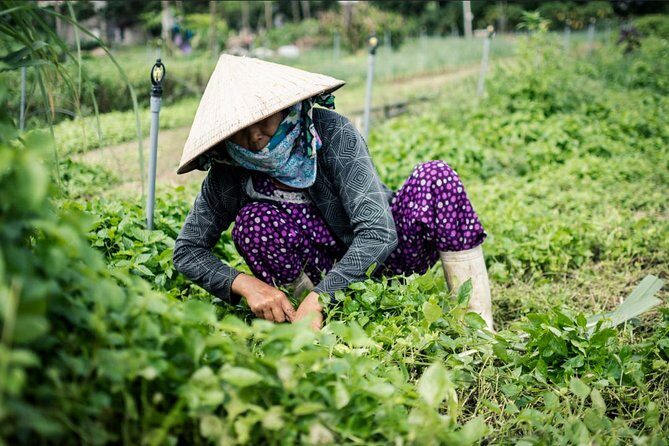
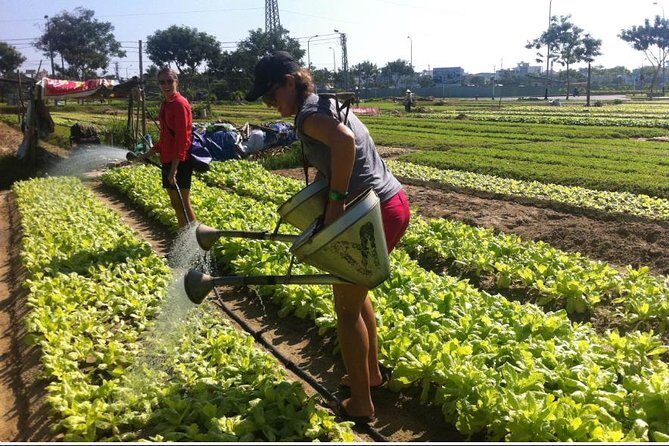
- Tra Que farm time without machinery: traditional methods, farming clothes, and light work
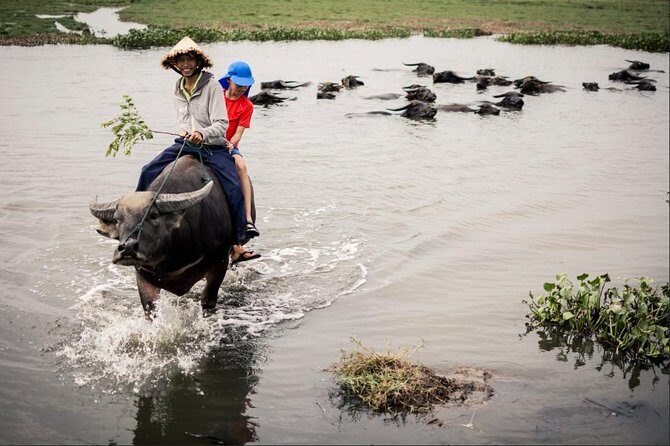
- Animal spotting around the village including water buffalo, storks, cows, and free-range chickens
- Cooking class as a competition with a Master Chef challenge and a local prize for the winner
- Lunch at a farmer’s house using what you just cooked, so it feels like a real meal—not a snack stop
How the farm-to-table format makes the cooking lesson easier
This tour works because it doesn’t start with recipes. It starts with the basics: what you buy, what you grow, and why those choices matter.
First, you head to the market and learn how to pick produce that’s good enough to taste great after cooking. Then you cycle to Tra Que Vegetable Village, where you see herbs and vegetables in their natural setting and do some light traditional farm work. When you finally get to the cooking class, it clicks fast—because you’ve already handled the ingredients (or at least seen them closely) and you understand what makes them special.
Value-wise, I like that the day is built for outcomes. You don’t just watch someone cook. You cook, you eat, and you leave with a clearer sense of how to recreate flavors at home. It’s the kind of half-day that feels like an experience, not an errand.
You can also read our reviews of more cooking classes in Hoi An


Cycling to Ba Le Market: pick fresh ingredients and practice bargaining
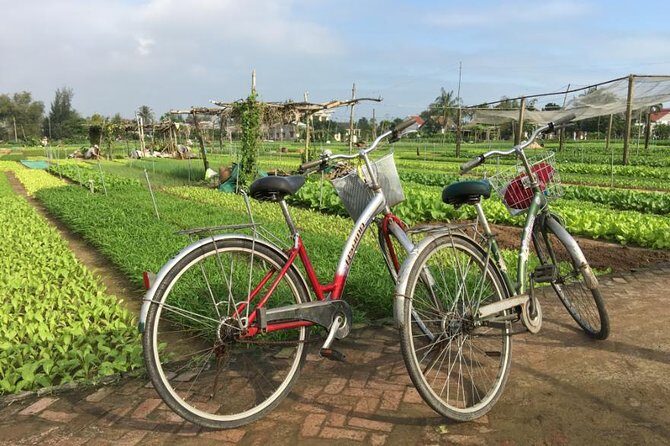
The tour runs at 8:00 am or 14:00 pm, with hotel pickup included. From there, you cycle to Hoi An’s central market area—specifically Ba Le Market—where the guide sets you up for the cooking lesson.
This stop is about more than “shopping.” It’s a crash course in local priorities:
- How to choose good, fresh ingredients
- What you’ll find around the market (produce, fruits, souvenirs, and animals)
- How bargaining works in a community setting
You also get a sense of market rhythm. Markets here aren’t only transactions; locals chat and meet friends. That matters because it changes the vibe from stressful haggling to normal social negotiation. You’ll likely feel more confident about it once you see how the guide frames it.
Practical note: the market time is about 40 minutes, and you’ll be moving at a relaxed but active pace. Come with an open mind and light hands—this is one of those “learn by doing” stops.
Tra Que Vegetable Village: traditional farm work and animal encounters
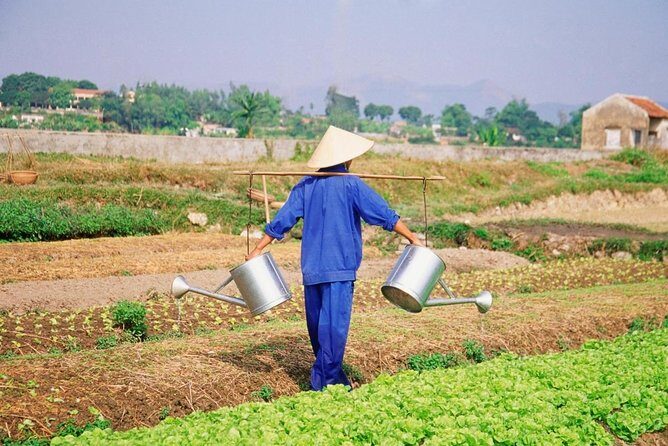
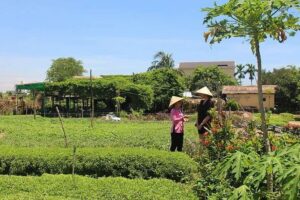
After the market, you keep cycling to Tra Que Vegetable Village. This is the part that gives the whole day its character: you’re not just eating vegetables—you’re meeting the people and routines behind them.
At the village, you’re welcomed with a local drink, then you get a short break before heading out with a local farmer. You’ll walk through the areas with herbs, vegetables, and fruits, and the guide points out what you’re about to cook later.
What I found especially useful is the farming time. You’ll wear farming clothes and do light work using traditional methods with no electrical machinery. That means you’ll get a real sense of how labor-intensive agriculture can be, even if you’re not working at full farm speed.
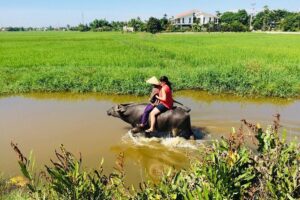
And yes, you’ll see animals. The tour notes common sightings like water buffalo, storks, cows, and free-range chickens. It’s not a zoo moment—it’s part of the working farm setting. You get a clearer picture of what life looks like when food production is right next to daily routine.
The Master Chef cooking class: teamwork, competition, and real techniques
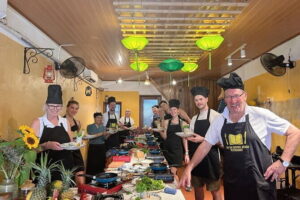
Once you’re back at the local farmer’s house, the cooking class begins. The format is built around group participation, and that’s a plus if you enjoy active tours.
Here’s the gist:
- You learn village-style dishes using the vegetables you saw and/or helped select
- You practice cooking steps in a hands-on setting
- You compete with the group to become a Master Chef
The winner gets a local special prize, which adds energy without turning it into a serious sporting event. It’s a fun structure that keeps everyone engaged—especially helpful on a half-day when you don’t want the time to drag.
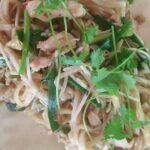
About the dishes: the tour specifically lists Tra Que vegetable specialties (the summary mentions Tra Que vegetable sal—cut off in the details you shared, but the point is clear: you’re cooking local vegetable-based dishes). Expect flavors that highlight fresh herbs and produce rather than heavy, generic sauces.
One more thing I’d watch for: if you’re not used to cooking in shared kitchens, don’t worry. The group size is capped at 15 travelers, so you’re more likely to get attention and guidance when you need it.
Lunch at a farmer’s house: where the value shows up
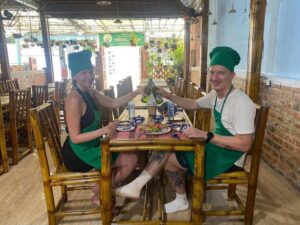
Lunch is included, and you eat at the farmer’s house after the cooking lesson. That sounds simple, but it’s often where tours either feel authentic or feel staged.
Here, it’s meaningful because the meal is tied to your work. You get to enjoy dishes made from the ingredients you learned about. And since the tour includes lunch plus a cooking class, your money isn’t split across multiple separate activities. It’s one cohesive block of time.
You’ll also have small comforts taken care of—there’s bottled water and wet tissues, which is helpful after cycling and farm work.
If you’re the type of traveler who likes to bring home recipes, I’d treat lunch like your practical tasting lab. Note which flavors you liked most and ask the guide what changes them—more herb, different timing, a different balance of ingredients. The tour is set up for questions because you’re in an interactive cooking environment.
You can also read our reviews of more tours and experiences in Hoi An




Price, group size, and what $71 includes (and why it feels fair)
The price is $71.00 per person, and it’s described as a half-day experience lasting about 5 hours. For that time, you’re getting a lot bundled in:
- Hotel pickup offered
- Bicycle use
- English-speaking guide
- Market time with ingredient selection and bargaining practice
- Village farm visit
- Cooking class
- Lunch
- Bottled water and wet tissues
- All fees and taxes
Two small value boosters: admission is handled for you (market admission is free, and the cooking portion includes admission), and the group size cap of 15 travelers keeps it from turning into a crowded bus experience.
Is it expensive compared with a DIY bike ride? Sure—if you only compare transport. But you’re also paying for guided ingredient education, access to the working village, hands-on cooking time, and a full lunch. For many visitors, that’s the real bargain: the tour saves you from having to figure out the village access and cooking setup on your own.
Who should take this cooking class (and who might skip)
This fits best if you:
- Want a hands-on day in Hoi An instead of another quick photo stop
- Like cooking classes that connect to real ingredients and real places
- Enjoy cycling and don’t mind a moderate pace
- Appreciate rural farm life and don’t mind getting a bit involved
You should think twice if:
- You strongly prefer fully seated, no-movement tours
- You don’t want any farm chores, even light ones
- You expect purely passive sightseeing
The good news is the cycling is described as pretty flat, and the experience notes moderate physical fitness. So it’s not framed as a hardcore workout. It’s more like “active enough to be memorable.”
Should you book the Tra Que half-day farm cooking class?
If you’re in Hoi An for a few days and want one experience that feels both local and practical, I’d book this. The combination of market ingredient shopping, traditional farm time, and a cooking lesson that ends with a meal you made is exactly the kind of structure that turns a tour into a skill you can use later.
I’d book especially if you enjoy interactive formats and you like the idea of a Master Chef competition that keeps the group lively. And if you’re lucky enough to get Mr. Tran, that guide experience can make the whole day feel smarter, not just busier.
On the other hand, if your ideal day is totally hands-off and you want minimal effort, this probably won’t be your favorite match.
FAQ
What time does the tour start?
The tour starts at 8:00 am or 14:00 pm, depending on the option you book.
How long does the experience take?
It lasts about 5 hours total (with the market stop and the village cooking portion included).
Is pickup included?
Yes. Hotel pickup is offered.
What’s included in the price?
You get lunch, a bicycle, bottled water and wet tissues, all fees and taxes, and an English-speaking tour guide.
Do I need to be a good cyclist?
You should have moderate physical fitness. The route is described as pretty flat, and the tour uses bicycles, so comfort on a bike helps.
What happens if the weather is bad or I need to cancel?
The experience requires good weather. If it’s canceled due to poor weather, you’ll be offered a different date or a full refund. You can cancel for a full refund up to 24 hours in advance.