Waking early in Hoi An pays off fast. This sunrise style outing takes you into everyday village work, from fish sauce to noodle making and mat weaving, with short stops and time to ask questions. It’s built for an authentic look at how families keep their traditional livelihoods going.
I especially like two things. First, you get hands-on context for how products like fish sauce actually get made, not just what they taste like. Second, the pacing is calm for a morning tour: about 4 to 5 hours, four focused stops, and a group capped at 8. The result feels more like being guided around by local connections than rushing through a checklist.
The main drawback is simple: the start time is 5:00 am. If you’re not a morning person, you’ll want to plan your night carefully, and note the tour requires good weather or it may be rescheduled.
In This Review
- Key highlights to know before you go
- A 5:00 am start that actually has a reason
- Where the tour begins: Duy Vinh fish sauce work
- Cam Kim Island: noodles first, then mat weaving
- Stop 2: noodles that match everyday tastes
- Stop 4: mat weaving and a real household economy
- Cua Dai Bridge and the Thu Bon River pause
- Who guides this kind of morning well
- Pickup, mobile tickets, and the simple logistics that matter
- Price and value: what $49 buys you here
- Best for: food-minded people, craft lovers, and culture seekers
- Who should pass (or plan differently)
- Should you book this Hoi An sunrise tour?
- FAQ
- FAQ
- What time does the Hoi An Sunrise Tour start?
- How long is the tour?
- How many people are in the group?
- Where do we go during the tour?
- Is pickup included?
- Do I need a printed ticket?
- What does the tour cost?
- Does the tour run in any weather?
- What is the cancellation policy?
Key highlights to know before you go
- 5:00 am departure with a small group (max 8): early start, but you’re not stuck in a crowd.
- Duy Vinh fish sauce work: see how the famous dipping sauce is processed and flavored.
- Cam Kim Island village life: learn about noodle production and then mat weaving.
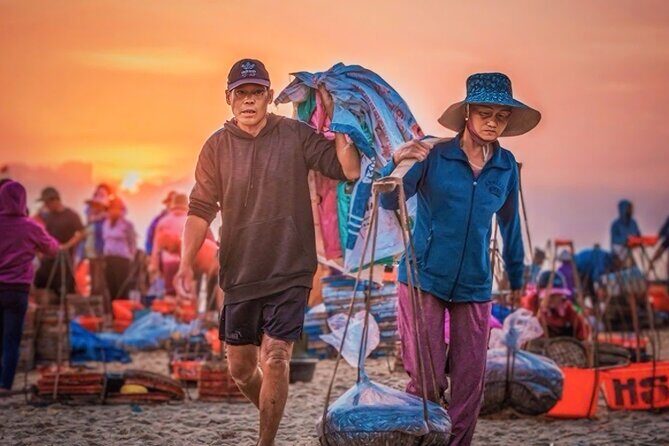
- Cam Kim weaving economy: about 200 households, with roughly 80% working in mat weaving.
- Cua Dai Bridge + Thu Bon River: a real geographic moment between Hoi An City and Duy Xuyen District.
A 5:00 am start that actually has a reason
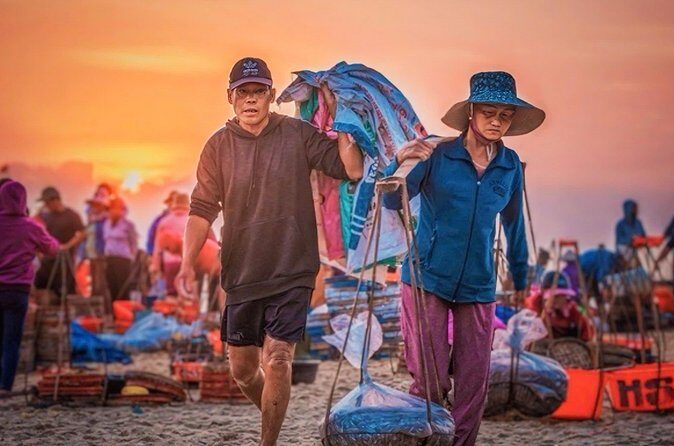
Hoi An at sunrise can feel quiet and even a bit surreal. That’s exactly why a morning tour works here: you’re visiting working neighborhoods when daily routines are just getting underway. The tour begins at 5:00 am, and the whole experience lasts roughly 4 to 5 hours, so you’re back early enough to enjoy the rest of your day in town.
This is also a practical tour design. You’ll have limited stops, each around an hour, so you’re not zig-zagging across the region all morning. That matters in Hoi An, where it’s easy to spend more time commuting than learning.
One more smart touch: the group size tops out at 8 travelers. With a smaller group, your guide can slow down, answer questions, and adjust the pace if a stop needs a little extra time.
You can also read our reviews of more tours and experiences in Hoi An


Where the tour begins: Duy Vinh fish sauce work
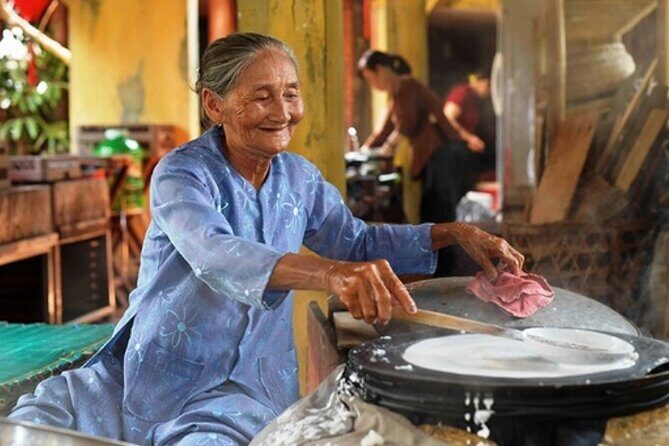
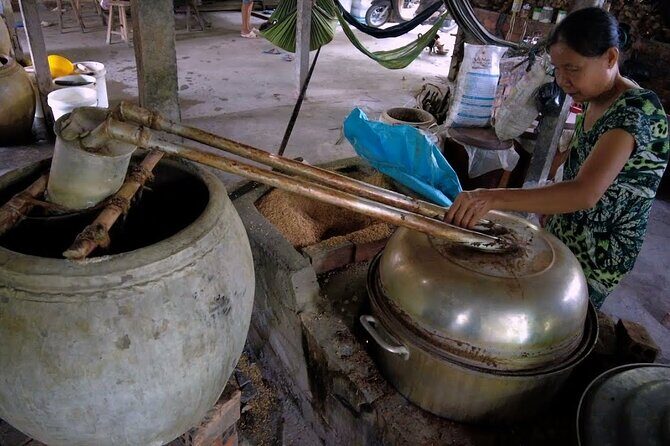
Your first stop is Duy Vinh, where you’ll learn how Vietnamese people make fish sauce and how the flavor gets developed through processing. Fish sauce is one of those staples that most people taste at restaurants, but it’s a very different experience when you see the steps and learn what goes into it.
Expect this stop to be more educational than performative. You’re not just watching a demo. You’re getting context for how a family occupation becomes a daily craft. The tour includes free admission tickets for this stop, so your time is spent on the work itself rather than paying extra at the door.
A small consideration: fish sauce has a strong scent. Even if you don’t mind it, the smell can be noticeable as you stand near production areas. If you’re sensitive to odor, it’s worth coming with a relaxed attitude and keeping the goal in mind: understanding the trade behind the condiment.
Cam Kim Island: noodles first, then mat weaving
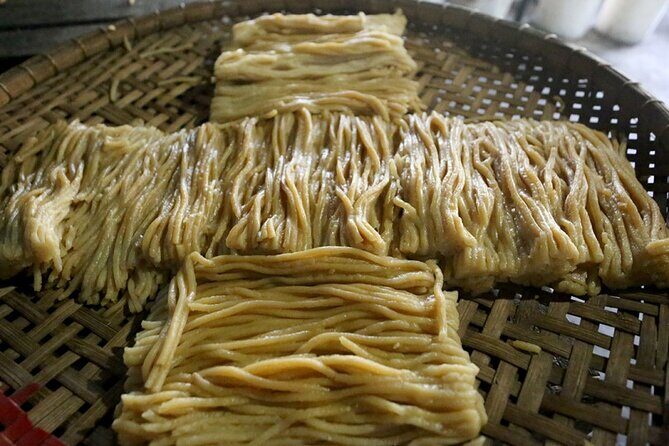
Cam Kim Island is the heart of why this tour feels local. You visit twice: once to connect with noodle culture, and again to focus on mat weaving.
Stop 2: noodles that match everyday tastes
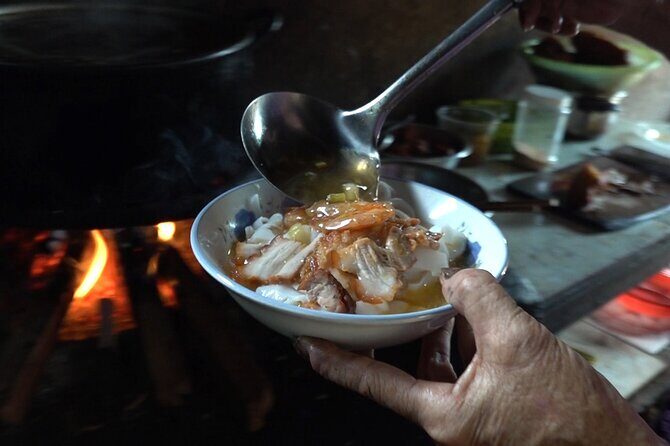
In Cam Kim Island, you’ll learn about noodles and why the region is known for different kinds that people actually eat as part of normal life. This isn’t pitched as a museum stop. It’s a window into what gets produced and what kind of skills keep families busy.
This hour is usually a good match if you like food, but also if you like process. You’re seeing how ingredients turn into something people rely on regularly, not just a tourist product.
Stop 4: mat weaving and a real household economy
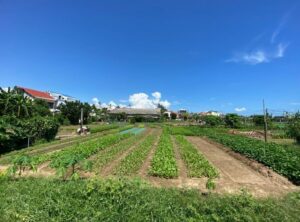
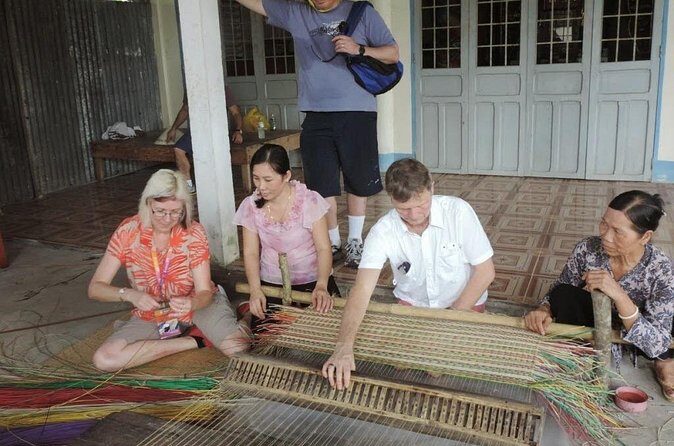
The final village stop on Cam Kim Island shifts from food to craft: mat weaving. The scale here is specific. The village has about 200 households, and about 80% of them work in mat weaving. Each year they provide the market with millions of mats with different designs and decorative patterns.
That detail changes how you think about “souvenirs.” Instead of buying something that feels decorative, you understand it as output from real labor and shared household skills. This is also where the tour’s community focus becomes clearer. You’re learning a livelihood that isn’t built for mass tourism, and that kind of attention matters to people who do the work every day.
Practical note: weaving involves ongoing, close work. If you’re hoping for nonstop photo opportunities, you may need to adjust your expectations to the reality of craft production. Watching carefully, asking respectful questions, and letting the process unfold usually creates the best experience here.




Cua Dai Bridge and the Thu Bon River pause
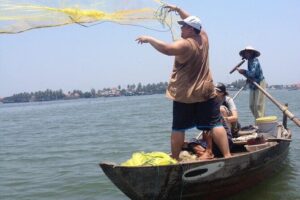
Between the village stops, you’ll spend time at Cua Dai Bridge. The bridge spans the Thu Bon River and connects Hoi An City with Duy Xuyen District. Even though this part is only about an hour, it’s a useful pause because it re-centers you in the geography.
This stop gives context for why these communities connect the way they do—by road, by river, by daily movement between districts. For photos, it’s also a chance to step away from village production and take in the bigger frame of the area.
A consideration: mornings can be breezy near waterways. Bring something light for comfort, especially if you run cold before sunrise.
Who guides this kind of morning well
The tour is run by Billy Vietnam Travel, and the guides you get may vary. From past experiences associated with this tour, you could meet guides such as Hoa, Tham, Nhat, or Huong. The common thread is that the tour style stays human and respectful, with plenty of conversation.
Small-group tours are only good when the guide manages the pace well. This one is designed for that. You get short, structured stops with time to connect the story from one place to the next: fish sauce processing, noodle production, a river crossing moment, and then mat weaving as a major household trade.
If you care about speaking with someone who can explain what you’re seeing in plain language, this is a strong fit.
Pickup, mobile tickets, and the simple logistics that matter
This experience offers pickup, which is a big deal for a 5:00 am start. Arranging transport on a morning like that can be annoying, especially if you’re staying outside the most convenient areas. Pickup makes the tour feel easier from the moment the day begins.
You also receive a mobile ticket, so you’re not stuck hunting for paper confirmations at dawn. The tour listing also indicates it’s near public transportation, which is helpful as a backup plan if you need it.
Finally, confirmation is provided at time of booking, which helps if you’re trying to lock in a specific date without delays.
Price and value: what $49 buys you here
At $49.00 per person, the tour isn’t cheap in the sense of being a bargain basement add-on. But it also isn’t priced like a big, high-volume city excursion. You’re paying for several practical things at once:
- A guided route that strings together multiple working village stops
- About 4 to 5 hours of structured time
- A small group size (max 8), which supports better conversation and pacing
- Pickup and a mobile ticket for smoother early-morning logistics
- Free admission tickets for the included stops
In other words, the value is strongest if you actually want what this tour promises: daily-life insight into how families maintain their traditional work. If you’re expecting a long, sightseeing-heavy morning with lots of scenic roaming, you may feel the time is tighter. But if you want to understand production, skill, and community trade, the price starts to look fair.
A quick tip: because the tour depends on good weather, build it into your schedule with some flexibility. When mornings are rainy, the tour can be adjusted or refunded rather than canceled with no options.
Best for: food-minded people, craft lovers, and culture seekers
This is ideal if you like experiences that feel less staged. If you’re the type who enjoys markets, production details, and crafts you can trace back to real households, you’ll probably love the flow.
You’ll also like it if you enjoy asking questions. The tour is short enough to stay focused, and small enough that questions don’t get swallowed by a crowd.
It’s a good choice for many travelers because it states that most travelers can participate. Still, this is a morning tour with early timing and multiple stops, so if you prefer slow afternoons, you might want to choose an alternative and save your energy.
Who should pass (or plan differently)
If mornings are tough for you, this one will require planning. It starts at 5:00 am, and that can feel early even if you’re traveling. If you sleep late or don’t like waking before sunrise, you’ll feel it.
Also, if you want purely sightseeing views, the stops are more about work and daily production than about major landmarks. The bridge stop helps, but the core of the tour is village occupations.
Should you book this Hoi An sunrise tour?
Book it if you want a morning in Hoi An that feels more grounded than the old town shuffle. You’re getting a rare combo: fish sauce processing in Duy Vinh, noodle culture on Cam Kim Island, a bridge-and-river geographic pause, and then the scale and details of mat weaving that support hundreds of households.
Skip it if sunrise mornings will wreck your trip rhythm, or if you only want classic sightseeing. This tour is for people who like real work, real skills, and learning how everyday products connect to daily livelihoods.
If you’re deciding last-minute, consider this: the company provides confirmation at booking, and the experience uses free cancellation as long as you cancel at least 24 hours before the start time. That gives you some room if your plans shift.
FAQ
FAQ
What time does the Hoi An Sunrise Tour start?
The tour starts at 5:00 am.
How long is the tour?
It runs for about 4 to 5 hours.
How many people are in the group?
The tour has a maximum of 8 travelers.
Where do we go during the tour?
You’ll visit Duy Vinh, Cam Kim Island (two separate stops), and Cua Dai Bridge.
Is pickup included?
Yes, pickup is offered.
Do I need a printed ticket?
No. You’ll have a mobile ticket.
What does the tour cost?
The price is $49.00 per person.
Does the tour run in any weather?
The tour requires good weather. If it’s canceled due to poor weather, you’ll be offered a different date or a full refund.
What is the cancellation policy?
You can cancel for a full refund up to 24 hours before the experience starts. If you cancel within 24 hours of the start time, the amount paid is not refunded.