REVIEW · HOI AN
Coffee Making and Banh Mi Class Hoi An
Book on Viator →Operated by HPT TRAVEL COMPANY LIMITED · Bookable on Viator
Two Hoi An favorites, made by hand. This coffee and banh mi class in Hoi An turns Vietnam’s street-food icons into a hands-on workshop you can repeat at home, with step-by-step guidance and fresh ingredients.
I especially like the chance to learn how banh mi is built, starting from the baguette itself, not just the filling. That means you leave with skills, not just a full stomach.
My second favorite part is the Vietnamese coffee side, where you get to brew and taste multiple styles, including egg coffee, salt coffee, and coconut coffee. One small consideration: there’s no pick-up or drop-off, so you’ll want to plan how you get to the meeting point.
In This Review
- Key highlights at a glance
- Coffee Making and Banh Mi Class in Hoi An: why this combo works
- Your $35 value: what you’re actually getting for the money
- Where it starts (and what that means for your day)
- Inside the coffee station: egg coffee, salt coffee, and coconut coffee
- Egg coffee
- Salt coffee
- Coconut coffee
- What to do while you’re there
- Inside the banh mi workshop: learning the baguette from scratch
- Making a sandwich that doesn’t fall apart
- If you’re nervous about bread
- The human factor: your host sets the tone
- Meal time: enjoying your banh mi together
- Group size and pacing: what “max 12” means in real life
- Who this class is for (and who might want something else)
- Practical tips to get the most out of the class
- Should you book this coffee and banh mi class?
- FAQ
- Where is the meeting point for the Coffee Making and Banh Mi Class in Hoi An?
- How long does the class last?
- How much does the experience cost?
- What coffee styles are included in the class?
- Is coffee and/or tea included?
- What food is included?
- Is pick up or drop off included?
- How many people are in a group?
- Do I get a mobile ticket and confirmation?
- What is the cancellation policy?
Key highlights at a glance

- Authentic banh mi baguette making with fresh ingredients and step-by-step support
- Three Vietnamese coffee styles to brew and taste: egg coffee, salt coffee, and coconut coffee
- Small group size (max 12) for more attention while you cook
- Everything feeds into the meal: you enjoy your homemade banh mi with the people in your class
- Mobile ticket and quick confirmation make it easy to show up ready to cook
- No pick-up/drop-off means you’ll handle your own transport to 16 Lưu Trọng Lư
Coffee Making and Banh Mi Class in Hoi An: why this combo works
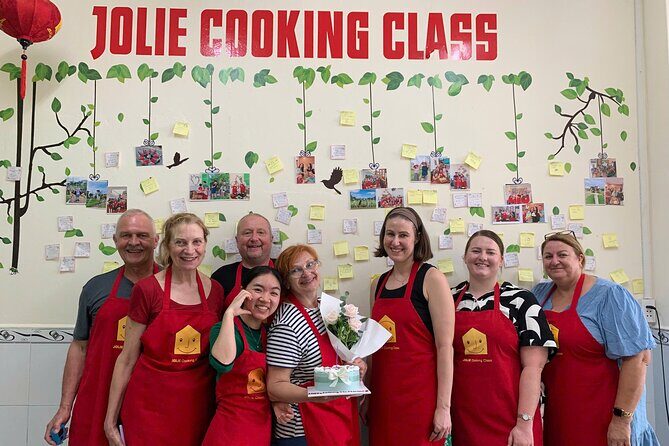
Hoi An has no shortage of food classes, but this one hits two targets at once: the sandwich that screams Vietnam, and the coffee culture that locals treat like a daily ritual. If you love street food, this is one of the more satisfying ways to understand why banh mi tastes the way it does, because you’re not just copying a photo—you’re making core components.
The other reason I like the combo is practical: you stay engaged the whole time. When one session feels technical (baguette work), the other feels sensory (coffee tasting). Even if you’re a beginner, you get a clear rhythm—cook, taste, adjust—until you’re ready to enjoy what you made.
You can also read our reviews of more tours and experiences in Hoi An


Your $35 value: what you’re actually getting for the money
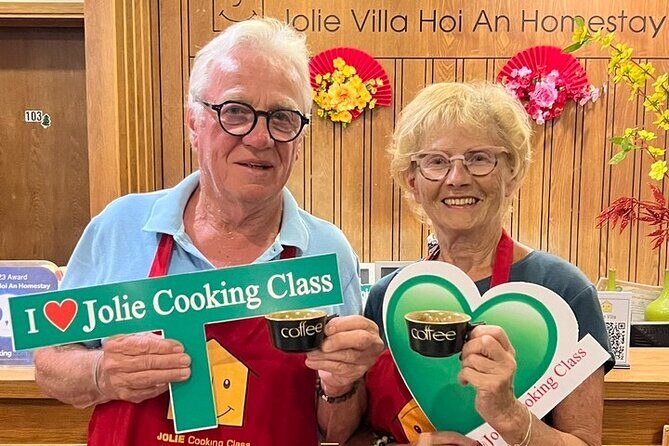
At $35 per person for about 2 hours 30 minutes, you’re paying for three things that are hard to fake on your own without guidance: technique, ingredients, and a small class setting. You’re not only learning to make banh mi from scratch—you also get multiple coffee styles included, plus coffee or tea to drink during the experience.
Also worth noting: the class includes banh mi (Vietnamese baguette). That matters because many cooking activities end with a final plate that feels more like an assembly demo. Here, the whole point is learning the process, then eating the result with other food lovers.
For me, the value sweet spot is this: you leave with a story you can recreate. The taste of a fresh baguette and the way different Vietnamese coffees come out are both repeatable at home with the right basics.
Where it starts (and what that means for your day)
The class starts at 16 Lưu Trọng Lư, Tân An, Hội An, Quảng Nam, Vietnam, and ends back at the meeting point. It’s near public transportation, which helps if you’re using a grab/taxi or local bus and want a straightforward route.
The lack of pick-up and drop-off is the main trade-off. Plan to arrive a bit early so you can settle in and start the class without rushing. If you’re staying across town, don’t treat this as a last-minute plan.
Inside the coffee station: egg coffee, salt coffee, and coconut coffee
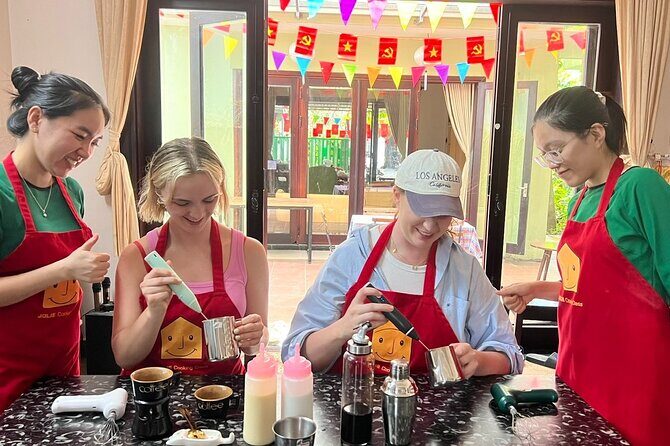
The coffee part isn’t just tasting; the class is built around brewing and sampling multiple Vietnamese styles. That’s a big difference from the usual food tour stop where you drink something and move on. Here, you learn how the flavors are shaped.
Egg coffee
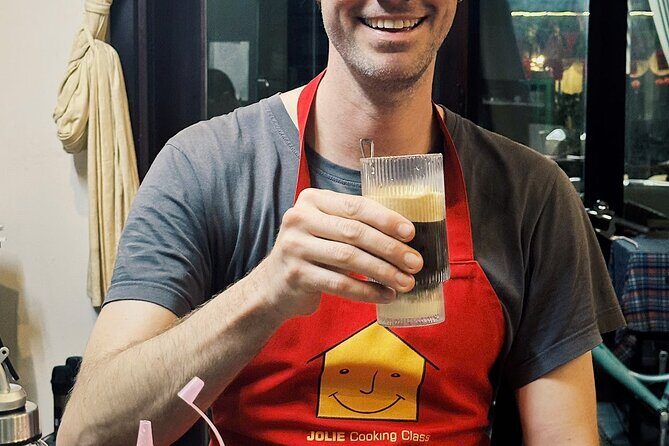
Egg coffee is famous for its creamy texture, and the experience is a chance to understand why it tastes different from regular iced coffee. If you like dessert-style drinks, you’ll likely enjoy this one the most.
You can also read our reviews of more tours and experiences in Hoi An




Salt coffee
Salt coffee is one of those flavors that sounds unusual until you experience it. The payoff is the balance—often described as smoother and less harsh than you’d expect. If you usually think you hate bitter coffee, this is the style that might change your mind.
Coconut coffee
Coconut coffee brings a gentler sweetness and an aromatic touch that pairs well with the heat and pace of Vietnamese cafés. It’s also a great option if you prefer something less intense than straight espresso-style drinks.
What to do while you’re there
I’d treat the coffee part like a mini science lesson. Taste, then pay attention to the texture and sweetness level. If you have a preference—strong vs. mild, creamy vs. light—tell your host. Better adjustment usually comes from asking questions early, not after everything is finished.
Inside the banh mi workshop: learning the baguette from scratch
Banh mi is known for its crispy baguette, savory fillings, and fresh herbs. Many classes focus on fillings and skip the bread. This one specifically includes learning to make an authentic Vietnamese baguette with step-by-step guidance and fresh ingredients.
That’s the part that makes this class feel like a real skill-building session. Bread is where a lot of the texture magic lives: the crust, the snap, and the way it holds fillings without turning soggy too fast.
Making a sandwich that doesn’t fall apart
When you learn the baguette technique, you also learn how to think like a cook. Instead of just assembling, you’re learning balance—how crisp bread meets juicy fillings, and why fresh herbs matter.
The experience also tends to be hands-on in a way that matters. One participant highlighted that the class had you making every element of the banh mi, and that approach is exactly what helps beginners move from imitation to understanding.
If you’re nervous about bread
You don’t need to be a confident baker. What you do need is willingness to follow instructions and accept that the first try might not be perfect. The structure here is designed for learning, with guidance throughout.
The human factor: your host sets the tone

Cooking classes live or die on the vibe. One past participant called out an energetic host named Rosie as a big reason the experience felt fun, not stressful. That kind of energy matters because making baguette elements and coffee styles both require focus, and a good guide keeps the room moving at a comfortable pace.
In a group this size, you’re not just watching. You’re working alongside others, and a lively teacher helps everyone stay comfortable asking questions.
Meal time: enjoying your banh mi together
The class doesn’t end with a take-home box and a quick goodbye. You’ll enjoy your homemade banh mi with fellow food lovers, which is a key part of the experience. Eating together turns the cooking work into something more satisfying: you can taste what you just learned, while the experience is still fresh in your brain.
Practical tip: slow down for the first few bites. If you rush, you’ll miss the contrast between the bread texture, the herb freshness, and the savory filling balance that makes banh mi iconic.
Group size and pacing: what “max 12” means in real life
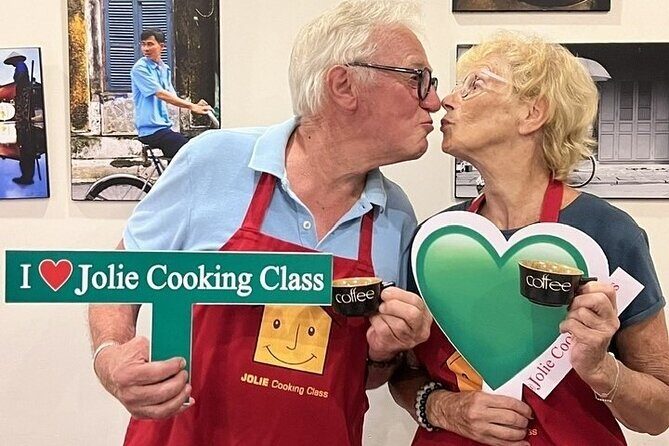
With a maximum of 12 travelers, you should expect a more personal setup than big group tours. This matters because banh mi baguette work needs feedback—small adjustments can change dough outcomes. It also matters for coffee-making since you’re learning technique, not just sampling.
At this group size, you’re more likely to get quick help if something goes wrong or if you want clarification on taste preferences.
Who this class is for (and who might want something else)
This is a strong match for you if:
- You want a hands-on Hoi An food class focused on a real Vietnamese skill set
- You love coffee and want to learn how egg, salt, and coconut coffee differ
- You’re happy to work with dough and follow step-by-step directions
- You prefer small-group experiences over crowded, fast-moving tours
You might prefer a different style of activity if:
- You don’t want to handle bread-making at all
- You hate anything that involves being somewhere at a specific time without transport assistance (since pick-up/drop-off isn’t included)
Practical tips to get the most out of the class
A little prep goes a long way, especially when you’re learning both coffee and banh mi basics.
- Arrive a few minutes early so you can get oriented at 16 Lưu Trọng Lư.
- Wear comfy clothes you don’t mind if you get a little messy. Bread work can be dusty.
- Ask about texture while you’re making the baguette elements. Getting the feel right is easier when someone points out what to look for.
- Taste coffee in stages. Start with mild, then compare how salt coffee and coconut coffee shift the flavor profile.
- Bring questions: If you want less sweetness or a stronger coffee style, this is the time to ask.
Should you book this coffee and banh mi class?
If you want value, this is one of the more sensible choices in Hoi An: two iconic Vietnamese foods, a small group, and real instruction rather than a quick stop. The biggest reason to book is the combination of skills—bánh mì baguette-making plus Vietnamese coffee styles—because it makes the class more than a meal.
Book it if you’re traveling with a friend or solo and want an activity where you leave with both knowledge and something tasty to eat. Skip it only if you truly don’t want to participate in hands-on bread work or you need pick-up/drop-off.
FAQ
Where is the meeting point for the Coffee Making and Banh Mi Class in Hoi An?
The class starts at 16 Lưu Trọng Lư, Tân An, Hội An, Quảng Nam, Vietnam and ends back at the same meeting point.
How long does the class last?
It runs for about 2 hours 30 minutes.
How much does the experience cost?
The price is $35.00 per person.
What coffee styles are included in the class?
You’ll brew and taste multiple Vietnamese coffee styles, including Egg Coffee, Salt Coffee, and Coconut Coffee.
Is coffee and/or tea included?
Yes. Coffee and/or Tea is included.
What food is included?
You’ll learn to make and enjoy Banh Mi (Vietnamese Baguette). The baguette is included as part of the experience.
Is pick up or drop off included?
No. Pick up & Drop off is not included.
How many people are in a group?
The tour/activity has a maximum of 12 travelers.
Do I get a mobile ticket and confirmation?
Yes. It includes a mobile ticket, and confirmation will be received at time of booking.
What is the cancellation policy?
There is free cancellation. You can cancel up to 24 hours in advance for a full refund. Canceling less than 24 hours before the start time is not refundable.
If you want, tell me your travel dates and where you’re staying in Hoi An, and I’ll suggest the easiest way to time your arrival at 16 Lưu Trọng Lư.