REVIEW · HOI AN
Hoi An town private walking tour with boat trip
Book on Viator →Operated by Be Your Feet Travel · Bookable on Viator
Hoi An hits different with a guide at your side. This private walk strings together the market, key temples and halls, and the Japanese Covered Bridge, then tops it off with a short Hoai River boat trip.
I especially love how efficient the route feels for a 3 to 4 hour window, and how much is actually included. You get snacks, bottled water, coffee or tea, herbal tea, and all fees and taxes—so you spend your time walking and looking, not doing math.
One consideration: the day is packed into several focused stops, so if you want a super slow, linger-everywhere style, you may feel a bit rushed. Also, the boat ride is short, so don’t expect a long sail.
In This Review
- Key points to know before you go
- Getting Your Bearings in Hoi An’s Old Town
- The First Stops: Ancient Town to the Local Market
- Phuc Kien (Fukian) Assembly Hall: Chinese Roots in Vietnamese Streets
- Museum of Folklore: Ceramics, Costumes, and Stories You Can Use
- A Short Cultural Interlude: Dancing and a Traditional Game
- Mot Herbal Tea and the Japanese Covered Bridge in One Flow
- The Hoai River Boat Break: Views From Water Level
- What’s Included (And Why It Matters for Value)
- Guide Quality Makes or Breaks This Day
- Who Should Book This Private Walking Tour
- Should You Book This Hoi An Tour With Boat Trip?
- FAQ
- Is this tour private?
- How long does the Hoi An town private walking tour with boat trip take?
- Is hotel pickup included?
- What’s included in the price besides the tour itself?
- What are the main sights on the route?
- Are admission tickets included?
- How long is the boat trip?
- Is there a mobile ticket?
- What is the cancellation policy?
- Is the tour suitable for most people?
Key points to know before you go
- Private group means calmer pacing. You’re not weaving through crowds as a face in the mass.
- Entrance fees and taxes are included for most major stops, plus snacks and drinks.
- The Phuc Kien (Fukian) Assembly Hall and Folklore Museum add culture beyond postcard photos.
- Mot herbal tea plus a local show breaks up the walking with real everyday moments.
- Japanese Covered Bridge views improve with timing. Starting earlier can help you see it with fewer people.
Getting Your Bearings in Hoi An’s Old Town
If you’re only in Hoi An for a short stretch, this is a smart way to orient yourself fast. You start at Hoi An Ancient Town, then move through a set of landmarks that connect to the town’s older trading links—Chinese, Japanese, and Vietnamese influences all show up in what you see and what you’re told.
What makes this work well for your day is the structure. In about 3 to 4 hours, you cover the market, a major assembly hall, a museum focused on folklore and culture, the Japanese Covered Bridge, and a river view from the water. It’s enough to help you understand the town later when you wander on your own.
The tour is private, so you can ask questions without shouting over a big group. Plus, many guides here get praised for English and a sense of humor, and that combo matters when you’re walking for hours and want stories that stick.
One practical tip: wear comfortable shoes. Hoi An is walkable, but the charm comes with uneven sidewalks and tight lanes.
You can also read our reviews of more walking tours in Hoi An



The First Stops: Ancient Town to the Local Market
You’ll begin in the Ancient Town area, then head to the Hoi An market for a guided stroll. This is where the trip becomes real, quick. Instead of treating Hoi An as just architecture, you see the day-to-day rhythm: produce, spices, and everyday goods in lanes that feel like they’re meant for locals first.
This segment lasts about 30 minutes, and the market admission is free. That matters because it keeps the schedule flexible: you can slow down to look, watch sellers work, or pick up a sense of what people buy and cook with.
What I like most here is that a guide helps you notice what you’d usually miss on your own. You start to recognize patterns—what’s sold together, what looks prepared for cooking, and how the market connects to the food culture you’ll keep seeing later. And since it’s private, you’re less likely to feel pushed to keep up.
If you’re sensitive to strong smells, you’ll still be fine, but keep in mind spices and herbs are part of the experience here. A little patience goes a long way.
Phuc Kien (Fukian) Assembly Hall: Chinese Roots in Vietnamese Streets
Next comes the Fukian Assembly Hall (Phuc Kien), built in 1696 by Chinese immigrants, according to the tour overview. Expect a proper architectural pause. This isn’t a quick photo stop; you’ll spend about 30 minutes inside, taking in the details that explain how immigrant communities organized social and spiritual life in trade hubs like Hoi An.
Look for how the building’s design supports gatherings—places where people would meet, pray, and coordinate community events. The tour focuses on the hall as a cultural artifact, including its decorative elements (the overview mentions intricate sculptures and decorative features), and it gives you the context to understand why it matters in Hoi An’s layout.
Admission here is included, so you won’t be hunting for ticket counters while you’re on the move. That kind of simplicity is worth something when your time is tight.
If you like history, this is one of the strongest stops. If you’re not a “museum person,” you’ll still probably enjoy it because the hall feels like a living piece of the city rather than a detached exhibit.
Museum of Folklore: Ceramics, Costumes, and Stories You Can Use
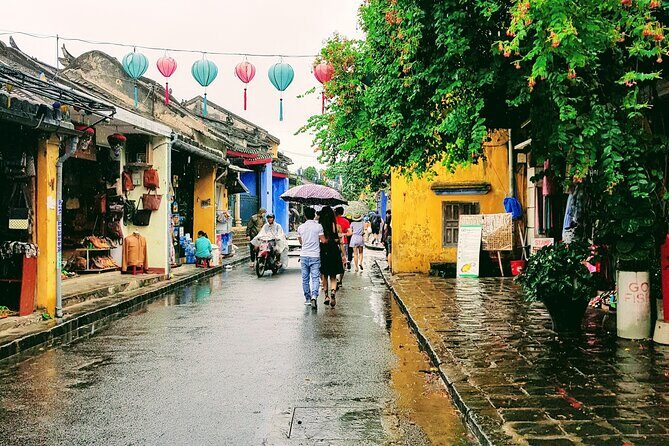
The Museum of Folklore is scheduled for about 30 minutes, and admission is included. This is where you shift from buildings you see in the streets to cultural themes you carry with you after you leave.
The tour describes collections like artifacts, ceramics, and costumes. That combination matters because folklore isn’t just about legends—it’s also about what people wore, what they made, and what they believed shaped daily life. In a place like Hoi An, that background makes everything else click, from the way people mark festivals to how traditions show up in crafts.
In practical terms, museums can be hit-or-miss on guided tours. This one works because it’s short enough to stay energetic, but structured enough that you get more than a walk-through. You’re there for focused viewing plus explanation, not just looking at labels.
Also: if the weather is hot, this is a nice break from direct sun without turning your afternoon into a long indoor detour. You’ll still be outside afterward.
A Short Cultural Interlude: Dancing and a Traditional Game
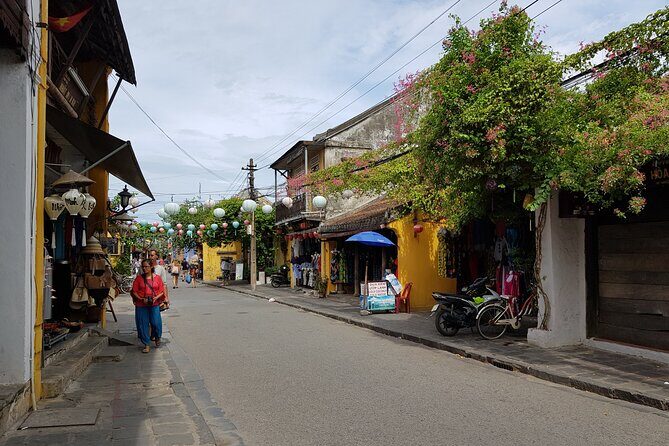
One stop in the middle of the walk is built for you to experience local culture in motion. The itinerary includes a show of dancing and a traditional game with local people, lasting around 30 minutes.
This is the kind of stop that can feel either like a planned performance or like a window into daily life. The difference is the guidance you get and how it’s framed. With a good guide, it becomes a chance to notice gestures, rhythm, and audience interaction—small things that are easy to miss if you’re just trying to keep taking photos.
Admission for this segment is listed as included. So again, you’re not paying extra mid-tour.
If you’re traveling with kids or you just prefer hands-on moments over another corridor of displays, this cultural interlude is a strong match. And it helps reset your energy before the bridge and river part of the afternoon.
You can also read our reviews of more boat tours in Hoi An





Mot Herbal Tea and the Japanese Covered Bridge in One Flow
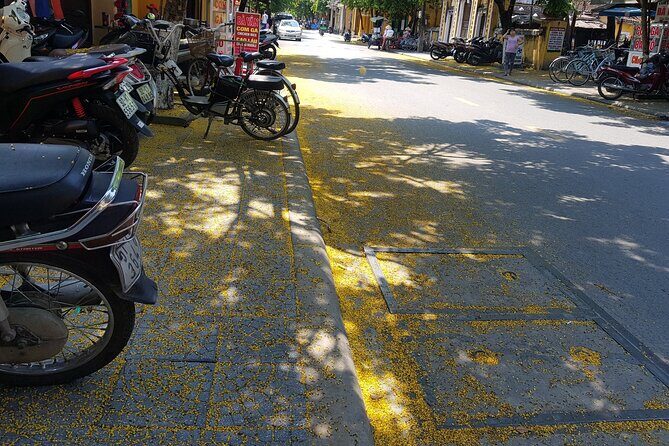
After the show, you’ll stop for Mot herbal tea, included for about 30 minutes. This part is specifically tied to local flavors—an herbal blend with a mix of aromatic herbs and spices, designed to be sipped during your visit. It’s not just a drink stop. The idea is to give you a small sensory anchor to Hoi An culture before you move into the iconic views.
Then you head to the Japanese Covered Bridge. Plan for about 30 minutes here, with admission included. This bridge dates to the 16th century and is presented as a symbol of cultural fusion. The overview also points out ornate statues guarding the bridge. That detail is important because it turns the bridge from a pretty structure into a story you can actually read.
The Japanese Covered Bridge is one of the most photographed spots in town, so timing helps. One review highlights that taking an earlier tour can mean fewer people on the bridge, which makes it easier to enjoy the details rather than being stuck in a slow-moving crowd.
Practical advice: if you want a clearer view and better photos, aim for the earlier end of your day if your schedule allows.
The Hoai River Boat Break: Views From Water Level
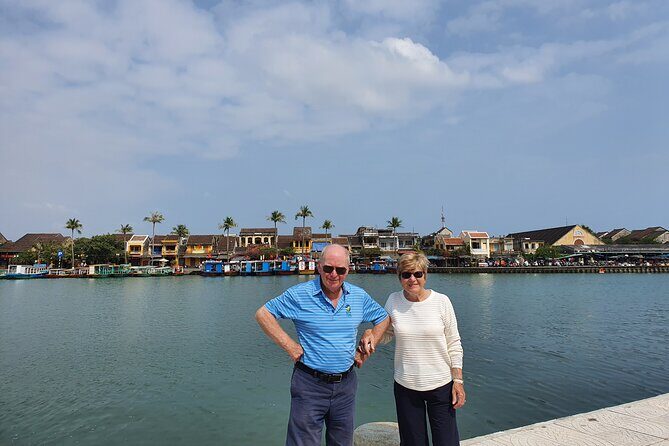
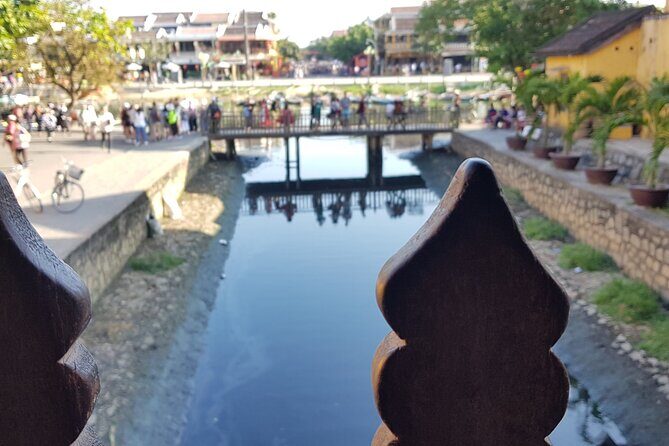
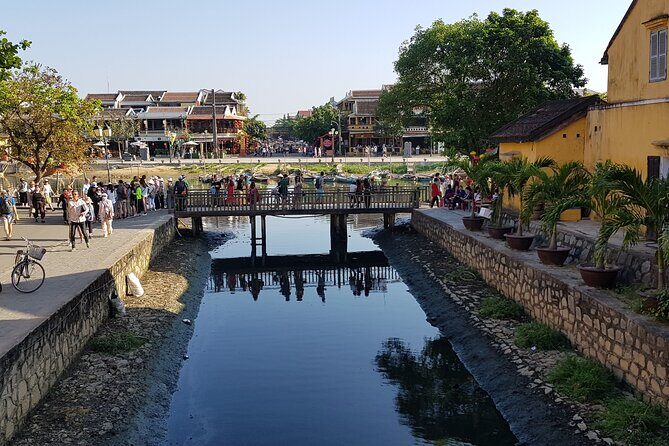
To finish strong, you’ll take a short boat trip on the Hoai (Hoai River/Hoai) River, about 20 minutes. This is listed as included, and it’s one of the best “reset” moments in the itinerary because it changes your perspective.
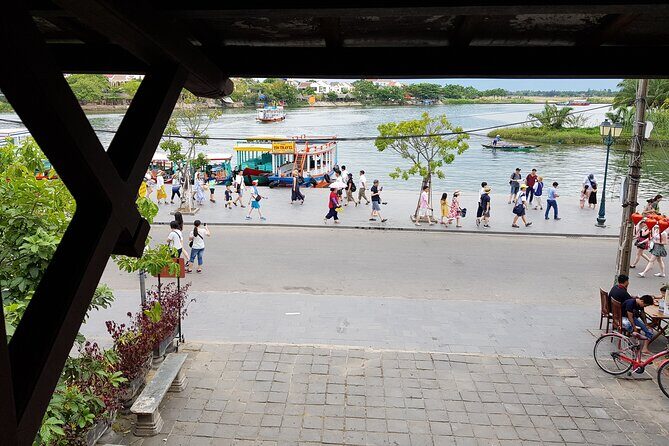
From the water, the town looks different. Instead of walking past façades and signs, you’re seeing how the city sits along the river bend—how buildings relate to the water and how the old town feels when viewed from a distance.
Because it’s short, it won’t feel like you’re giving up half your day to transportation. It’s more like a scenic punctuation mark after all the walking.
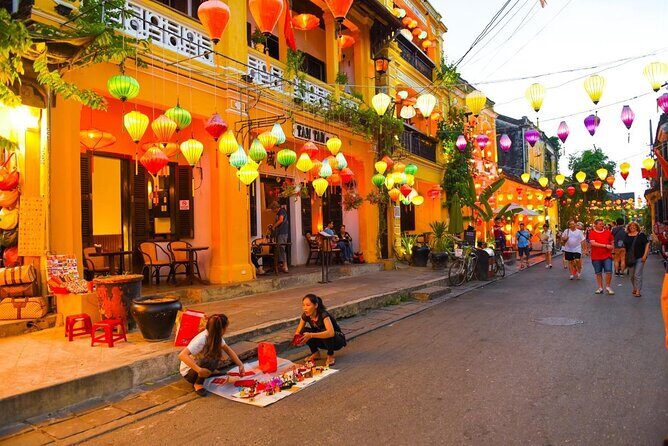
A note from real experiences: some departures can come with lantern scenes on the river, especially if your timing overlaps with evening atmosphere. If you want that mood, plan your visit around night if you have flexibility—but the core value of the ride is still the calmer viewpoint and the city views.
What’s Included (And Why It Matters for Value)
At $39.60 per person, the big value isn’t that it’s “cheap.” It’s that you’re not paying for basic extras along the way.
Included items are:
- Snacks
- Coffee and/or tea
- Herbal tea
- Bottled water
- All fees and taxes
- Boat trip on Hoai River
In a short tour like this, those inclusions matter because they reduce friction. You don’t have to stop to buy water, hunt for tickets, or calculate costs between attractions. And since it’s private, you’re getting a guided experience without the slowdown and crowd chaos of a large group.
Also, most stops have admission included, with the market specifically noted as free. That combination is rare in a compact walking tour: you get a good mix of “street life + paid sights + a river view,” without the feeling that the schedule is built around upsells.
If you’re comparing options, look for tours that bundle both the cultural sights and the river time. This one does.
Guide Quality Makes or Breaks This Day
A big theme in the feedback is that the guide quality is a major part of why the tour lands well. Names mentioned include Eric, Dat, Vu, Nih, and Annie, and multiple reviews highlight excellent English plus clear explanations of history and everyday customs.
That matters for you because the itinerary includes specific places like the Phuc Kien Assembly Hall and the Folklore Museum. Without context, those can turn into “nice buildings and objects.” With a strong guide, they become part of a bigger picture: why these buildings exist, how communities formed, and what people actually did and believed.
One more practical detail: guides on this tour also pass along food tips. One review mentions a banh mi recommendation from Eric. That kind of inside advice can save you a lot of time later when you’re deciding where to eat after the tour ends.
If you care about getting more than a checklist of sights, choose this tour and trust the guide.
Who Should Book This Private Walking Tour
This tour is a great fit if:
- you want a fast introduction to Hoi An’s most important older sites
- you prefer a private setting over weaving through large groups
- you like a mix of street scenes (market) and structured stops (museum, assembly hall)
- you want a short river boat view without committing to a long excursion
It might be less ideal if:
- you hate walking for several hours in warm weather
- you want a totally free-form day with lots of unscheduled time
- you’re hoping for a long boat experience instead of a quick 20-minute ride
If you’re visiting during busy festival periods or rainy conditions, a guided route with covered and indoor options can also help. One review mentions visiting during Vesak and notes that rain or not, it’s still a must-see area. That tracks with how flexible the route feels: you’ll have outdoor and indoor anchors.
Should You Book This Hoi An Tour With Boat Trip?
Yes, if you want an efficient, guide-led way to understand Hoi An without spending time figuring out logistics on your own. The biggest selling points for me are the included fees across multiple attractions, the smart mix of market + culture stops + Japanese Covered Bridge, and the fact that the Hoai River boat ride is built in as a calm break.
If your day is packed and you want to make the most of 3 to 4 hours, this hits the sweet spot. If you’re staying in Hoi An for several days and want to explore slowly, you could still book this as your orientation day, then return later to linger on the stops that grab you most.
FAQ
Is this tour private?
Yes. It’s a private tour/activity, so only your group will participate.
How long does the Hoi An town private walking tour with boat trip take?
The duration is listed as about 3 to 4 hours.
Is hotel pickup included?
Pickup is offered.
What’s included in the price besides the tour itself?
Included items are snacks, coffee and/or tea, herbal tea, bottled water, all fees and taxes, and the boat trip on Hoai River.
What are the main sights on the route?
You’ll visit Hoi An Ancient Town, the Hoi An market, Fukian Assembly Hall (Phuc Kien), the Museum of Folklore, a local cultural show, Mot herbal tea, the Japanese Covered Bridge, and you’ll take a short boat trip on Hoai River.
Are admission tickets included?
Admission tickets are included for several stops. The market stop is listed as free, while other major stops show admission ticket included.
How long is the boat trip?
The boat trip is listed as about 20 minutes on Hoai River.
Is there a mobile ticket?
Yes, the tour includes a mobile ticket.
What is the cancellation policy?
Free cancellation is available up to 24 hours in advance for a full refund. If you cancel less than 24 hours before the experience start time, the amount paid will not be refunded.
Is the tour suitable for most people?
The information says most travelers can participate.
If you tell me your travel dates and whether you prefer morning or afternoon, I can suggest the best way to fit this into a realistic Hoi An day.