REVIEW · HOI AN
Vietnamese Coffee Making Class in Hoi An
Book on GetYourGuide →Operated by hoang thien travel · Bookable on GetYourGuide
A small coffee class can feel like a full sensory evening. In Hoi An, I like that this one starts with how roast changes flavor, then hands you the tools to make Vietnamese styles like Phin filter coffee and egg coffee. You also get a choice of specialties, so you can match what you make to your mood and caffeine tolerance. One thing to consider: if you want deeper background on Vietnamese coffee culture beyond the steps, you may wish the explanation went a bit further.
The setting is easy to reach and the class stays focused, with a small group limited to 10 and an English-speaking instructor guiding every step. I also like that you end up with a cup you made yourself, not just a quick tasting. Still, the coffee is strong and the options can stack fast, so pacing matters if you book multiple sessions.
In This Review
- Key Highlights You’ll Actually Feel In Your Cup
- Meeting Trí Long Coffee and Spotting the Red Hat
- How the Class Works: 1 to 1.5 Hours of Coffee Craft
- Roasted Coffee Demonstration: Why the Bean Matters More Than the Brand
- Vietnamese Phin Filter Coffee: The Slow Drip That Makes It Strong
- Egg Coffee (Hanoi Capital Style): Creamy, Rich, and Surprisingly Smooth
- Coconut Coffee: A Tropical Twist With Nutty Sweetness
- Hue Imperial Salt Coffee: How a Pinch of Salt Changes the Finish
- Choosing 2 or 3 Sessions: How to Build Your Perfect Cup Set
- What’s Included in the $16 Price (and Why It Feels Fair)
- Who This Coffee Class Is Best For
- Potential Drawbacks to Plan Around
- Should You Book This Vietnamese Coffee Making Class in Hoi An?
- FAQ
- Where is the meeting point for the Vietnamese coffee making class?
- How long does the class last?
- How much does it cost?
- What coffee types can I choose to make?
- Is the instructor available in English?
- What is the group size limit?
- What’s included in the price?
- Is hotel pickup included?
- Can I cancel for a full refund, and is pay-later available?
Key Highlights You’ll Actually Feel In Your Cup
- Roast-level basics: learn how different roasting levels affect bitterness, sweetness, and aroma
- Hands-on Phin filter brewing: slow-drip coffee with a bold, robust profile
- Specialty options: egg coffee, coconut coffee, and salt coffee you can choose from
- Make, don’t just watch: tools and ingredients are included so you actively prepare your drink
- Small group, English instruction: limited to 10 participants for a smoother, more personal feel
Meeting Trí Long Coffee and Spotting the Red Hat
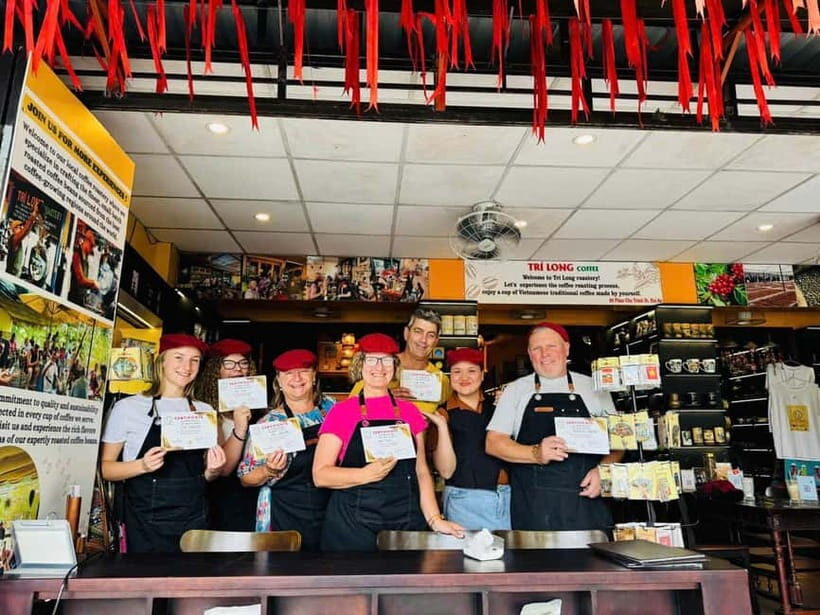
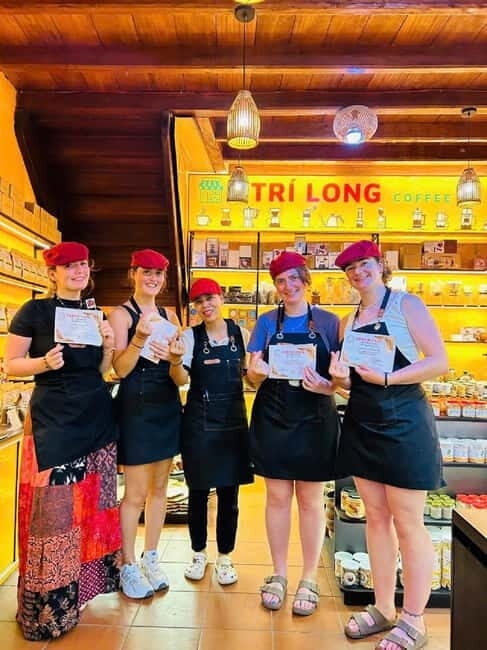
You’ll meet at Trí Long coffee, 88 Phan Chau Trinh street, Hoi An. The simplest tip: look outside the coffee shop for a guide wearing a red hat. If you’re the type who likes to arrive early, do it—this class is straightforward, but having a few minutes to get settled makes the first tasting step less rushed.
This is a downtown meeting point, so you won’t be waiting around for pickup. That also means you control your schedule. If you’re planning this on a busy day, I’d put it in the middle or early part of your afternoon, when you can enjoy the coffee without immediately heading somewhere smoky or stressful.
You can also read our reviews of more tours and experiences in Hoi An

How the Class Works: 1 to 1.5 Hours of Coffee Craft
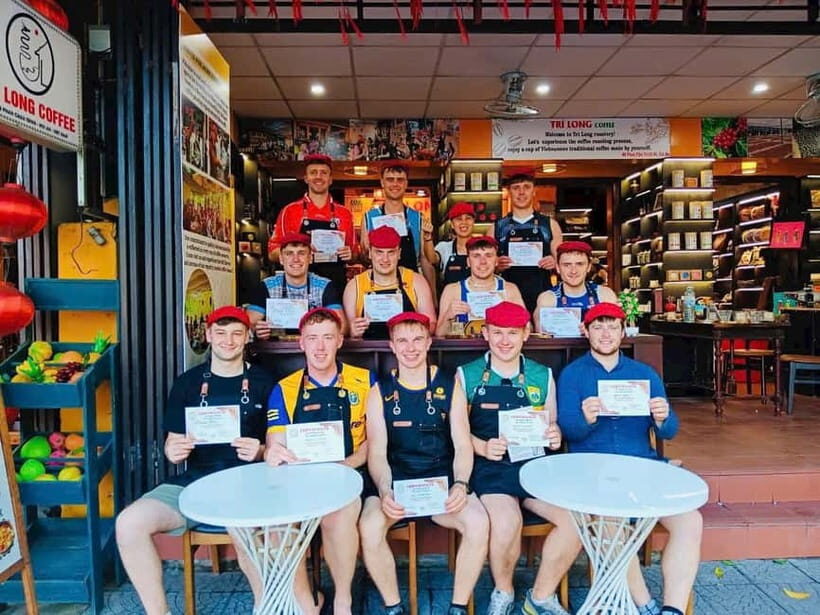
The class runs 1 hour to 90 minutes. In that window, you typically get a roasting and brewing foundation, then move into Vietnamese coffee styles you choose to make. There’s also the option to select 2 or 3 sessions, which is great if you want a broader tasting lineup without turning it into an all-day commitment.
Small group size matters here. With a limit of 10 participants, you’re more likely to get help when your coffee drip slows down or you’re unsure about timing. And since the instruction is in English, you’ll spend less time guessing and more time learning what each technique is doing to flavor.
Roasted Coffee Demonstration: Why the Bean Matters More Than the Brand
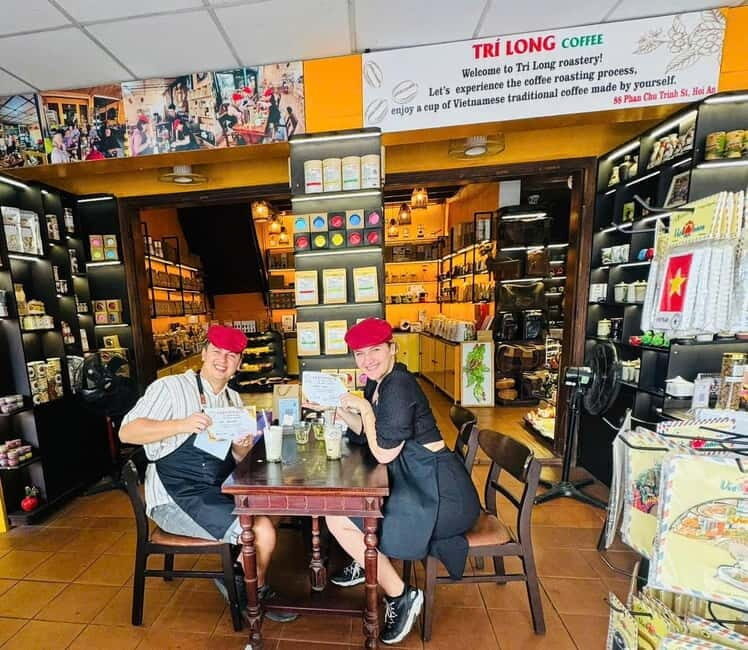
Before you start building drinks, you get a roasted coffee demonstration. This is where the class earns its keep. You’ll learn how coffee beans go from raw to aromatic and flavorful, and you’ll hear about roast levels and how they influence the final cup.
Why this matters for you: Vietnamese coffee often tastes bold, sometimes dark, sometimes surprisingly sweet depending on roast and brewing style. If you understand the roast, you stop treating every café cup as a lottery. You start recognizing why one brew tastes more bitter, another tastes smoother, and another carries more chocolate-like aroma.
In practical terms, this part also trains your palate for what comes next. When you taste later, you’ll be able to separate the effect of roast from the effect of brewing method (like the Phin filter slow drip).
Vietnamese Phin Filter Coffee: The Slow Drip That Makes It Strong
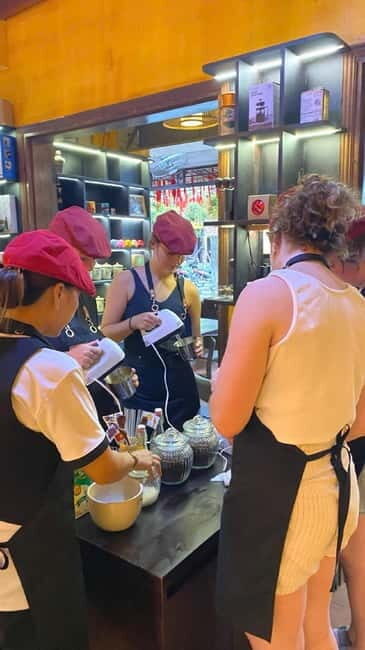
Next up is the traditional Phin filter style. You’ll see the technique and learn what makes it distinct: coffee drips slowly, producing a brew that’s bold and robust.
If you’ve only had coffee made by machines, this is the moment you’ll notice why Vietnamese coffee has its own reputation. The slow-drip approach tends to concentrate flavor, and it can amplify both bitterness and perceived sweetness. The balance is part of the charm—this is not meant to taste mild or watery.
Here’s how I’d think about it as you’re learning: don’t rush the process. The Phin is about rhythm. Watch the drip, pay attention to color and speed, and follow the instructor’s steps closely. If you’re sensitive to caffeine, this is also a good time to decide how many sessions you really want to pack.
Egg Coffee (Hanoi Capital Style): Creamy, Rich, and Surprisingly Smooth
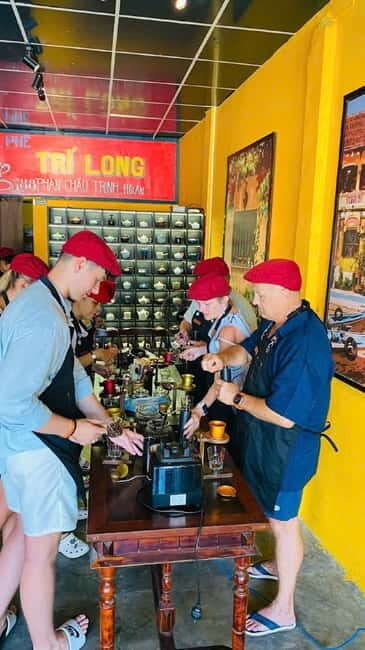
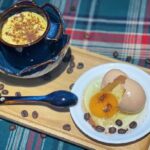
One of the most iconic Vietnamese specialties on the menu here is egg coffee. In this session, you’ll watch skilled baristas prepare it, and you’ll learn the key building blocks: coffee, egg yolks, condensed milk, and sugar.
The goal is a creamy texture with a rich finish—velvety rather than sharp. The magic is in the way the egg yolk mixture integrates with the sweetness and coffee. Instead of tasting like separate ingredients, it becomes one coherent drink.
A useful thing to know before you choose: egg coffee tends to taste richer than many people expect, even if you only have one serving. If you’re thinking about stacking sessions (say, egg coffee plus another specialty), plan your timing and pace. I’m glad this class lets you choose what you make, because it gives you control over how intense your afternoon becomes.
You can also read our reviews of more tours and experiences in Hoi An



Coconut Coffee: A Tropical Twist With Nutty Sweetness
If you want something less heavy than egg coffee, coconut coffee is a great option. The class teaches you how to infuse coconut flavor into your coffee so it comes across as nutty-sweet and aromatic.
This session is a nice contrast to the darker, thicker styles. Coconut coffee can feel brighter and more refreshing, which makes it especially appealing if you’re doing the class when the weather is warm—or if you just want a calmer flavor after something very rich.
Again, the practical payoff is that you learn the method. It’s easier to find coconut coffee in cafés than to replicate it well at home, but once you understand how the flavor is built into the drink, you’ll taste what’s going on instead of only appreciating the result.
Hue Imperial Salt Coffee: How a Pinch of Salt Changes the Finish
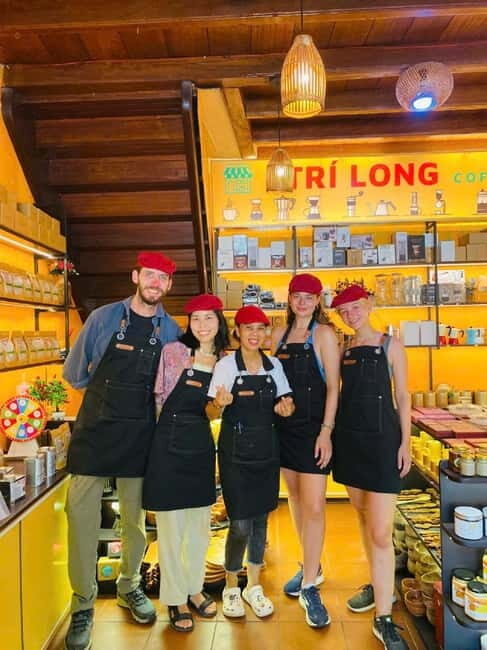
This is the “wait, salt in coffee?” moment. In the Hue Imperial salt coffee session, you’ll see how a pinch of salt enhances coffee’s natural flavors and reduces bitterness.
It sounds odd until you taste it. Salt doesn’t make coffee salty in the normal sense. It can soften sharp edges and round off bitterness so the coffee feels smoother. This is a good choice if you usually find dark coffee too harsh, or if you want to understand how flavor balancing works beyond just adding sugar.
If you’re the type who likes to understand the logic behind flavors, salt coffee is one of the most interesting sessions. You’ll walk away with a simple tool for balancing bitterness—something you can use even after your trip.
Choosing 2 or 3 Sessions: How to Build Your Perfect Cup Set
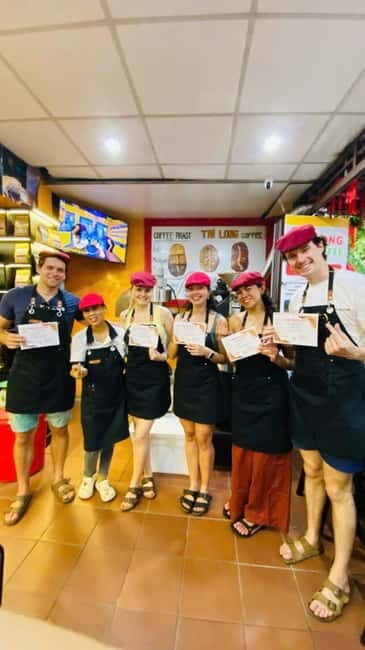
You can choose your coffee type and often select 2 or 3 sessions to experience different roasting and flavor styles. That’s a smart way to get variety without overcommitting your time.
Here’s the balancing act I’d recommend:
- If you want variety with manageable intensity, pick one creamy specialty (egg coffee or coconut) plus one technique (Phin filter) plus one balancing twist (salt coffee).
- If caffeine hits hard for you, consider skipping the number-three session or saving it for later in the day so you can enjoy it instead of powering through it.
One review highlight that’s genuinely worth planning around: making three coffees in a short period can mean a lot of richness and caffeine at once. If you’re doing multiple sessions, go in with an open mind and a slower pace.
Also, there’s a practical perk here: in at least one case, the staff offered a substitution—swapping in a chocolate drink for the last one. That suggests they’re willing to adjust when needed, so if caffeine is an issue, ask early and be clear about what you prefer.
What’s Included in the $16 Price (and Why It Feels Fair)
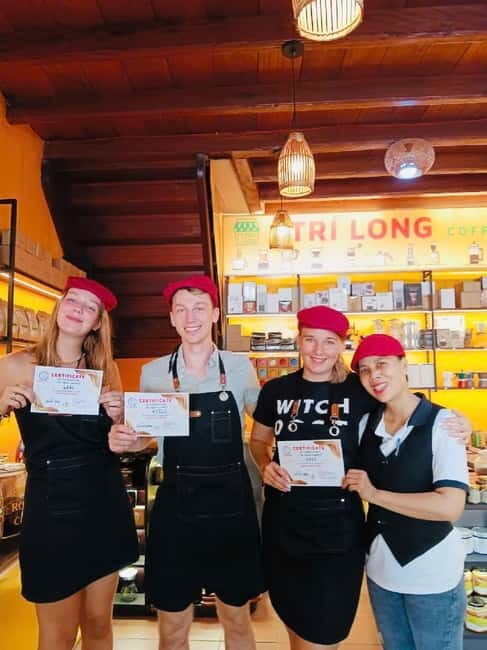
This class costs $16 per person. For that, you get:
- a cup of coffee made by yourself
- the coffee making course
- water
- an English-speaking instructor
- ingredients and tools
That combination is what makes the price feel reasonable. You’re not just paying for tasting. You’re paying for instruction plus hands-on materials. Tools and ingredients don’t sound glamorous, but they’re the difference between a real class and a quick stop at a café.
Another value point: the class is small (up to 10). When the group stays small, your chances of getting direct help increase, and your learning actually sticks.
Your main cost risk isn’t the class—it’s what you do before and after. Food isn’t included, so if you tend to drink coffee on an empty stomach, you may want to eat first.
Who This Coffee Class Is Best For
This experience is ideal if you fall into one of these categories:
- You like learning how flavors are made, not just what to order.
- You’re curious about Vietnamese coffee culture and want it explained through real technique.
- You want a rainy-day plan that’s indoors and structured, not a wandering search for the right café.
It’s also a great fit for couples or solo travelers who enjoy small-group instruction. If you prefer high-volume attractions, this may feel quieter than a big tour—but that’s the point. You’re here for craft and flavor.
If you dislike strong coffee or you’re very sensitive to caffeine, you’ll still probably have a good time—you just need to be strategic about how many specialties you make.
Potential Drawbacks to Plan Around
No class is perfect, and one theme comes up clearly: you might want more background knowledge. One comment specifically called out that they would’ve liked more context, not just the steps.
So here’s how to handle that: ask questions. If something about roast levels, the Phin drip, or egg coffee technique surprises you, bring it up. With a small group size, your questions are less likely to get lost.
Second consideration: intensity and pacing. Making multiple coffees quickly can feel like a lot—both in richness and caffeine. If you’re ordering by taste, not by caffeine tolerance, you may enjoy everything less than you should. Choose fewer sessions or ask about lighter substitutions for the last drink.
Should You Book This Vietnamese Coffee Making Class in Hoi An?
If you want a short, friendly, hands-on activity that teaches you why Vietnamese coffee tastes the way it does, I think this is a smart booking. The value is strong for the price because you get tools, ingredients, English instruction, and a cup you personally made. The variety—Phin filter coffee, egg coffee, coconut coffee, and salt coffee—also gives you real range in one session.
Book it if:
- you like practical food and drink learning
- you want something indoors that still feels special
- you’re curious about roasting and Vietnamese brewing methods
Skip it (or scale it back) if:
- you strongly prefer mild coffee
- you want a long, lecture-style cultural deep dive
- you plan to make multiple coffees and don’t want to manage the caffeine/richness
FAQ
Where is the meeting point for the Vietnamese coffee making class?
You’ll meet at Trí Long coffee, 88 Phan Chau Trinh street, Hoi An. Look for a guide standing outside the shop wearing a red hat.
How long does the class last?
The duration is 1 hour to 90 minutes.
How much does it cost?
The price is $16 per person.
What coffee types can I choose to make?
You can choose to make egg coffee, Vietnamese Phin filter coffee, coconut coffee, or salt coffee.
Is the instructor available in English?
Yes, the instructor is English-speaking.
What is the group size limit?
The class is a small group limited to 10 participants.
What’s included in the price?
Included: a cup of coffee made by you, the coffee making course, water, an English-speaking instructor, and ingredients and tools.
Is hotel pickup included?
No, hotel pickup and drop-off are not included. Food is also not included.
Can I cancel for a full refund, and is pay-later available?
Yes. There is free cancellation up to 24 hours in advance for a full refund, and you can reserve now & pay later.